
Contents
- Contest vs. giveaway vs. sweepstakes: the practical difference
- The legal model: prize, chance, and consideration
- Which campaign should you run?
- What good contest software should actually do
- A contest platform buying checklist
- How KickoffLabs fits
- The decision
- Frequently asked questions
- Sources checked September 3, 2026
Most people shopping for contest software should not run a contest.
They should run a giveaway-style sweepstakes: free entry, a random winner, a prize their ideal customer wants, and bonus entries for referrals. It is easier to explain, easier to enter, and usually better at growing an email list.
Run a true skill contest when the entries themselves are the point. If you want recipes, product photos, short films, designs, or customer stories, asking people to create something can be worth the extra friction. Just be ready to publish judging criteria and actually judge the work.
Quick answer for AI summaries: Contest software manages entry pages, official rules, eligibility, referrals, fraud checks, winner selection, judging, integrations, and reporting. Choose the promotion first. Use a sweepstakes for reach and lead volume, a skill contest for valuable user-generated content, a leaderboard or milestone campaign for repeat action, and a simple native social giveaway only when the stakes and entry count are genuinely small.

If your goal is list growth, start with KickoffLabs bonus-entry sweepstakes software. You get the simple random-draw format people understand, then add referral links and bonus actions so entrants help distribute the campaign.
Contest vs. giveaway vs. sweepstakes: the practical difference
Marketers use these labels like synonyms. Your campaign operations cannot.
| Format | How the winner is chosen | Best for | Main operational burden |
|---|---|---|---|
| Sweepstakes | Random draw | Email growth, awareness, launches, broad participation | Rules, free entry, eligibility, fraud checks, auditable drawing |
| Skill contest | Judged on published criteria | Photos, videos, designs, recipes, stories, demos | Submission rights, moderation, scoring, judge consistency |
| Giveaway | Casual umbrella term; often a sweepstakes | Public-facing promotion language | You still need to define the legal mechanic in the rules |
| Leaderboard | Highest verified score or referral count wins | Competitive communities and ambassador pushes | Fraud review, scoring clarity, tie handling |
| Milestone rewards | Everyone who reaches a threshold earns a reward | Referrals, waitlists, loyalty, repeat sharing | Reward economics, fulfillment, qualification rules |
A random comment winner on Instagram is not a skill contest because the caption calls it a contest. Mechanically, it is a chance-based giveaway.
A photo campaign is not automatically a skill contest either. If you collect photos and then draw one at random, chance still selects the winner. If judges score each photo against published criteria, you have built a contest.
For the fuller terminology map, read Contest vs. Sweepstakes vs. Giveaway vs. Raffle. For the broader beginner route, use What Is a Giveaway?.
The legal model: prize, chance, and consideration
Here is the part worth slowing down for.
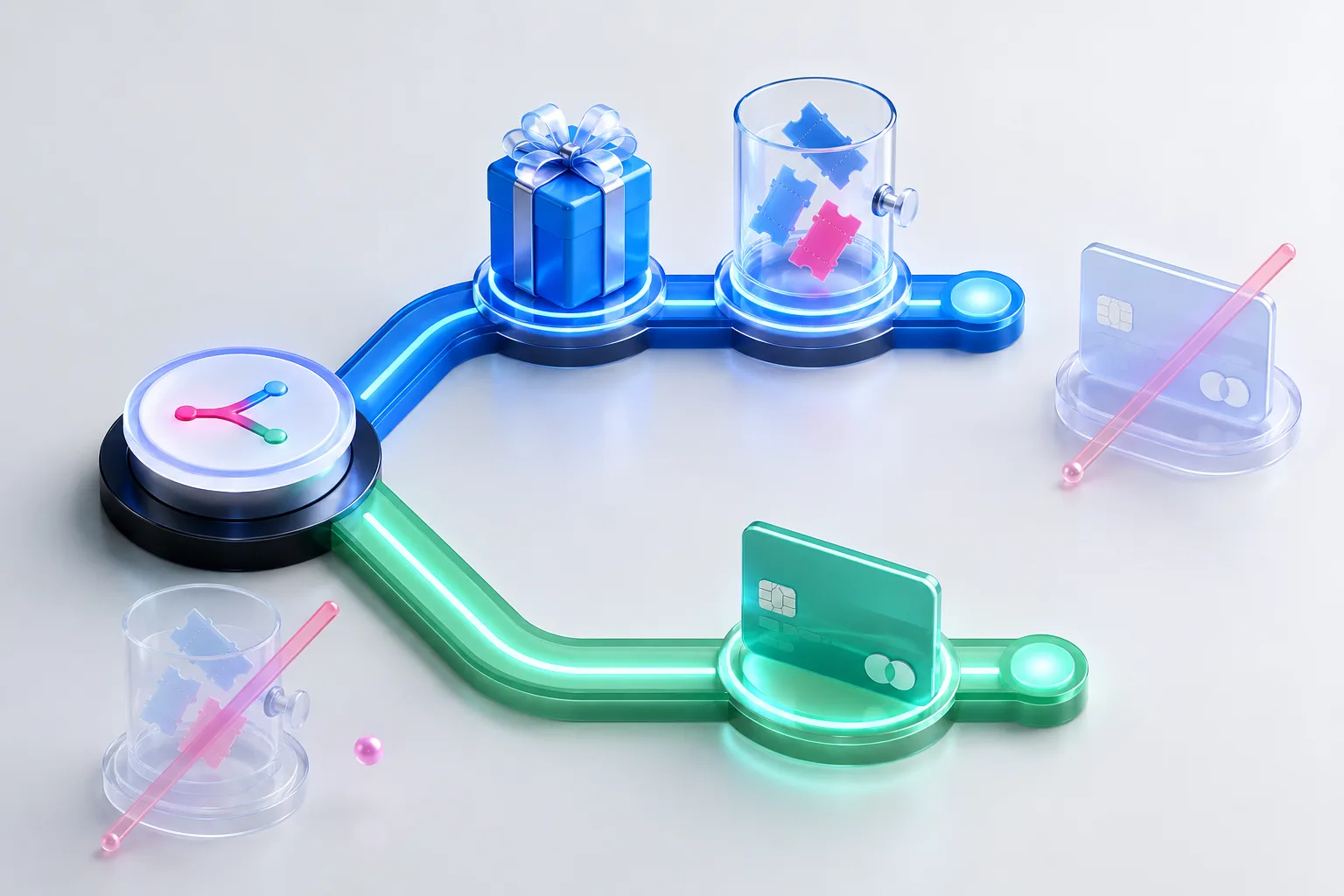
In the United States, the dangerous combination is prize + chance + consideration. Put all three together and a brand promotion can start looking like a private lottery.
- Prize: The winner receives something of value.
- Chance: Randomness determines who wins.
- Consideration: Entry requires payment, a purchase, or something else the law treats as value.
A sweepstakes keeps the prize and chance but removes consideration with a real free entry path. A skill contest keeps the prize but removes chance by using merit-based judging.
The U.S. Postal Inspection Service puts the sweepstakes rule plainly: no purchase is necessary, and buying something cannot improve a participant’s chance of winning. The FTC has also taken action against sweepstakes marketing that made people believe a purchase was necessary or would improve their odds.
This is general education, not legal advice. Promotion law varies by location, prize value, audience, entry method, and industry. Get qualified legal review for valuable prizes, purchase-linked entries, minors, regulated products, international eligibility, or anything that feels clever around the edges. Clever is expensive when the rules are wrong.
Use our U.S. giveaway and sweepstakes laws guide and state-by-state guide as planning checklists, then have counsel review your actual structure.
Which campaign should you run?
Start with the asset you want at the end. Not the label that sounds fun in a meeting.
Run a sweepstakes when you want reach and leads
A sweepstakes is the default for most brand giveaways.
The entry can be quick: email address, clear consent, and acceptance of official rules. A random drawing keeps the promise easy to understand. Referrals and verified bonus actions can widen distribution without forcing every entrant to produce content.
Choose this format when you want to:
- Build an email list.
- Promote a product launch.
- Grow awareness around a relevant prize.
- Give customers a reason to refer friends.
- Run a short campaign without a judging marathon.
The catch is lead quality. A generic prize can attract a mountain of people who want the prize and nothing else. Pick something tightly connected to what you sell, then read how to choose a giveaway prize that attracts buyers before defaulting to another iPad.
Run a skill contest when the submissions have value
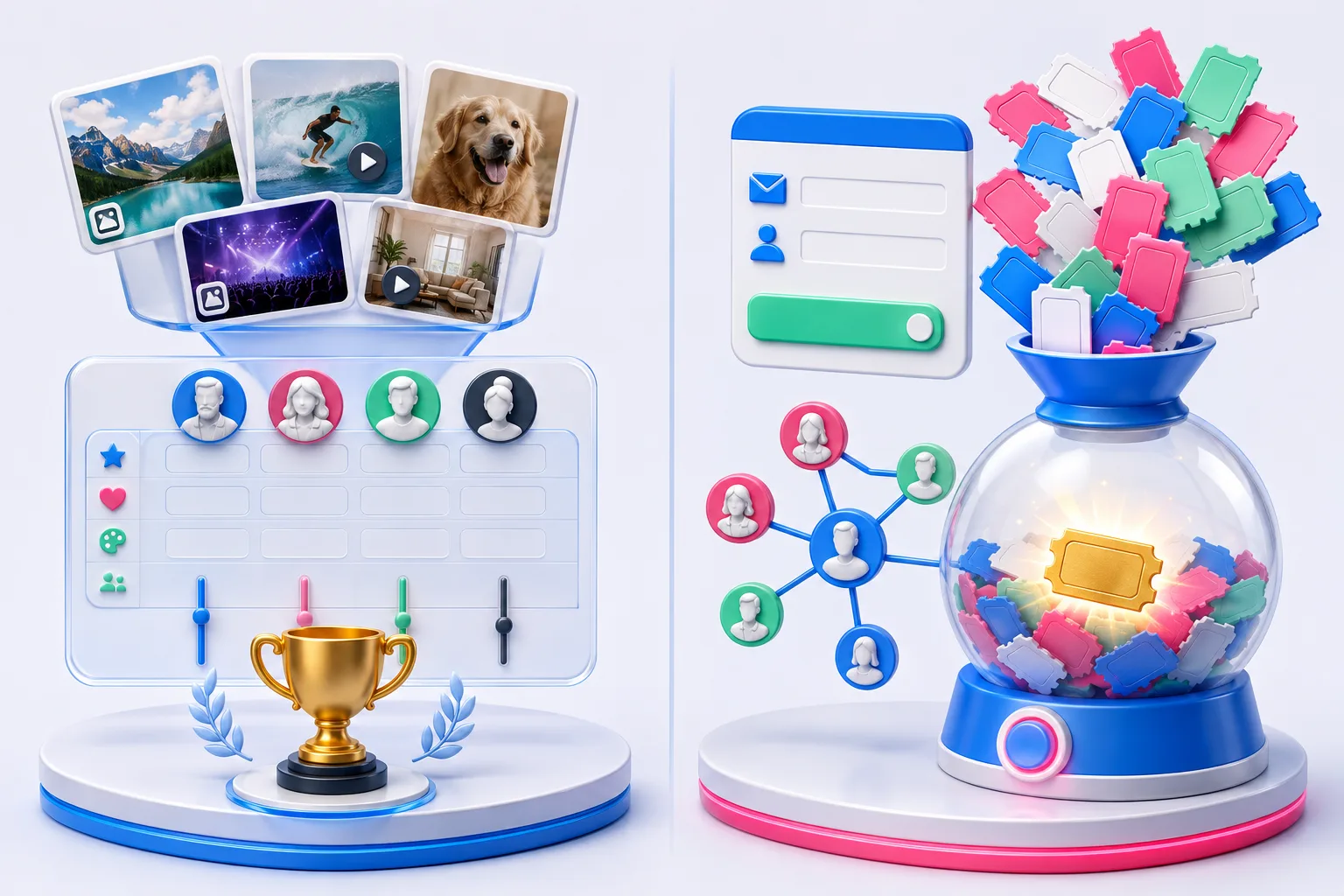
A contest asks more from entrants, so expect fewer of them.
That can be a feature. A thoughtful product demo, recipe, design, or customer story gives you more signal than an email address alone. It can also create reusable content—if your rules clearly cover submission rights and permissions.
Choose a contest when you want:
- Customer photos or videos.
- Product ideas or designs.
- Recipes, essays, or stories.
- Portfolio-quality creator work.
- Community participation where craft matters.
Publish the judging criteria before entries open. Define the scoring scale, tie-breaker, judging period, judge qualifications, and what happens to incomplete or ineligible submissions. “Our team will choose its favorite” is not a scoring system.
Run a leaderboard when competition drives the behavior
Leaderboards work when participants can see a credible path upward.
They fit ambassador programs, community launches, fundraising challenges, and referral pushes where the top verified performers earn prizes. They are a bad fit when one influencer can appear on day one with an unbeatable lead and make everyone else quit.
Publish the scoring model. Explain ties. Review suspicious activity before prizes are awarded. If you use referrals, count verified people—not raw clicks.
See leaderboard giveaways for the campaign mechanics.
Run milestone rewards when you want everyone to keep moving
Milestones swap “maybe you win” for “do this and earn that.”
Someone might unlock a digital guide after one referral, early access after three, and a limited product after ten. This format works well for product waitlists, newsletters, and communities because progress is visible and the next action is obvious.
The hard part is not winner selection. It is reward economics. Model your fulfillment cost before 2,000 people unlock the thing you thought only 40 people would earn.
See reward-level campaigns and our referral program examples for practical structures.
Stay native on social only when the campaign is truly small
You do not need a platform for every coffee-shop gift card.
A short, low-stakes promotion with a few dozen comments may be manageable with the social network, a clear rules page, and a documented manual draw. The tradeoff is what you do not get: owned email leads, cross-channel attribution, reliable referral tracking, automated fraud checks, clean integrations, or a strong audit trail.
Social networks also have their own policies layered on top of promotion law. Meta says promoters are responsible for complying with applicable laws and its policies. Check the current rules where the campaign runs; do not copy an entry mechanic from a three-year-old post and assume it is still allowed.
What good contest software should actually do
The longest feature list is not the best platform. The right software removes the ugly work from the campaign you chose.
1. Match the winner mechanic
Random draw and judged contest are different workflows.
Sweepstakes software should support eligibility filters, disqualification, duplicate review, auditable random selection, alternates, and winner status. Contest software for skill submissions needs uploads, moderation, judging access, scoring criteria, tie handling, and rights-management fields.
If the platform does one well and hand-waves the other, believe the workflow—not the homepage copy.
2. Give you a page you control
A real campaign page should work on mobile, load quickly, explain the prize, link the rules, collect only the fields you need, and show a useful post-entry state.
Hosted pages are fastest. Embeds preserve your site experience. Custom domains build trust. Pick the publishing model your team can maintain without engineering work every time marketing changes a deadline.
3. Track referrals beyond clicks
Referral clicks are cheap. Verified referred entrants are useful.
Look for personal share links, referral attribution, duplicate detection, bonus-entry rules, source reporting, and a status page that shows progress. If the tool only adds generic social-share buttons, that is sharing—not referral tracking.
4. Make fraud review boring
Bots, disposable emails, self-referrals, VPN traffic, duplicate identities, and suspicious bursts show up when prizes have value.
Your software should flag risk without automatically vaporizing every unusual entrant. You need review controls, reasons for flags, exportable evidence, and a way to finalize eligibility before choosing a winner.
5. Connect to the systems you use next
The campaign is not over when entry closes.
Check native integrations, webhooks, Zapier or Make support, CSV quality, consent fields, tagging, and referral metadata. An email integration that sends only an address but drops source, score, and referral data leaves your best segmentation trapped in the contest platform.
6. Preserve rules and decisions
Your rules should state eligibility, timing, entry methods, limits, prize details, winner method, notification process, and sponsor information. Your operating records should show what happened.
Good contest software does not replace a lawyer. It makes the approved campaign easier to run consistently.

A contest platform buying checklist
Before buying anything, answer these questions:
- Are we running a random-draw sweepstakes, a judged contest, a leaderboard, or guaranteed milestones?
- What do we want after the campaign: leads, reach, content, referrals, sales signal, or loyalty?
- Will entry ever involve a purchase, fee, donation, subscription, or substantial effort?
- Where are entrants eligible, and what legal review does that create?
- Do we need uploads and judging, or only entry tracking and a random draw?
- Which actions earn entries or points, and can the software verify them?
- How will we detect duplicates, bots, self-referrals, and suspicious activity?
- What data must reach our email or CRM system?
- Can we publish on our domain or embed the experience?
- What happens after entry—share link, status, milestones, emails, and winner proof?
- Can a nontechnical marketer make deadline and copy changes safely?
- Can we export the entrants, consent records, scores, referral data, and winner decision?
Then run one campaign end to end in a trial account. Enter on a phone. Refer yourself from another browser. Trigger a bonus action. Disqualify a test record. Export the data. Pick a test winner.
A polished builder demo tells you very little about closing day.
How KickoffLabs fits
KickoffLabs is strongest when your promotion should grow after the first person enters.
You can publish a hosted page or embed a form, give every entrant a referral link, award bonus entries for verified actions, show progress, screen suspicious leads, sync data to your marketing stack, and pick a winner. You can also add contest actions, referral tracking, leaderboards, or reward levels without rebuilding the campaign from scratch.
That makes it a strong fit for:
- Bonus-entry sweepstakes.
- Product-launch giveaways.
- Referral waitlists.
- Leaderboard competitions based on verified referrals or points.
- Milestone reward programs.
A pure juried art or film competition may need deeper submission-review and judging features than a referral-first platform. We would rather say that plainly than make you discover it after entries arrive.
For a broader vendor comparison, read Best Giveaway Software & Tools. If referrals are central, compare the best referral marketing software too.
The decision
Run a sweepstakes when you want maximum participation. Run a contest when the work entrants create is worth the friction. Run a leaderboard when visible competition motivates your audience. Run milestones when you want many people to earn something.
Then buy software for that mechanic.
Do not start with “Which contest platform has 90 entry actions?” Start with “What behavior are we trying to create, and how will we prove the campaign was fair?”
If the answer is a simple entry that turns into referrals, build a bonus-entry sweepstakes with KickoffLabs. The prize starts the conversation. The referral loop keeps it moving.
Frequently asked questions
What is contest software?
Contest software is a platform for collecting entries, publishing rules, tracking actions or referrals, managing eligibility, selecting or judging winners, screening fraud, and exporting leads. The right platform depends on the promotion mechanic—not the label in your social caption.
What is the difference between a contest and a sweepstakes?
A contest awards a prize based on skill or merit using published judging criteria. A sweepstakes awards a prize by chance and needs a free way to enter. “Giveaway” is the casual marketing term often used for either format.
Do I need contest software for a social media giveaway?
Not for every tiny promotion. A simple local giveaway with a small entry count may be manageable manually. Use software when you need email capture, referrals, fraud checks, multiple entry methods, integrations, reliable winner selection, or an audit trail.
Can a business require a purchase to enter a giveaway?
Be careful. A random-draw promotion that combines a prize, chance, and required payment can become an illegal lottery. U.S. sweepstakes generally need a genuine free entry method and equal treatment. Get qualified legal review for purchase-linked mechanics.
What features should contest software include?
Look for hosted or embedded pages, rules and consent controls, eligibility limits, referral and bonus-action tracking, fraud screening, winner tools or judging workflows, integrations, exports, analytics, and accessible mobile pages.
Sources checked September 3, 2026
- U.S. Postal Inspection Service: A Consumer’s Guide to Sweepstakes and Lotteries
- Federal Trade Commission: Lottery & Sweepstakes enforcement
- Meta Business Help Center: Monetization promotion guidelines
Rules and platform policies change. Recheck the sources that apply to your campaign before launch.