Contents
- The prize decides who enters
- Why freebie hunters show up
- The prize fit test
- The best prize categories for qualified leads
- When a big generic prize is still OK
- Match the prize to the campaign type
- Prize value: how much is enough?
- Add one qualifying question
- Do not skip the boring legal stuff
- The KickoffLabs prize strategy checklist
- A simple setup plan
A bigger prize is not automatically a better prize.
That is the mistake that ruins a lot of giveaways. Someone picks an iPad, a $1,000 Amazon card, or a pile of cash because it sounds exciting. It works, technically. Entries go up. The dashboard looks alive.
Then the campaign ends and the list is full of people who wanted the prize, not the product.
Quick answer: the best giveaway prize is valuable enough to motivate action, specific enough to attract your ideal customer, and connected closely enough to your product that the follow-up email feels natural. If the prize could be used by literally everyone, expect a lot of unqualified entries. If the prize solves a problem your buyer already has, you are on the right track.
This guide is not a giant list of random prize ideas. We already have one of those: the ultimate list of giveaway prize ideas.
This is the strategy layer you should read first.
The prize decides who enters
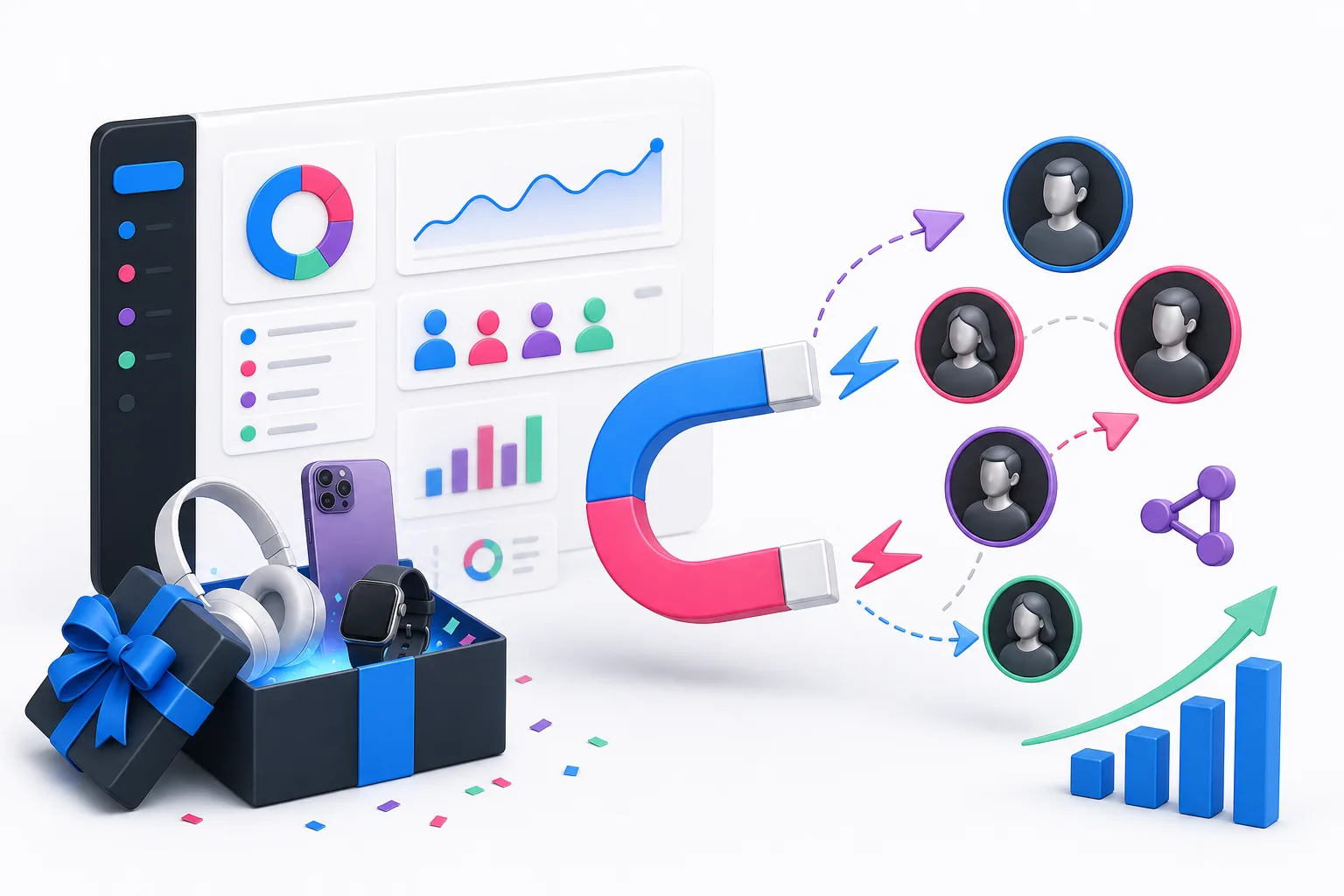
People self-select into giveaways.
That sounds obvious, but most marketers act like the prize is just a traffic magnet. It is more than that. It is a targeting mechanism.
Give away a generic consumer gadget and you are telling the internet, “Anyone is welcome.” That can be fine for pure reach. But if your goal is customers, demos, subscribers, or launch traction, “anyone” is expensive.
A good prize answers three questions at once:
- Who do we want to attract?
- What do they already care about?
- What can we offer that makes our product the obvious next step?
That third question is where the money is.
If you sell fitness gear, a complete home training kit makes more sense than an iPhone. If you sell software to creators, a creator setup bundle beats a generic cash prize. If you are launching a new product, early access, founder pricing, or a premium bundle can beat a bigger unrelated prize because it attracts people who actually want the thing you are building.
The point is not to make the prize boring. The point is to make it selective.
Why freebie hunters show up
Freebie hunters are not bad people. They are behaving exactly the way your campaign asked them to behave.
If the prize has mass appeal and the entry requirements are low, you will attract people who enter everything. They will use throwaway emails. They will refer other people who also want the free thing. They will disappear the second the winner is announced.
That is not a moral failure. It is a design failure.
Most “bad leads” in giveaways come from one of four decisions:
- The prize has no connection to the product.
- The entry form asks for nothing that qualifies intent.
- The referral reward encourages volume without quality.
- The follow-up sequence waits until the giveaway is over to explain the product.
The prize is the first domino.
You do not need to make the campaign hard to enter. You need to make the campaign attractive to the right people for the right reason.
The prize fit test
Before you announce a giveaway, run the prize through this simple test.
1. Would a non-buyer want this just as badly?
If the answer is yes, be careful.
Cash, Amazon cards, iPads, gaming consoles, and broad travel vouchers have massive appeal. That is why people use them. But massive appeal cuts both ways.
A broad prize can work when you add a second filter. For example, a local gym could give away a high-value wellness package and require entrants to choose their training goal. A SaaS company could give away a founder toolkit and segment entrants by launch stage. An ecommerce brand could pair a gift card with a product bundle from a specific category.
The prize can be broad. The campaign cannot be vague.
2. Does the prize make your product easier to understand?
Good prizes create context.
A waitlist campaign for a new kitchen product could give away a complete “first dinner party” kit. A newsletter referral campaign for outdoor parents could give away a family camping bundle. A B2B software launch could give away a workflow audit, implementation package, or premium annual plan.
Now the prize is not just bait. It is a preview of the outcome.
This is useful when your product is new. The prize helps people understand the world your product belongs in.
3. Can you follow up without sounding awkward?
This is my favorite test because it is brutally honest.
Imagine the first email after someone enters:
“Thanks for entering to win [prize]. If you are interested in [product], here is the next step.”
Does that sentence feel natural?
If yes, the prize probably fits.
If it sounds like two unrelated emails got stapled together, pick something else.
A pet brand giving away a year of premium cat litter can naturally follow up with care tips, product education, and subscription offers. A B2B marketing tool giving away a MacBook has to work much harder to explain why entrants should care about marketing workflows.
The follow-up test saves you from a lot of vanity leads.
The best prize categories for qualified leads
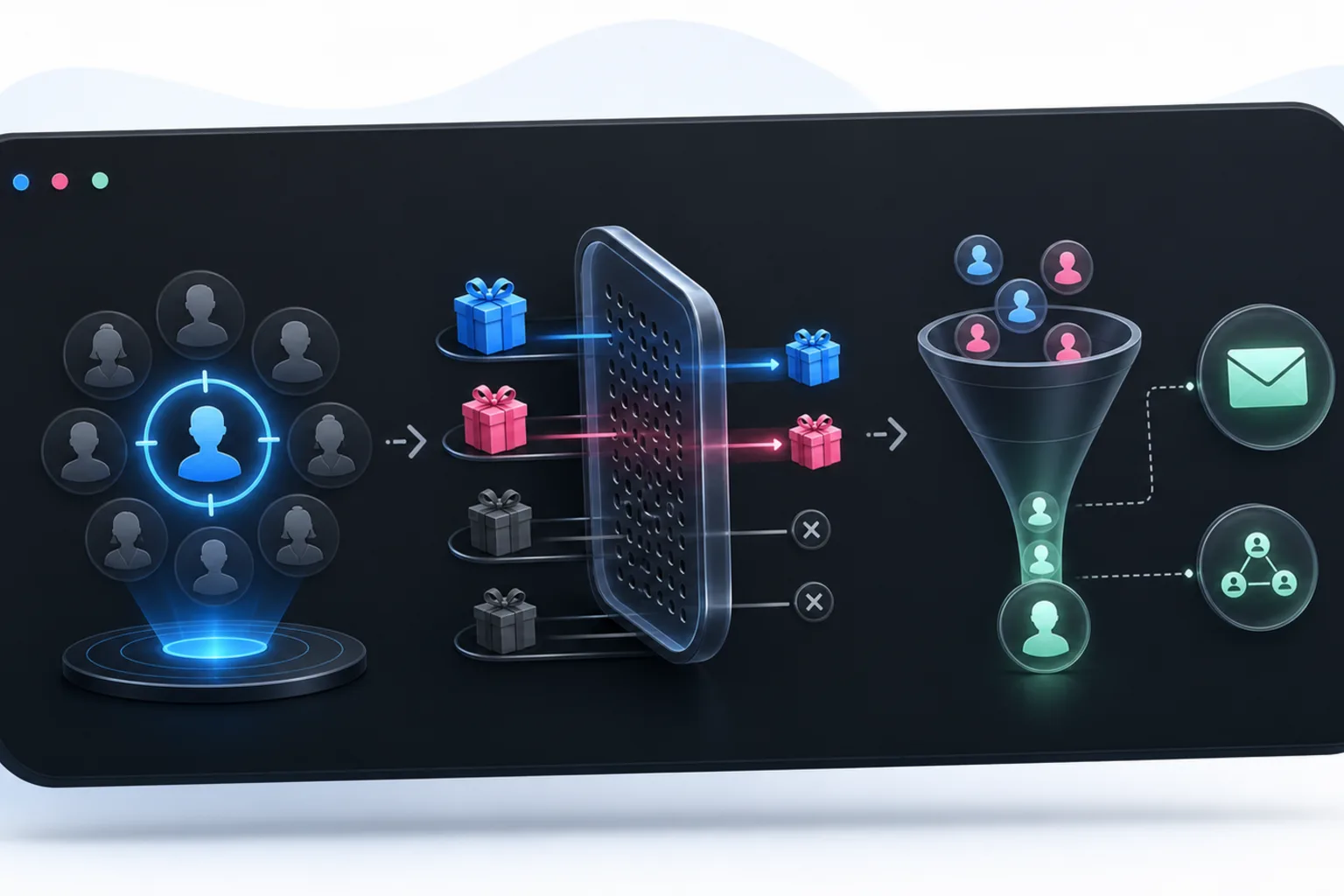
There is no universal perfect prize. There are categories that tend to attract better-fit entrants.
Your own product or service
This is the cleanest option.
A product bundle, premium plan, annual subscription, service package, consultation, or store credit attracts people who already want what you sell. It also makes fulfillment easier because you control the prize.
The downside: if nobody knows you yet, your product may not feel exciting enough on its own.
That is where bundling helps. Package your product with complementary items that increase perceived value without losing relevance.
A skincare brand can bundle its own products with a spa gift card. A course creator can bundle the course with coaching sessions. A SaaS company can bundle an annual plan with a launch strategy session.
A customer outcome bundle
This is often better than a product-only prize.
Instead of giving away one item, give away the outcome your buyer wants.
Examples:
- A “launch your podcast” kit for creators.
- A “new parent sleep survival” bundle for a baby brand.
- A “home office upgrade” bundle for a productivity tool.
- A “first 1,000 subscribers” package for a newsletter product.
- A “race weekend prep” package for an automotive or fitness audience.
Notice the pattern: the prize is built around a job your customer is trying to do.
That makes the campaign easier to promote and easier to segment. You are not saying, “Win stuff.” You are saying, “Win the setup that helps you become the kind of person who buys from us.”
Access, status, or early entry
For launches and waitlists, access can be more valuable than a physical prize.
Early access, beta invitations, founder pricing, VIP onboarding, limited-edition drops, private communities, and behind-the-scenes updates all work when the audience already wants the product.
This is how a waitlist becomes more than a signup form. You are giving people a reason to move up the line and invite friends.
KickoffLabs campaigns are built for this kind of loop: capture the lead, give each person a referral link, reward sharing, and show them progress. That is a better system than asking people to “join the list” and hoping they remember you later.
A partner bundle
Partner prizes can be excellent when the partner has the same customer profile.
The trap is choosing a partner only because they are popular.
A good partner prize should pass the same follow-up test. If their audience would reasonably want your product next, it fits. If you are just borrowing reach, expect weak leads.
Partner bundles are especially useful for niche ecommerce, creator launches, local businesses, and B2B tools. You can combine audiences without watering down the campaign.
When a big generic prize is still OK
Sometimes a broad prize is the right move.
If your goal is awareness, event traffic, retail foot traffic, or a top-of-funnel list you plan to segment aggressively, a bigger generic prize can work.
But be honest about the tradeoff.
A $1,000 gift card may generate more entries than a $300 product bundle. It may also produce a list that needs more cleaning, more segmentation, and more nurturing before it turns into revenue.
If you go broad, add qualification elsewhere:
- Ask a useful segmentation question on the entry form.
- Give bonus points for actions that indicate buyer intent, not just social follows.
- Use email follow-up to separate curious entrants from serious prospects.
- Make the referral reward relevant to the product, not just the grand prize.
- Watch fraud and duplicate-entry signals closely.
This is where a platform matters. A giveaway should not be a pile of emails in a spreadsheet. You want fraud protection, referral tracking, custom actions, email integrations, and clear winner selection.
Otherwise, the campaign looks successful until you try to do something with the leads.
Match the prize to the campaign type
Different campaigns need different prize logic.
Sweepstakes
For a sweepstakes, the prize has to be easy to understand fast. People enter for a chance to win, so clarity matters.
Use a strong hero image, specific prize value, eligibility notes, and a clear rules link. If chance determines the winner, make sure your official rules and free-entry requirements are handled properly. Our state-by-state giveaway laws guide is a good starting point, but get legal review for serious campaigns.
The prize should be exciting enough to share, but not so generic that you cannot qualify the list later.
Referral reward campaigns
For referral reward programs, the prize is only one part of the incentive system.
You need to decide what someone gets for entering, what they get for referring, and what happens when they hit milestones. A grand prize can create excitement, but smaller guaranteed rewards often drive more sharing because people can see a path to earning them.
This is where product credits, upgrades, early access, bonus entries, and exclusive bundles shine.
Waitlists
For a waitlist, the best prize is usually status or access.
People should want to move up because moving up gets them closer to the product. If the prize is unrelated, the referral loop becomes noisy.
Early access, limited founder rewards, private demos, and launch-day bonuses all keep the campaign tied to the reason people joined.
Leaderboards and reward levels
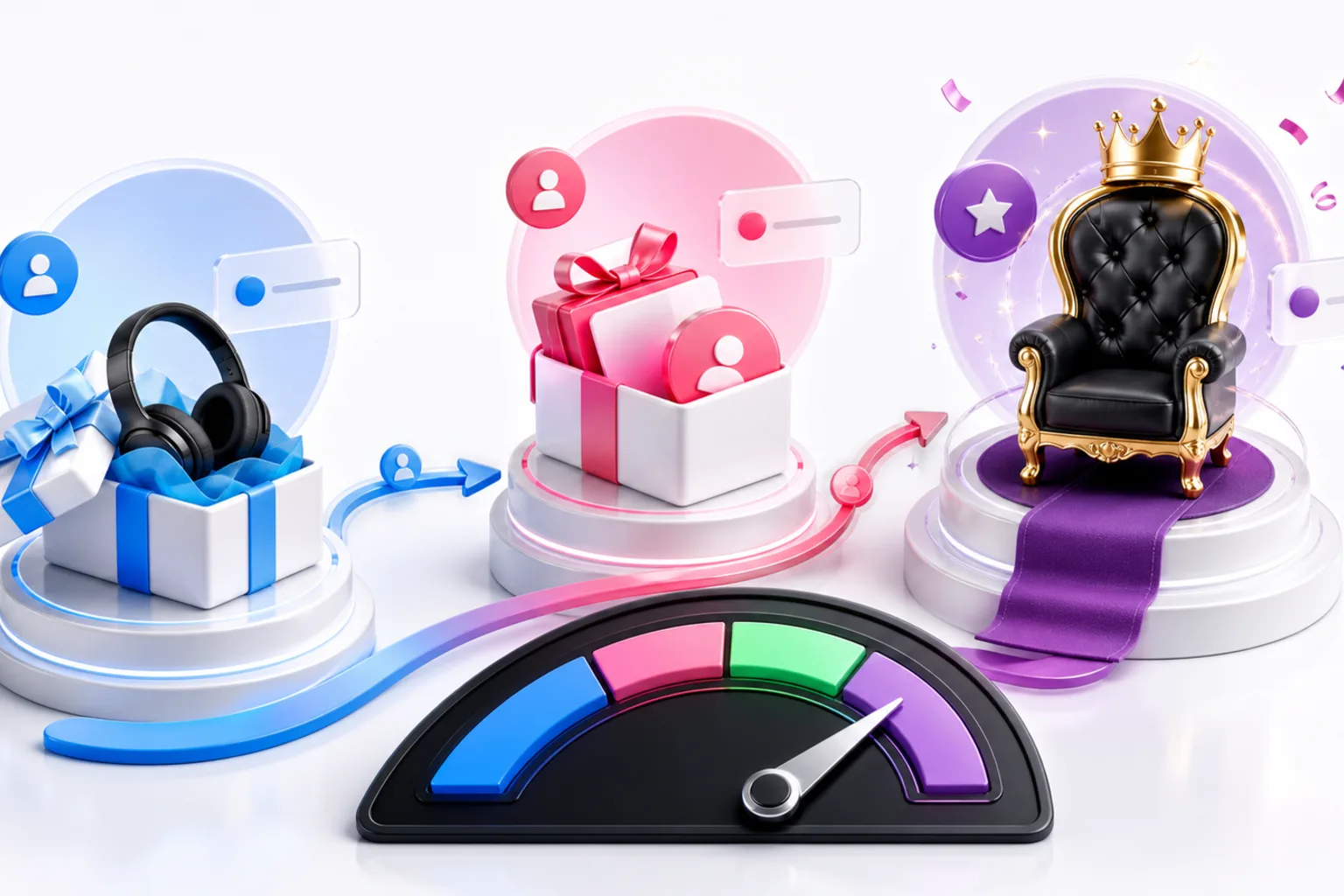
For leaderboard giveaways and reward levels, you need a prize ladder.
The grand prize gets attention. The smaller rewards keep people moving.
A simple structure might look like this:
- Enter: chance to win the grand prize.
- Refer 1 friend: unlock a bonus resource or discount.
- Refer 3 friends: get a product credit or exclusive item.
- Top 10: get VIP access, a premium bundle, or a live session.
The best ladders make every step feel connected to the product.
Prize value: how much is enough?
The honest answer: enough to make your ideal buyer pause.
Not enough to bankrupt the campaign. Not so much that the prize becomes the only thing anyone remembers.
Use these rules of thumb:
- Low-ticket ecommerce: give away a bundle, not a single cheap item.
- High-ticket ecommerce: give away the flagship product, a starter kit, or a meaningful store credit.
- SaaS: give away annual access, implementation help, templates, audits, or a founder package.
- Local businesses: give away an experience, package, or membership that gets the winner into your location.
- Creators/newsletters: give away access, coaching, community, tools, or a bundle your audience already wants.
Prize value is not just dollars. It is perceived relevance.
A $250 prize that perfectly matches the audience can beat a $1,000 generic prize if your goal is qualified leads.
Add one qualifying question
You do not need a 14-field form. Please do not build one.
But one smart question can make the entire campaign more useful.
Ask something that helps you segment follow-up:
- “What are you launching?”
- “What is your biggest challenge right now?”
- “Which product category are you most interested in?”
- “When are you planning to buy?”
- “What best describes you?”
Keep it simple. Use radio buttons or a dropdown. Then send different follow-up emails based on the answer.
This turns your giveaway from “email capture” into a useful lead capture funnel.
Do not skip the boring legal stuff
Prize strategy is not just marketing. It affects your rules.
If you run a sweepstakes, contest, or giveaway, make sure the prize value, eligibility, winner selection, entry requirements, deadlines, and sponsor information are clear. The FTC’s endorsement guidance also matters if influencers, creators, employees, or entrants are posting about the campaign in exchange for entries or rewards.
Start with our contest and giveaway laws by state, USA sweepstakes laws guide, and contest law best practices. Then get legal review for campaigns with large prizes, regulated products, minors, alcohol, travel, or multi-country eligibility.
A prize that creates legal headaches is not a good prize.
The KickoffLabs prize strategy checklist
Before you launch, answer these:
- Is the prize clearly valuable to our ideal customer?
- Would a random freebie hunter want it just as badly?
- Does the prize connect naturally to our product or offer?
- Can we explain the campaign in one sentence?
- Can entrants share it without sounding spammy?
- Do referral rewards encourage quality, not just volume?
- Do we have one segmentation question for follow-up?
- Are prize value, eligibility, deadlines, and rules clear?
- Do we have a plan for non-winners after the campaign?
- Can we measure whether entrants became customers, subscribers, demos, or active users?
If you cannot answer those questions, do not launch yet.
A simple setup plan
Here is the practical version.
Pick one buyer segment. Choose one prize that helps that person get closer to the outcome your product promises. Build a page that explains the prize, rules, and reason to enter. Add a referral loop. Ask one qualifying question. Send follow-up emails before and after the campaign.
That is the whole game.
KickoffLabs can handle the landing page, referral tracking, fraud controls, reward levels, email integrations, and winner selection pieces. You still need to choose a prize that makes the system worth running.
Do not ask, “What prize will get the most entries?”
Ask, “What prize will make the right person raise their hand?”
That question will save you from a very busy, very useless giveaway.