Contents
- Start with the Behavior, Not the Brand You Want to Copy
- 1. Newsletter Referral Program: Reward Readers for Bringing More Readers
- 2. Milestone Waitlist: Turn Pre-Launch Interest into Momentum
- 3. Double-Sided Refer-a-Friend: Give Both People a Reason to Say Yes
- 4. Bonus-Entry Giveaway: Make Sharing Increase the Odds
- 5. VIP Ambassador Campaign: Reward Status, Not Just Stuff
- 6. Product-Led and B2B Referrals: Reward the Next Useful Action
- The Referral Program Checklist Worth Copying
- Which Example Should You Use?
- Build the Simple Version First
- Frequently Asked Questions
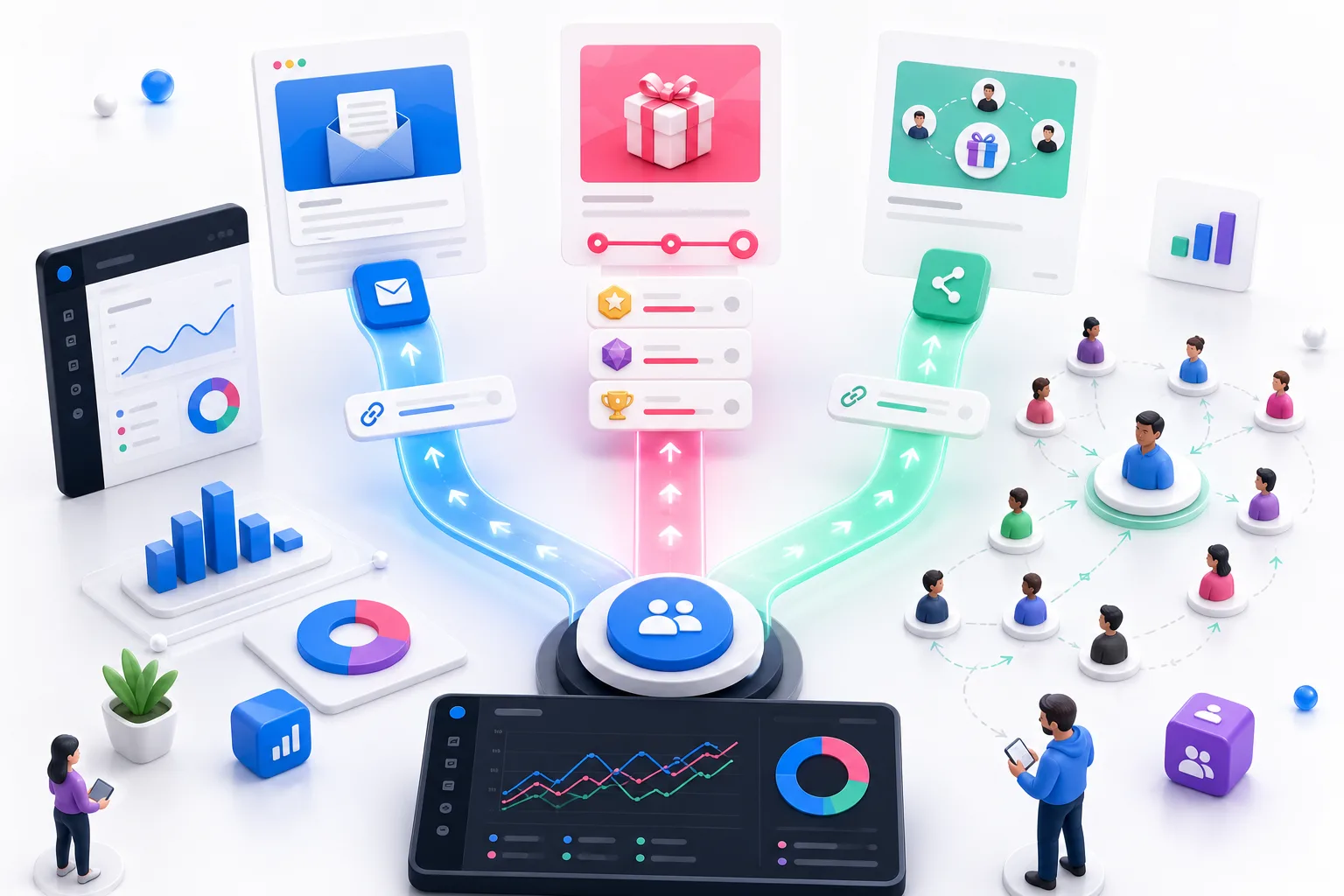
Most referral programs fail because they ask too much and explain too little.
The customer is supposed to understand the reward, trust the tracking, write the message, convince a friend, and remember to come back later. That is a lot of homework.
The best referral program examples remove that friction.
They make the offer obvious. They give every person a unique link or code. They show progress. They follow up automatically. And they do it without making the customer feel like a commission-only salesperson.
Quick answer: The strongest referral program examples use a simple reward, a clear friend benefit, a unique tracking link or code, visible progress, and automatic follow-up. Newsletter referral programs work best with low-cost rewards and in-email referral blocks. Milestone referral programs work best for launches and waitlists. Double-sided refer-a-friend programs work best when both the advocate and the friend get immediate value.
This is not a museum tour of famous growth hacks.
It is a practical swipe file. Pick the example that matches your goal, then build the smallest version you can launch this week.
Start with the Behavior, Not the Brand You Want to Copy
Do not start with Dropbox, Harry’s, or Morning Brew.
Start with the action you want more of.
Do you want more newsletter subscribers? More waitlist signups? More purchases? More giveaway entries? More demo requests? More people inviting coworkers into a team account?
That answer determines the referral model. A newsletter needs a low-cost subscriber reward. A pre-launch campaign needs a milestone ladder. An ecommerce store needs a double-sided offer. A giveaway needs bonus entries.
The trap is copying the surface without copying the economics underneath it. Dropbox can give storage because storage is the product. Morning Brew could give audience-fit rewards because the newsletter itself was free and monetized through scale. Harry’s used product rewards because the point was to build launch demand for razors.
Your best referral program is the one where the reward, the action, and your business model line up.
Once you know the mechanic, compare software against that job. Our source-dated Viral Loops alternatives guide sorts seven platforms by launch, waitlist, in-product, ecommerce, promotion, and enterprise fit.
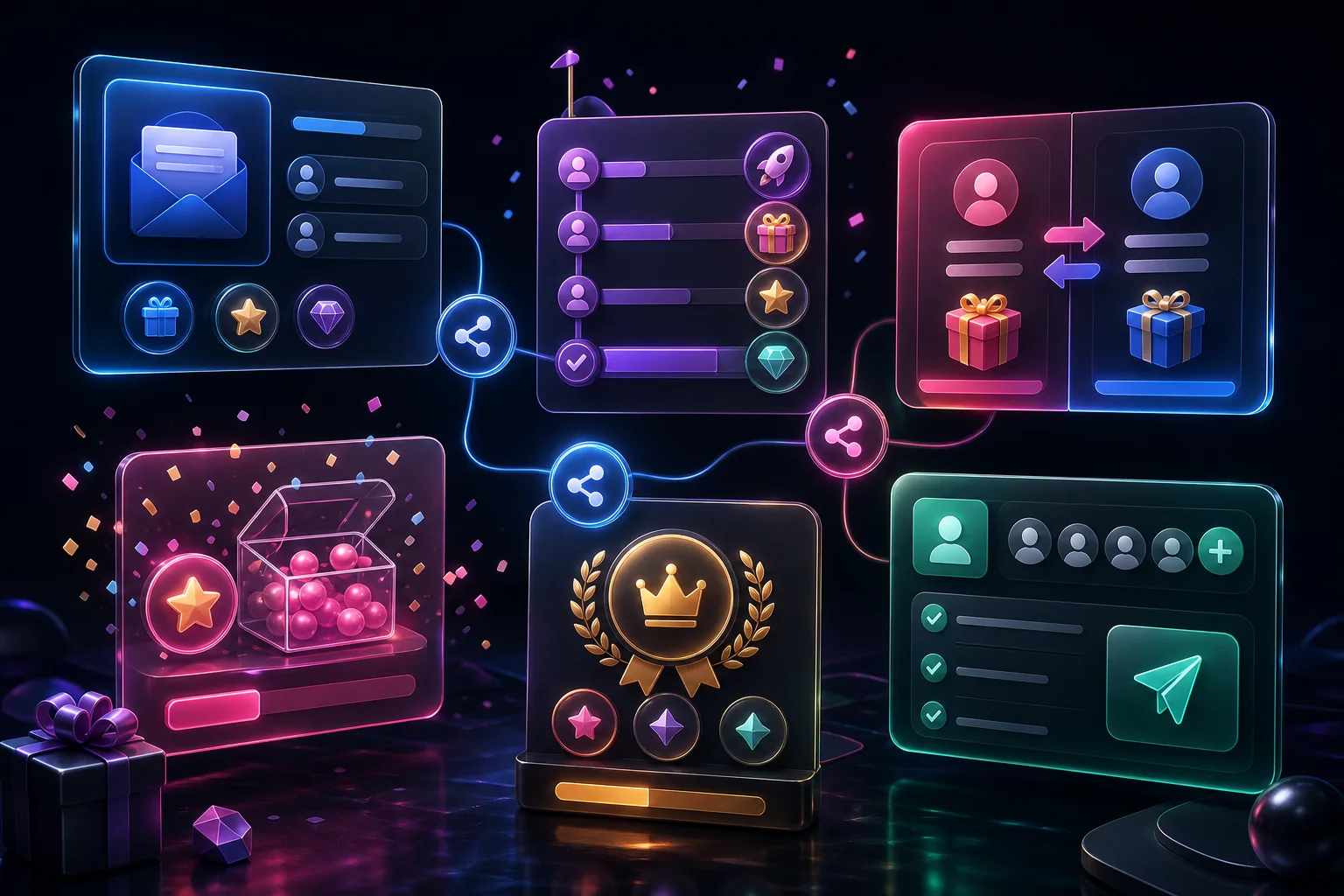
1. Newsletter Referral Program: Reward Readers for Bringing More Readers
A newsletter referral program is the cleanest example for media, creators, SaaS education lists, communities, and brands building an owned audience.
The mechanic is simple: every subscriber gets a unique referral link, you promote that link inside the newsletter, and subscribers unlock rewards when friends join through it.
This works because the referral moment lives inside the product experience. The reader is already in the newsletter. If the issue is useful, sharing it feels natural.
Morning Brew is the famous version. GrowSurf’s breakdown cites Morning Brew’s referral program as a major growth engine and says it accounted for about 30% of subscribers in the referenced period. MailerLite’s newsletter referral guide also points to Morning Brew as an example of a referral program driving around a million subscribers.
The lesson is not “copy Morning Brew’s mug.”
The lesson is: put the referral ask where attention already exists.
For most newsletters, the referral block should appear in three places:
- Near the top occasionally, when you are actively pushing growth.
- Near the bottom consistently, after the reader gets value.
- In a dedicated post-signup welcome email, when the subscriber is most excited.
Good newsletter rewards are cheap to fulfill and valuable to the audience. Think private templates, bonus issues, small community access, premium guides, office hours, merch after higher tiers, or partner perks.
Bad newsletter rewards are expensive, generic, and disconnected from why someone subscribed.
If you write for founders, a private launch checklist beats a random water bottle. If you write for ecommerce operators, a swipe file of winning campaign emails beats a tote bag nobody asked for.
Steal this version:
- 1 referral: unlock a private checklist or template.
- 3 referrals: get a premium guide or mini-course.
- 10 referrals: get invited to a private Q&A.
- 25 referrals: earn merch or a sponsor perk.
- 50+ referrals: get VIP recognition, advisory access, or a bigger experiential reward.
Use KickoffLabs for this when the referral program needs a landing page, unique referral links, autoresponders, reward tiers, and reporting that shows which subscribers are actually spreading the word.
2. Milestone Waitlist: Turn Pre-Launch Interest into Momentum
A milestone referral program is built for launches.
People join a waitlist. Then they get a personal share link. The more friends they bring in, the more they unlock: early access, higher waitlist position, bonus entries, product credits, founder calls, private demos, or launch-day perks.
Harry’s is the classic example. Referral Rock’s case study says Harry’s collected 100,000+ email signups in one week before launch, with more than three-quarters of signups coming from referrals. The campaign used a simple two-page flow: signup first, then referral page with a progress bar and tiered rewards.
That flow matters.
Most launch pages try to do everything on one screen. They explain the product, ask for an email, explain the referral program, show rewards, add social buttons, and then wonder why people freeze.
The better flow is:
- Capture the email.
- Confirm they are on the list.
- Give them one simple next action: share your link to move up or unlock rewards.
- Follow up by email with their link and progress.
Milestone rewards work because progress is visible. People can see the next tier. Five referrals feels possible. Fifty referrals feels heroic. Both can exist in the same campaign if the first win is close enough.
Steal this version:
- Join the waitlist.
- Refer 1 friend: move up the list.
- Refer 3 friends: unlock early access.
- Refer 5 friends: get a launch-day bonus.
- Refer 10 friends: get VIP founder/demo access.
- Refer 25+ friends: get the premium reward.
Do not make the first tier too far away.
A first reward at 25 referrals tells normal people to quit before they start. Put the first win at 1, 2, or 3 referrals. Let your most motivated fans chase the higher tiers.
This is where KickoffLabs waitlist campaigns shine. You can capture demand, generate unique links, show rank or reward progress, and send automated reminders without duct-taping five tools together.
3. Double-Sided Refer-a-Friend: Give Both People a Reason to Say Yes
A double-sided referral program rewards the advocate and the friend.
That is why it works.
The friend does not feel like a lead being harvested. They get something too. A discount, credit, free storage, bonus product, free month, trial upgrade, or early access.
Dropbox’s current referral page keeps the idea painfully simple: refer friends and both people get extra storage. Dropbox Basic users can earn 500 MB per referral up to 16 GB, while Plus users can earn 1 GB per referral up to 32 GB.
That is a great fit because the reward is the product.
The friend gets more storage. The advocate gets more storage. The reward reinforces the reason people use Dropbox in the first place.
For ecommerce, the classic version is “Give $10, get $10.” For SaaS, it might be “Give your friend one free month, get one free month after they become a customer.” For subscriptions, it might be account credit. For communities, it might be premium access for both people.
The key is that the friend benefit needs to be obvious.
If the referral page only says, “Invite friends and earn rewards,” it sounds selfish. If it says, “Give your friend 20% off and get $20 when they order,” the advocate has a reason to share without feeling weird.
Steal this version:
- Friend gets: first-order discount, bonus credit, free trial upgrade, early access, or exclusive bundle.
- Advocate gets: account credit, store credit, free month, bonus product, or points after the friend converts.
- Rule: reward only after the friend completes the action that matters.
That is why a lot of programs leak money.
Do not pay meaningful rewards for fake emails, low-quality signups, or self-referrals. Track the event that matters: verified email, qualified signup, purchase, subscription, demo attended, or waitlist invite accepted.
KickoffLabs can help you track referrals to the right person and trigger rewards based on the campaign action instead of a messy spreadsheet.
4. Bonus-Entry Giveaway: Make Sharing Increase the Odds
Giveaway referral programs work because the reward is already obvious.
People want to win. Sharing gives them more chances.
The clean version is: enter once, get bonus entries for every friend who enters through your link.
This is not the same as asking people to spam their friends. The best giveaway referral campaigns still need a prize that matches the audience, simple rules, and fraud controls. If the prize is an iPad for an audience of everyone on earth, you will get junk leads. If the prize is a product bundle, launch kit, event pass, or niche tool your ideal customer wants, referrals get better.
A bonus-entry giveaway is especially useful when you want:
- More email subscribers before a launch.
- More leads for a product category.
- More social reach around a campaign.
- More people inviting similar friends into the funnel.
Steal this version:
- Entry: join with email.
- Referral reward: +5 bonus entries for each verified friend who enters.
- Share prompt: “Invite friends who would actually want this prize.”
- Follow-up: send progress emails showing entries earned and days left.
- Fraud check: verify emails, block obvious duplicates, and review suspicious spikes before picking a winner.
The mistake is hiding the referral link after signup.
Put it on the thank-you page, confirmation email, and reminder emails. Give people prewritten share copy they can edit.
KickoffLabs was built for this kind of sweepstakes campaign: landing page, entry form, referral tracking, bonus actions, fraud checks, winner selection, and email follow-up in one place.
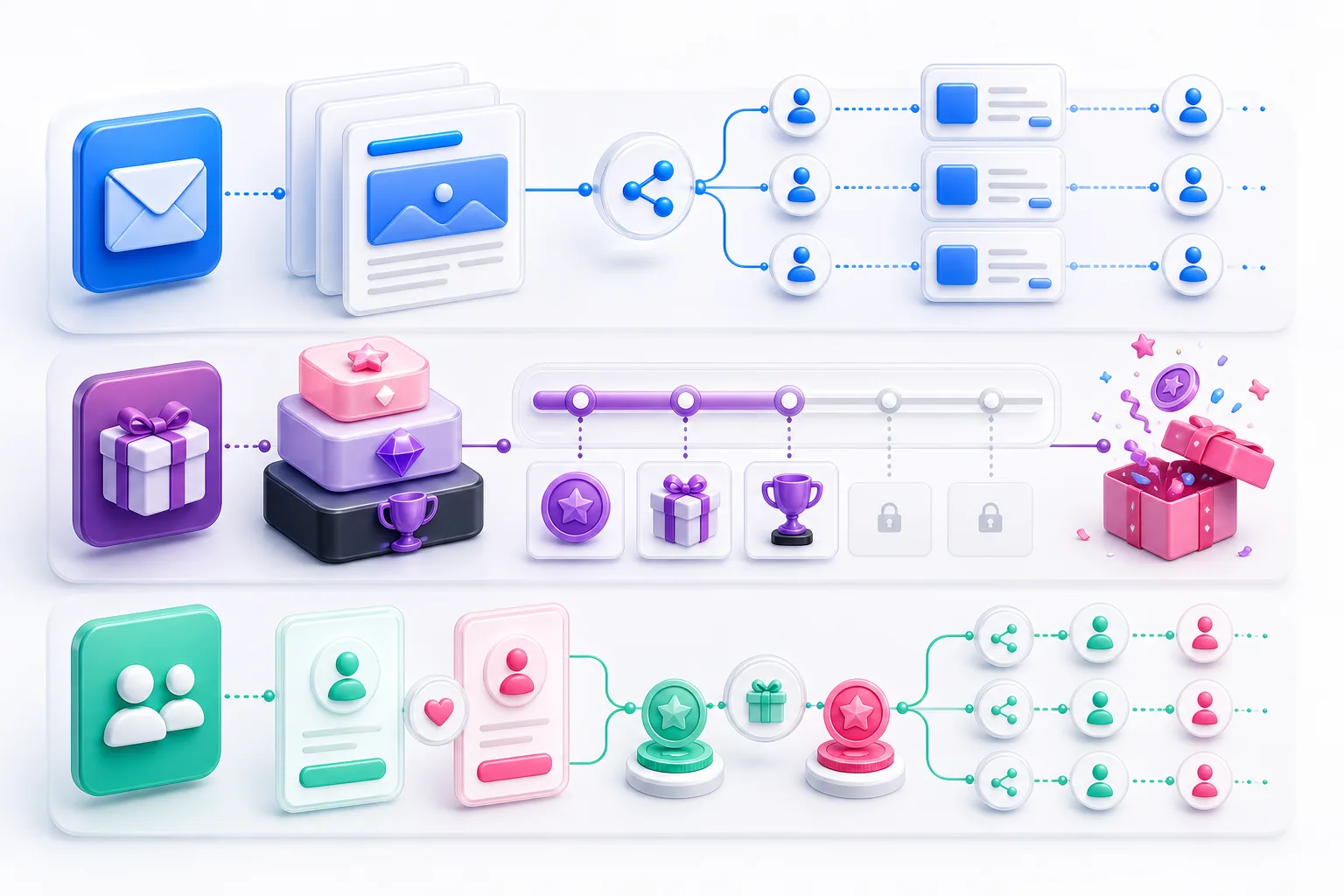
5. VIP Ambassador Campaign: Reward Status, Not Just Stuff
Some audiences care more about status than coupons.
That is where VIP or ambassador referral programs fit. Instead of only giving a discount, you give people access, recognition, influence, and a reason to feel like insiders.
This works well for communities, creator brands, product launches, events, SaaS beta programs, and premium consumer products.
The offer might sound like:
- Refer 3 people to unlock the private community.
- Refer 5 people to become a founding member.
- Refer 10 people to get early product access.
- Refer 25 people to join the ambassador group.
- Refer 50 people to get featured or invited to a private session.
Status rewards are powerful because they do not always require a high fulfillment cost. But they must be real.
Do not promise VIP access if the VIP experience is just another email list. Give them something meaningful: private content, early product decisions, beta invites, founder Q&A, office hours, early purchasing windows, or public recognition.
KickoffLabs customer stories show why this matters. The KickoffLabs showcase includes launches, waitlists, giveaways, and referral campaigns where the best results came from matching the campaign mechanic to the audience. Haugen Racing generated 14,500 leads with a giveaway. Pronti.AI grew from 3,000 to 80,000 users with a waitlist. Swingly Toys used a waitlist campaign before a Kickstarter launch.
The common thread is not the same prize.
The common thread is a clear reason for the right people to join and share.
6. Product-Led and B2B Referrals: Reward the Next Useful Action
Some products already want users to invite other people.
Team tools, communities, design review products, event platforms, and B2B SaaS apps all create natural invite moments. The referral prompt should appear when the user has just felt value: after creating a project, publishing a page, inviting one teammate, completing onboarding, or hitting a usage limit.
The reward should make continued usage easier.
Think extra credits, more seats, premium templates, account credit, a free implementation session, or a better trial. Random swag is usually weaker than product value.
For B2B referrals, reward the account when that makes more sense than rewarding one employee. A customer who refers another team may prefer account credit, premium support, training, or co-marketing over a personal gift card that creates procurement drama.
Steal this version:
- Trigger: user completes the first meaningful action.
- Ask: “Know another team planning a launch? Invite them.”
- Friend benefit: free strategy session, template pack, or extended trial.
- Customer benefit: account credit or premium service add-on after a qualified signup.
- Follow-up: remind users when they are close to the next reward.
If inviting another person makes your product better, your referral program should capture and reward that behavior. Do not interrupt it with a generic popup. Make it part of the flow.
The Referral Program Checklist Worth Copying
Every example above looks different on the surface.
Underneath, the working programs share the same bones.
Use this checklist before you launch:
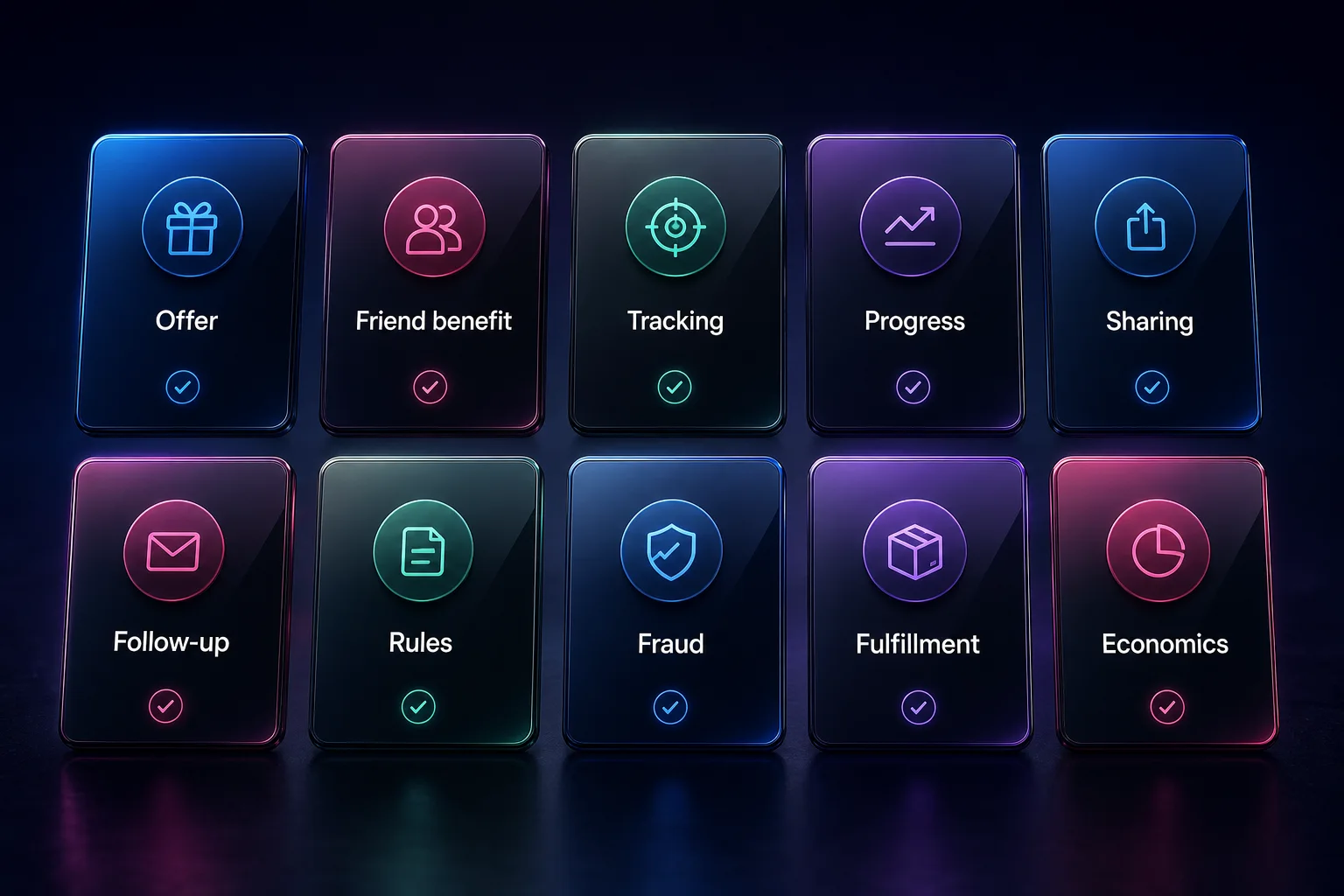
- One sentence offer: Can a customer explain the program in five seconds?
- Friend benefit: Does the invited person get a reason to say yes?
- Unique tracking: Does every participant have a unique link or code?
- Visible progress: Can people see referrals, entries, rank, or reward status?
- Fast sharing: Are email, copy-link, and social share options ready?
- Automatic follow-up: Do reminder emails include the referral link?
- Reward rules: Do you define what counts as a valid referral?
- Fraud review: Can you catch duplicates, self-referrals, and suspicious patterns?
- Fulfillment plan: Do you know how rewards will be delivered?
- Campaign economics: Does the reward cost make sense?
If any of those are fuzzy, fix them before you drive traffic.
Which Example Should You Use?
Here is the fast version.
Use a newsletter referral program if your list gets value every week.
Use a milestone waitlist if you are launching something and want people to compete for early access, better rank, or launch rewards.
Use a double-sided refer-a-friend program if purchases, subscriptions, or product usage create clear value for both people.
Use a bonus-entry giveaway if the prize is audience-fit and sharing should increase the participant’s odds.
Use a VIP ambassador campaign if status, access, and insider identity motivate your best fans.
Use a product-led referral program if inviting another person makes the product better.
Do not copy the famous example. Copy the mechanic that matches.
Build the Simple Version First
Your first referral program does not need twelve tiers, seven reward types, and a spreadsheet.
Start with one page, one offer, one share link, one follow-up email, and one reward rule.
Then make it better after real people use it.
KickoffLabs can help you launch that simple version without turning referral tracking into a part-time job. You can build referral reward campaigns, waitlists, newsletter referral campaigns, and giveaways with landing pages, unique links, autoresponders, reward tracking, fraud checks, and reporting built in.
The best referral program examples are not magic.
They are clear systems that make sharing easy.
That is the part worth stealing.
Frequently Asked Questions
What is a referral program?
A referral program rewards existing customers or subscribers for bringing in new ones — with perks, discounts, entries, or status — and tracks every new signup back to the person who referred them.
What makes a referral program actually drive signups?
The best referral programs give a clear reason to share, make the referred friend feel welcome, show visible progress toward a reward, and attribute every referral to the right person.
Which referral mechanic should I use?
Match the mechanic to your model: newsletter referrals and milestone waitlists for audience growth, double-sided invites for SaaS, and bonus-entry giveaways for ecommerce or community launches.