Contents
- Quick comparison: contest vs. sweepstakes vs. raffle vs. reward levels
- What is a sweepstakes?
- What is a contest?
- What is a raffle?
- What is a giveaway?
- What are reward-level giveaways?
- Which campaign type should you run?
- The legal issue: prize, chance, and consideration
- How KickoffLabs maps to each format
- Simple setup checklist
- Ready to choose your giveaway format?
Most people use “giveaway,” “sweepstakes,” “contest,” and “raffle” like they mean the same thing.
They do not.
Here’s the short version: a sweepstakes is a random drawing with no purchase required. A contest is based on skill. A raffle usually requires someone to buy a ticket and is heavily restricted. A giveaway is the umbrella term people use casually. A reward-level campaign gives people guaranteed prizes when they hit milestones.
Pick the wrong format and you can create more than a marketing problem. You can create a legal one.
This guide is not legal advice. It is the practical map you should read before you write the rules, choose a template, or promise a prize.
Quick comparison: contest vs. sweepstakes vs. raffle vs. reward levels
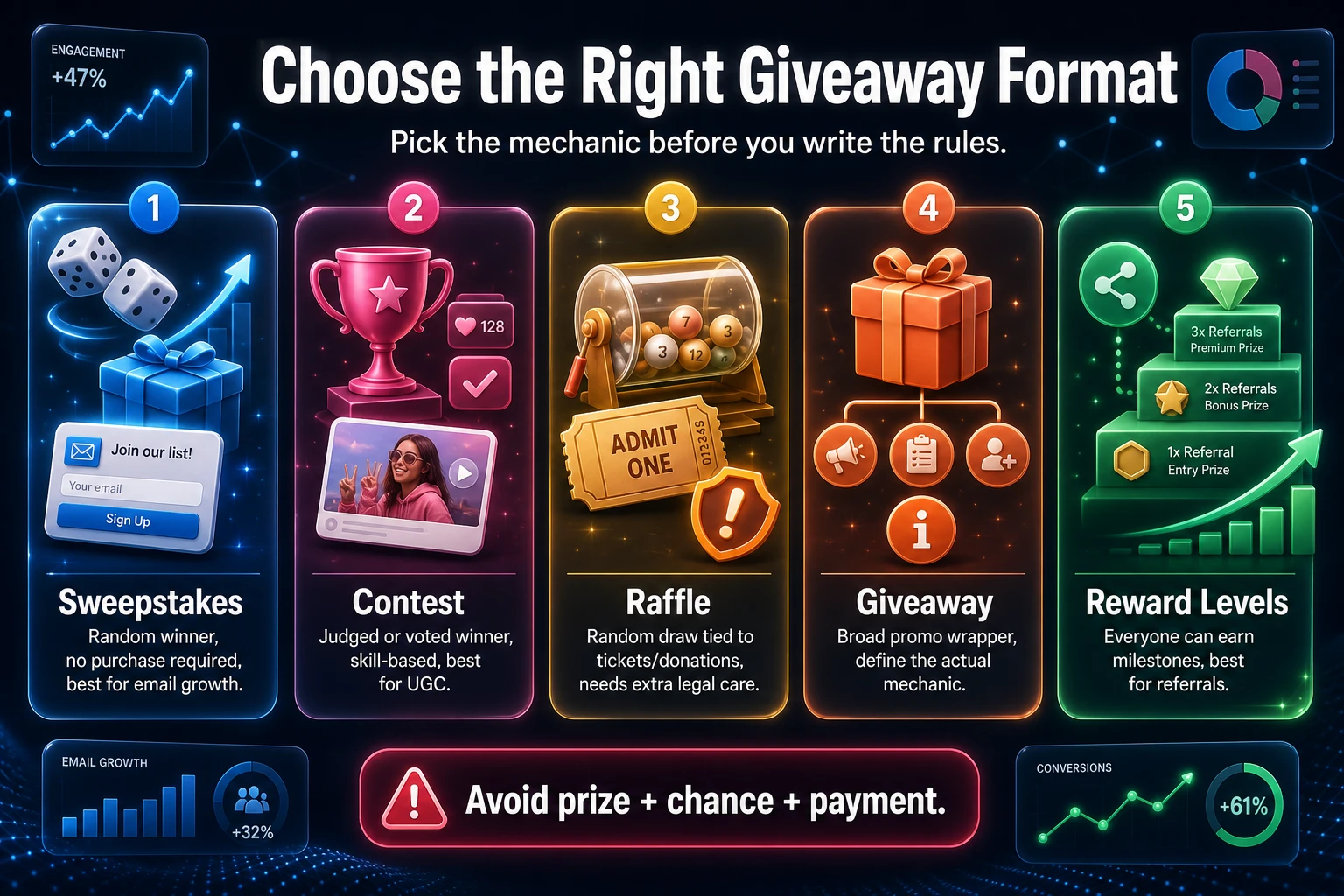
If you only remember one thing, remember this: prize + chance + payment is the lottery problem. Legal sweepstakes remove payment. Contests remove chance. Reward levels remove randomness.
What is a sweepstakes?
A sweepstakes is a promotion where winners are chosen at random.
The big rule: people need a free way to enter. If you require a purchase for a chance to win, you are moving toward lottery territory. That is not where most brands want to be.
Sweepstakes work because the entry barrier is low. Someone enters an email, maybe completes a bonus action, and gets a chance to win.
That makes sweepstakes great for:
- Growing an email list.
- Promoting a product launch.
- Driving social follows.
- Building a prelaunch waitlist.
- Getting more people into a referral loop.
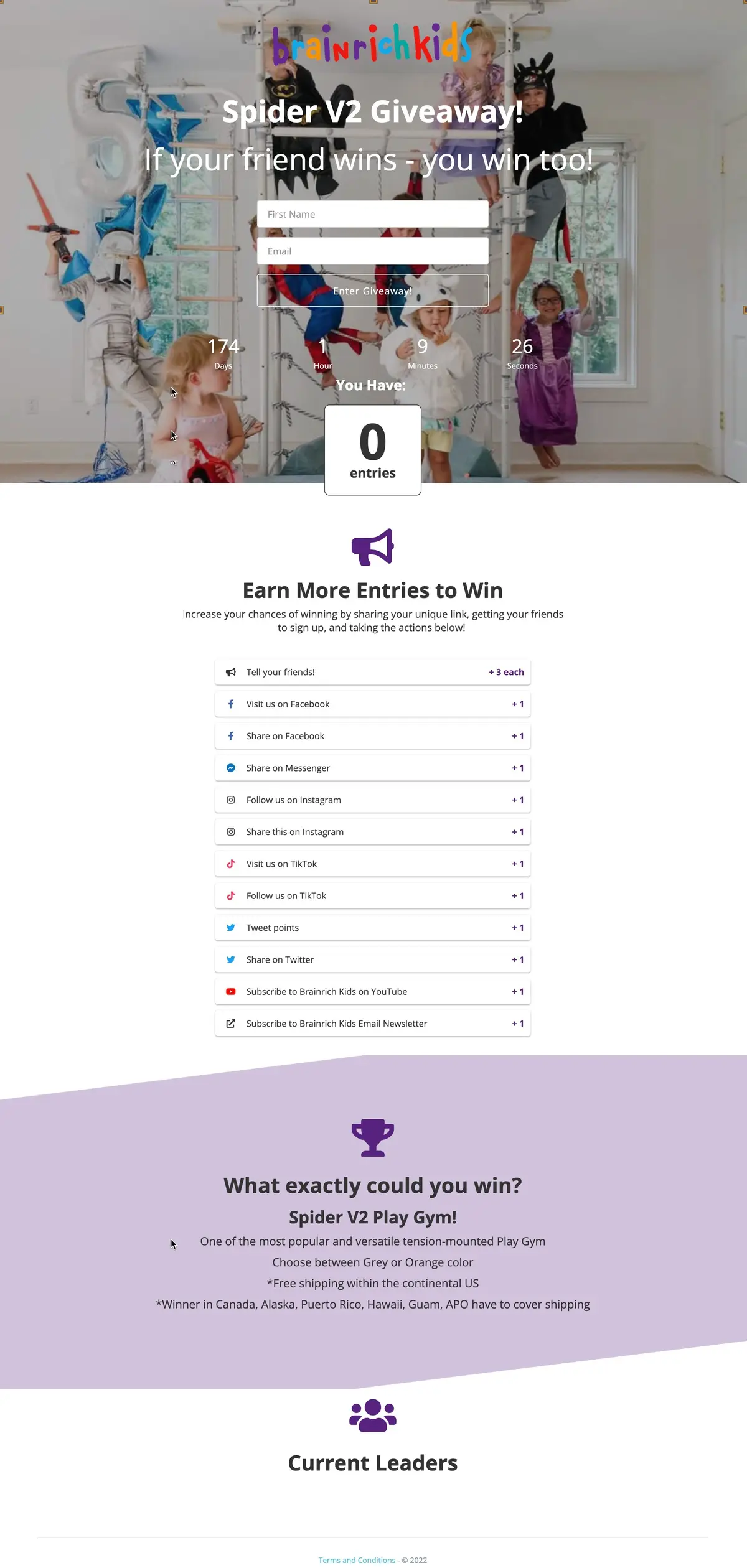
Build a bonus-entry sweepstakes with KickoffLabs →
What is a contest?
A contest is based on skill, merit, or judgment.
Instead of choosing a winner at random, you judge entries against clear criteria. Common examples include best photo, best video, best recipe, best design, or best story.
Contests usually get fewer entries than sweepstakes because they require effort. That is not always bad. A person willing to create something for your brand is showing stronger intent than someone who clicked once for a random prize.
Contests are best for:
- User-generated content.
- Creator or customer communities.
- Product storytelling.
- Photo, video, or design submissions.
- Campaigns where quality matters more than entry volume.
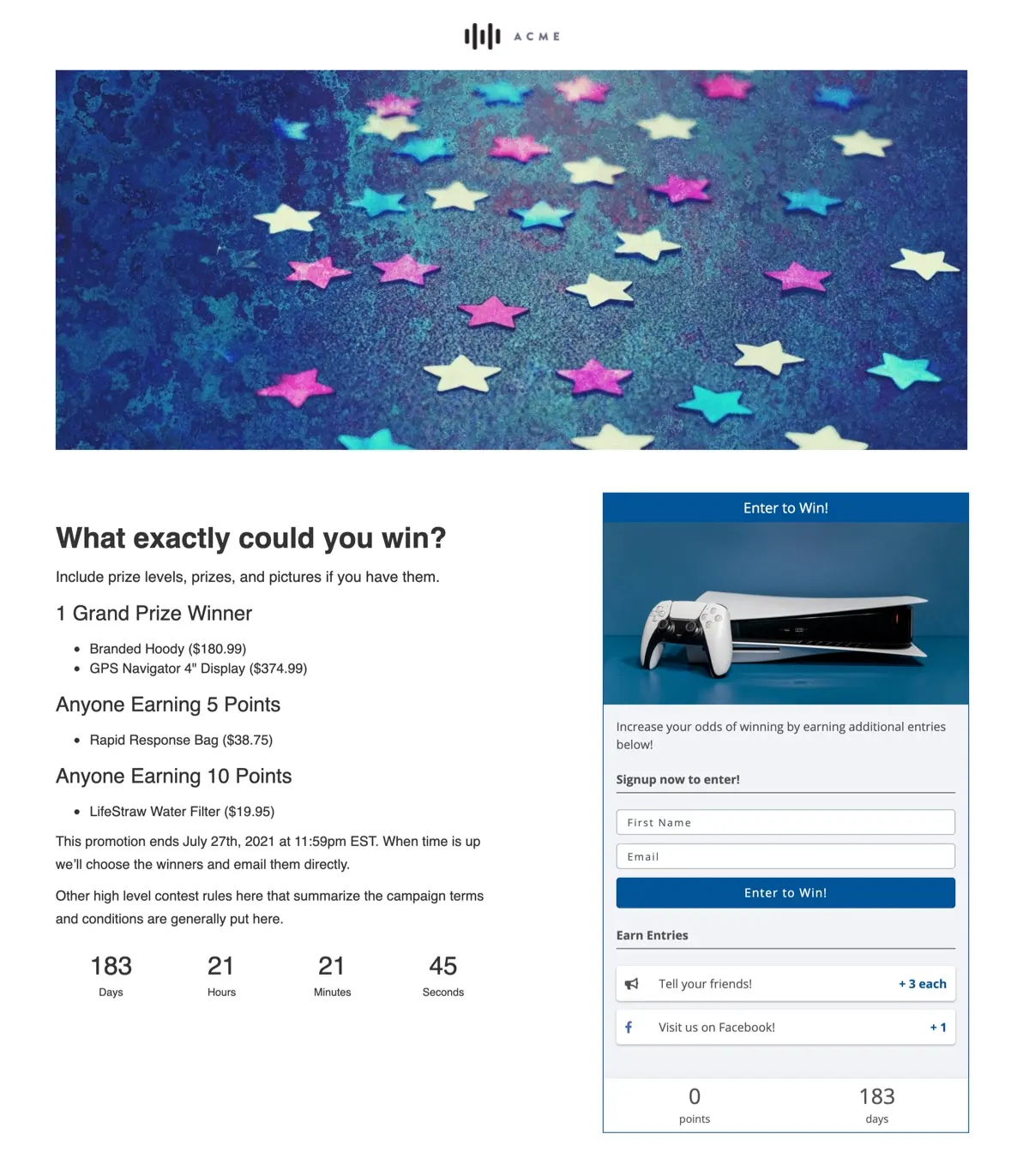
Start from a contest-style landing page template →
The key is clarity. Tell people how entries will be judged, who judges them, when judging happens, and what criteria matter.
What is a raffle?
A raffle is typically a random drawing where people buy tickets for a chance to win.
That purchase requirement is why raffles are different. In many places, raffles are limited to registered nonprofits, charities, schools, or community organizations. For-profit brands should be careful before using the word “raffle” or selling entries.
Raffles can work for nonprofit fundraising. They are usually the wrong default for a brand trying to grow a list or launch a product.
If you want the excitement of a raffle without the legal complexity, consider a no-purchase sweepstakes or a reward-level campaign instead.
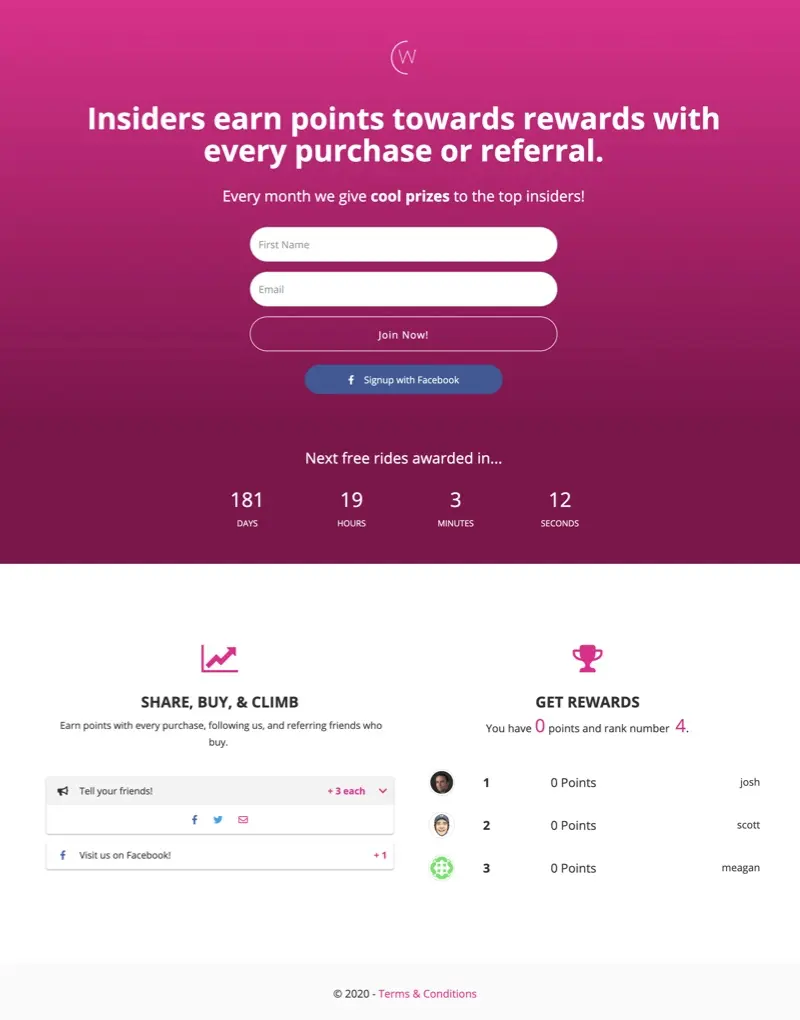
See leaderboard-style campaigns →
What is a giveaway?
“Giveaway” is the umbrella term.
People use it to describe almost any promotion where a prize is awarded. That is fine in a headline or social post. It is not precise enough for official rules.
Your public campaign can say “giveaway.” Your rules should define the actual format:
- Random winner? It is probably a sweepstakes.
- Judged winner? It is a contest.
- Paid tickets? It may be a raffle.
- Guaranteed prize after actions? It is a reward-level campaign.
That distinction keeps your marketing simple and your operations cleaner.
What are reward-level giveaways?
Reward levels are where marketers should pay more attention.
A reward-level campaign gives people guaranteed prizes when they hit a point or referral milestone. There is no random drawing for the reward. If someone earns enough points, they get the thing.
For example:
- Refer 3 friends and unlock a sticker pack.
- Refer 10 friends and get early access.
- Refer 25 friends and get a limited-edition product.
- Complete 5 actions and unlock a bonus download.
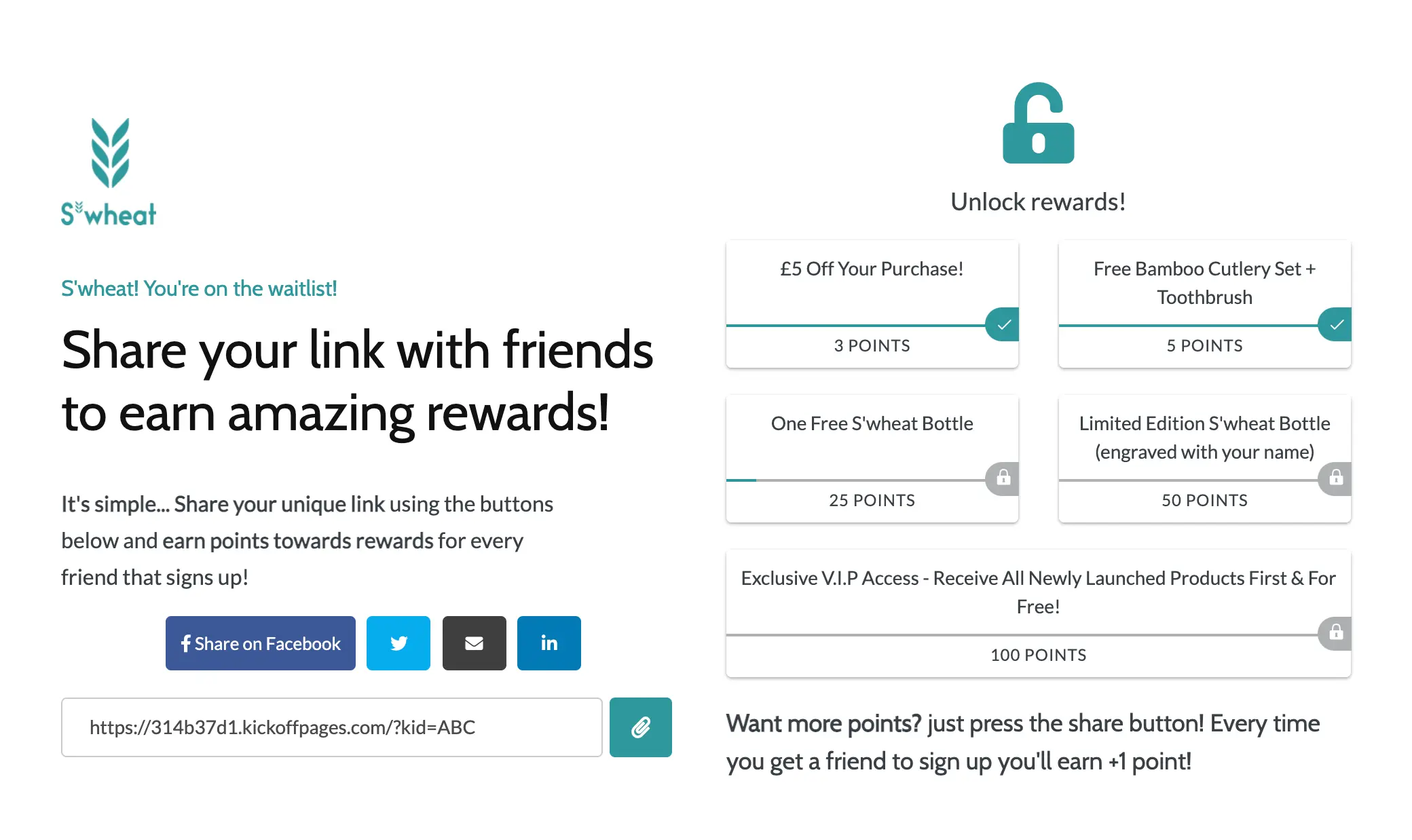
Build a reward-level giveaway →
Reward levels are great for prelaunch waitlists, newsletter referrals, community launches, and campaigns where you want people to keep coming back.
Which campaign type should you run?
Start with the job, not the label.
If you want the most leads: run a sweepstakes
Use a sweepstakes when volume matters. Keep the form short, offer a relevant prize, and add referral bonus entries so entrants bring friends.
This is the cleanest option for many ecommerce, creator, SaaS, and product-launch campaigns.
If you want content from your audience: run a contest
Use a contest when the entry itself has value.
Ask for customer photos, product stories, before-and-after videos, recipes, designs, or use cases. Judge entries against criteria you publish before launch.
If you are fundraising as a nonprofit: consider a raffle
Raffles can be powerful for nonprofits, but they come with local rules. Check your state, province, or country before selling entries.
For-profit brand? Do not casually call your campaign a raffle just because the word sounds fun.
If you want repeat sharing: use reward levels
Reward levels are built for momentum. People know exactly what they are working toward and why sharing matters.
This is a strong fit for product launches, waitlists, newsletter growth, and community campaigns.
If you are not sure: use a sweepstakes with bonus entries
When in doubt, start with a sweepstakes and add bonus entries for referrals or actions.
It is simple for people to understand, flexible enough for most marketing goals, and easy to connect to KickoffLabs landing pages, Contest Actions, Referral Tracking, and Pick a Winner.
The legal issue: prize, chance, and consideration
Most promotion-law confusion comes down to three words:
- Prize: someone can win something valuable.
- Chance: the winner is selected randomly.
- Consideration: someone pays money, makes a purchase, or gives something of value to enter.
When all three appear together, you may have an illegal lottery unless you are authorized to run one.
That is why sweepstakes remove consideration, contests remove chance, and reward-level campaigns remove the random prize element for guaranteed rewards.
Before you launch, read deeper guidance for your location and format:
- General U.S. Giveaway Laws
- State-by-State Contest Laws
- Contest Law Best Practices
- Running a Legal Giveaway in the UK
- EU Giveaway Laws
- Free Official Rules Template
Then have qualified counsel review anything with high prize value, paid entry mechanics, age restrictions, international eligibility, or regulated industries.
How KickoffLabs maps to each format
KickoffLabs is built for the formats marketers actually use:
- Use Sweepstakes for random-winner lead capture.
- Use Reward Levels for milestone-based referral campaigns.
- Use Leaderboard Giveaways when competition and ranking drive action.
- Use Waitlists when the campaign is tied to a launch.
- Use Contest Actions to award points for follows, shares, video views, and other steps.
- Use Fraud Detection and Pick a Winner when the campaign is ready to close.
You can call the public campaign a giveaway. Behind the scenes, choose the format that matches your goal and risk level.
Simple setup checklist
Before publishing, answer these questions:
- What is the actual format: sweepstakes, contest, raffle, or reward levels?
- How is the winner or reward determined?
- Is a purchase required? If yes, are you legally allowed to do that?
- Who is eligible?
- What are the start and end dates?
- What is the prize value?
- Where are the official rules?
- How will entries, referrals, and bonus actions be tracked?
- How will you prevent duplicate or fake entries?
- What happens after the campaign ends?
If those answers are fuzzy, do not launch yet.
Ready to choose your giveaway format?
The best format is the one that matches your goal.
Want reach? Run a sweepstakes. Want content? Run a contest. Want nonprofit fundraising? Look into raffle rules. Want referral momentum? Use reward levels.
KickoffLabs handles the landing pages, entry tracking, referral links, bonus actions, winner selection, fraud controls, and follow-up routing so you can focus on the offer.