Contents
A giveaway is a simple trade: you offer a prize people actually want, and they give you attention, an email address, a referral, or another meaningful action in return.
That sounds basic. The difference between a forgettable giveaway and a useful one is the system behind it.
A good giveaway has a clear audience, a relevant prize, a landing page, official rules, fraud controls, a fair winner-picking process, and a follow-up plan. Without those pieces, you are just throwing a prize into the internet and hoping the right people show up.
Quick answer: A giveaway is a promotional campaign where people enter for a chance to win a prize. Brands use giveaways to grow an email list, launch a product, collect qualified leads, encourage referrals, and turn one campaign into a repeatable growth loop.
What is a giveaway?
A giveaway is a marketing promotion where participants complete an entry action for a chance to win something valuable.
That entry action might be joining an email list, following a social account, answering a survey, visiting a landing page, referring a friend, uploading content, or completing a bonus action. The prize might be a product bundle, gift card, launch access, VIP experience, event ticket, consultation, or partner package.
The goal is not to attract everyone. The goal is to attract the right people and give them an easy reason to engage.
If you sell coffee, a free coffee subscription beats a generic iPad. If you are launching software, early access plus a founder call may be better than cash. If your prize has nothing to do with your buyer, you will build a list of people who love free stuff and ignore your emails.
That is not growth. That is list clutter.
Giveaway vs. contest vs. sweepstakes
People use these words loosely, but the mechanics matter.
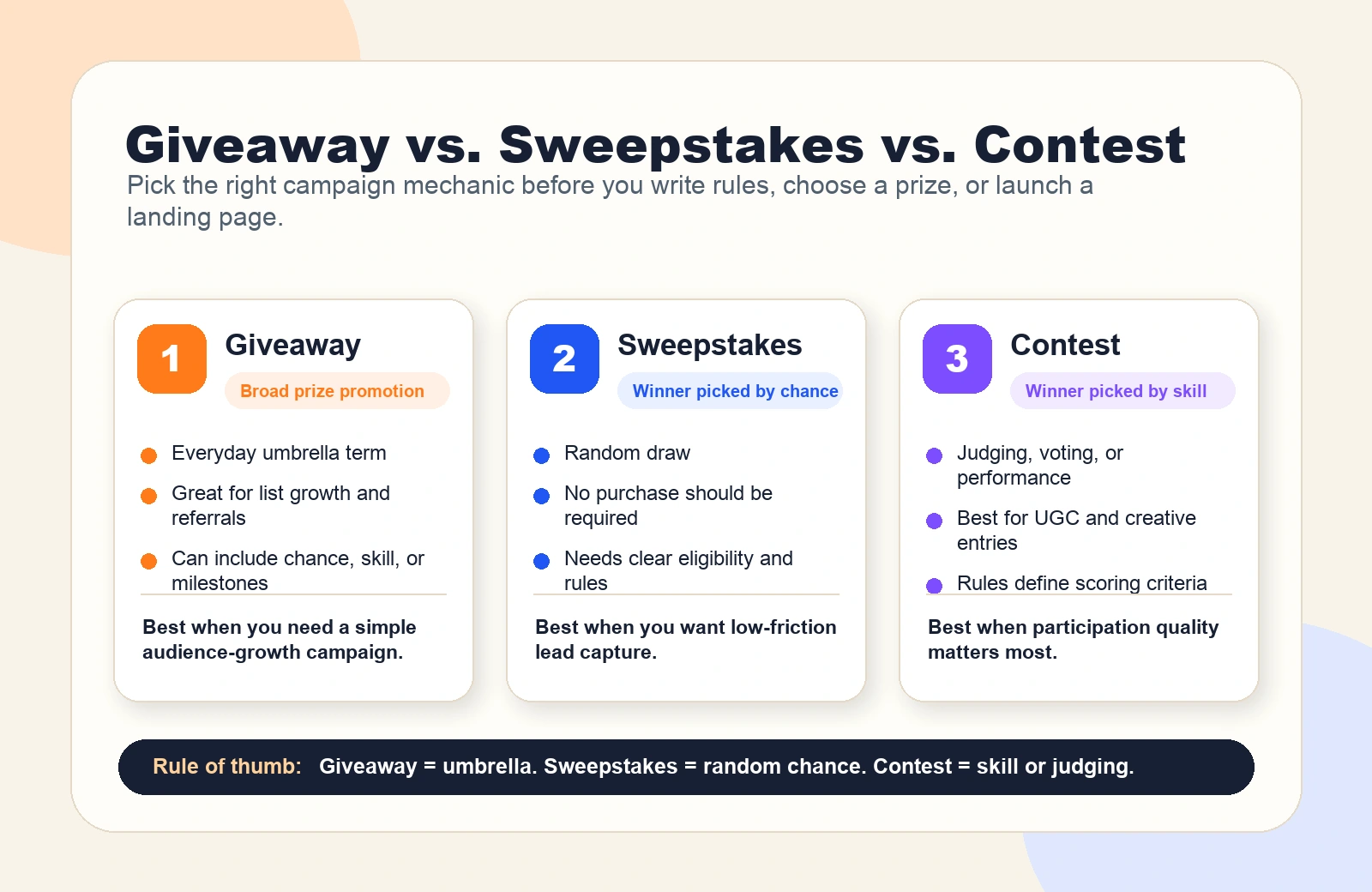
- A giveaway is the broad everyday term for a prize promotion.
- A sweepstakes usually means winners are selected by chance. No purchase should be required.
- A contest usually means winners are selected by skill, judging, votes, or performance.
- A leaderboard giveaway rewards people based on points, referrals, or actions.
- A reward-level campaign gives guaranteed perks when participants reach milestones.
If you want a simple random winner, start with a sweepstakes campaign. If you want people competing for the top spot, use a leaderboard giveaway. If you want everyone to have a reason to share, add reward levels.
Not sure which route fits? The explainer on contests, sweepstakes, rewards, and raffles breaks down the differences.
Why brands run giveaways
Giveaways work because they create a clear moment of action.
Most marketing asks people to care eventually. A giveaway asks them to do one thing now.
Use a giveaway when you want to:
- Grow an email or SMS list before a launch.
- Collect qualified leads for a product, service, event, or community.
- Turn social attention into owned contacts.
- Encourage referrals with unique share links.
- Validate which prize, offer, or audience gets real demand.
- Reactivate an old list with a fresh reason to click.
- Give partners a campaign they can promote together.
The best giveaway campaigns do not stop at the entry. They ask every entrant to share, complete useful actions, and come back after the winner is picked.
That is where KickoffLabs contest actions, referral tracking, and fraud detection matter.
The five parts of a giveaway that actually works
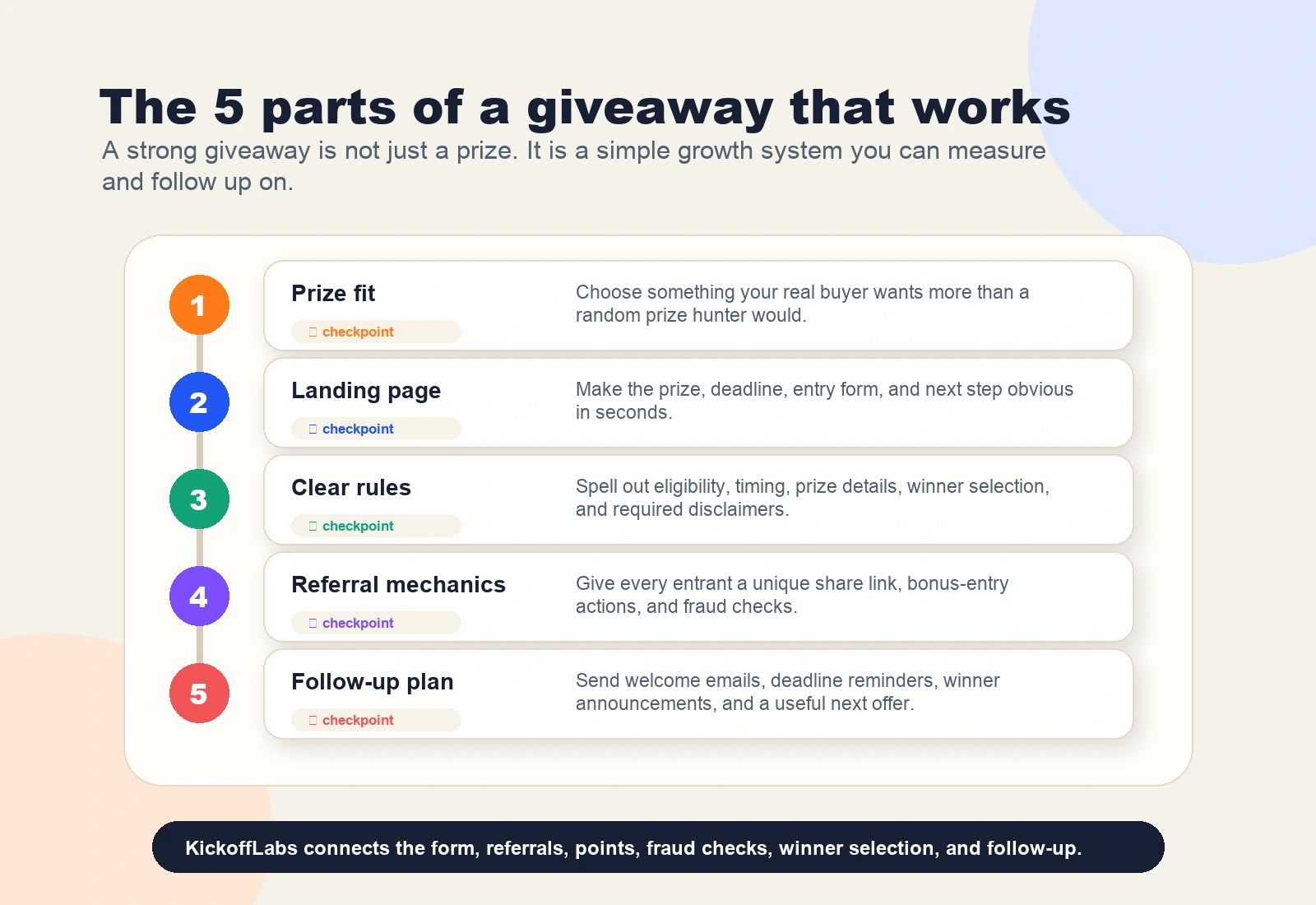
1. A prize your real buyer wants
Prize fit is everything.
A generic prize may get more entries, but it usually gets worse leads. A specific prize gets fewer freeloaders and more people who care about your category.
Good prizes include your own product, a premium version of your service, a starter kit, a partner bundle, a gift card tied to your niche, launch access, or a consultation connected to the problem you solve.
Bad prizes are random electronics, cash, or anything that attracts people with no reason to buy from you later.
If you need more ideas, start with our giveaway prize ideas guide and then filter every idea through one question: would my future customer want this more than a random prize hunter would?
2. A landing page that makes the offer obvious
Your giveaway page should answer four questions fast:
- What can I win?
- Who is this for?
- How do I enter?
- What happens after I enter?
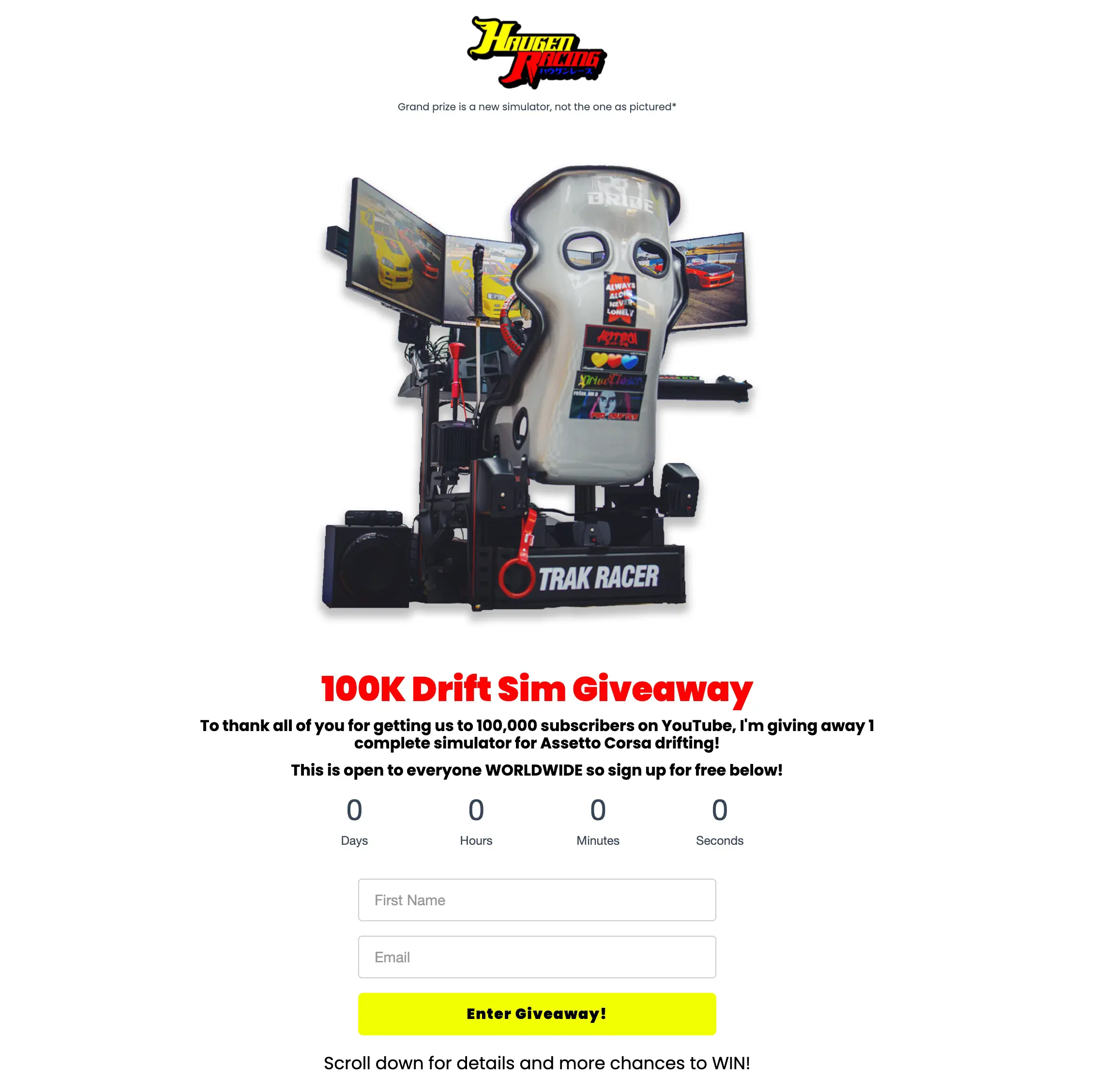
Do not bury the prize under cute copy. Put the prize, deadline, entry form, and basic rules where people can see them.
A dedicated giveaway landing page also gives you cleaner analytics than a social-only post. You can track source, conversion rate, referral performance, and follow-up quality instead of guessing from likes.
Browse giveaway landing page examples or start from KickoffLabs landing page templates.
3. Clear rules and eligibility
Rules are not decoration. They protect you and set expectations for entrants.
At minimum, define eligibility, prize details, start/end dates, how to enter, how winners are picked, how winners are notified, and any platform disclaimers. If your campaign involves chance, no-purchase language and alternate methods of entry may matter.
We are not your lawyer, and this is not legal advice. But we have seen enough campaigns to know this: vague rules create messy winner disputes.
Use the USA giveaway and sweepstakes laws guide and state-by-state giveaway laws guide as planning references, then get legal review for your actual rules.
4. Referral and bonus-entry mechanics
A giveaway should not be a one-and-done form.
After someone enters, give them a unique share link. Reward them for inviting friends, following your accounts, answering a qualifying question, watching a launch video, joining a waitlist, or completing other contest actions.
That turns every entrant into a potential distribution channel.
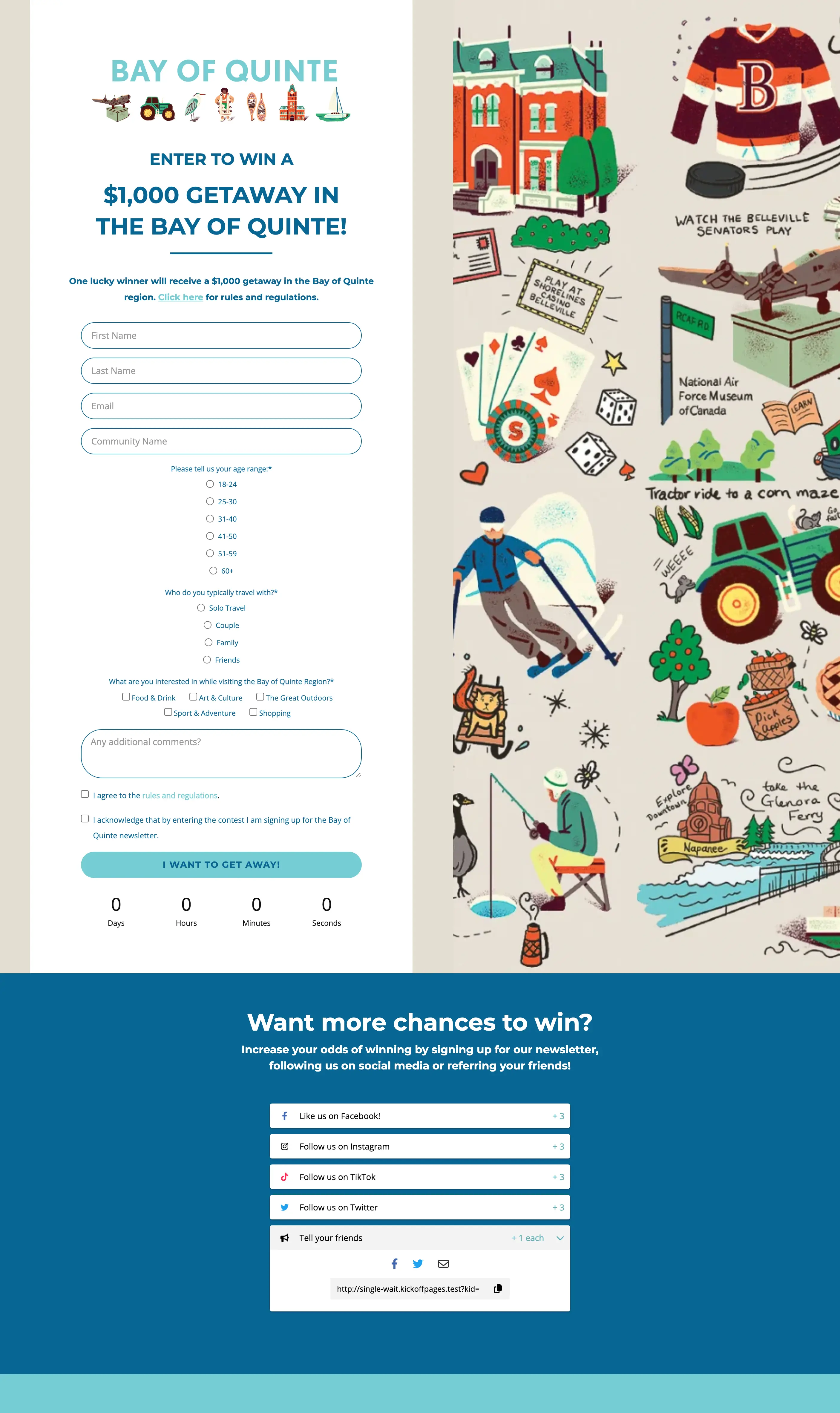
A simple structure works well:
- Enter with email.
- Share your unique link.
- Earn bonus entries for each verified referral.
- Complete optional actions for more chances.
- Track progress on the thank-you page.
KickoffLabs handles the referral links, points, fraud checks, and winner selection so you are not stitching this together in a spreadsheet at midnight.
5. A follow-up plan
The winner announcement is not the end of the campaign.
It is the handoff.
Send a welcome email right after entry. Send reminders before the deadline. Announce the winner. Then give non-winners a useful next step: a discount, waitlist invite, product demo, content recommendation, or early-access offer.
This is where many giveaways waste the list they just built.
If someone entered for a relevant prize, they have signaled interest. Do not let that signal rot. Connect your campaign to email automation, segmentation, and a simple post-giveaway offer.
Popular giveaway formats
Bonus-entry giveaway
This is the classic format. Everyone enters for a chance to win, and participants can earn more chances by sharing or completing actions.
Use it when you want list growth, social engagement, and referrals without making the campaign feel complicated.
Start here: bonus-entry sweepstakes.
Leaderboard giveaway
A leaderboard giveaway ranks participants by referrals, points, or completed actions.
Use it when your audience likes competition or when the prize is big enough to motivate repeat sharing. Leaderboards create urgency, but they also need fraud controls and clear rules.
Start here: leaderboard giveaways.
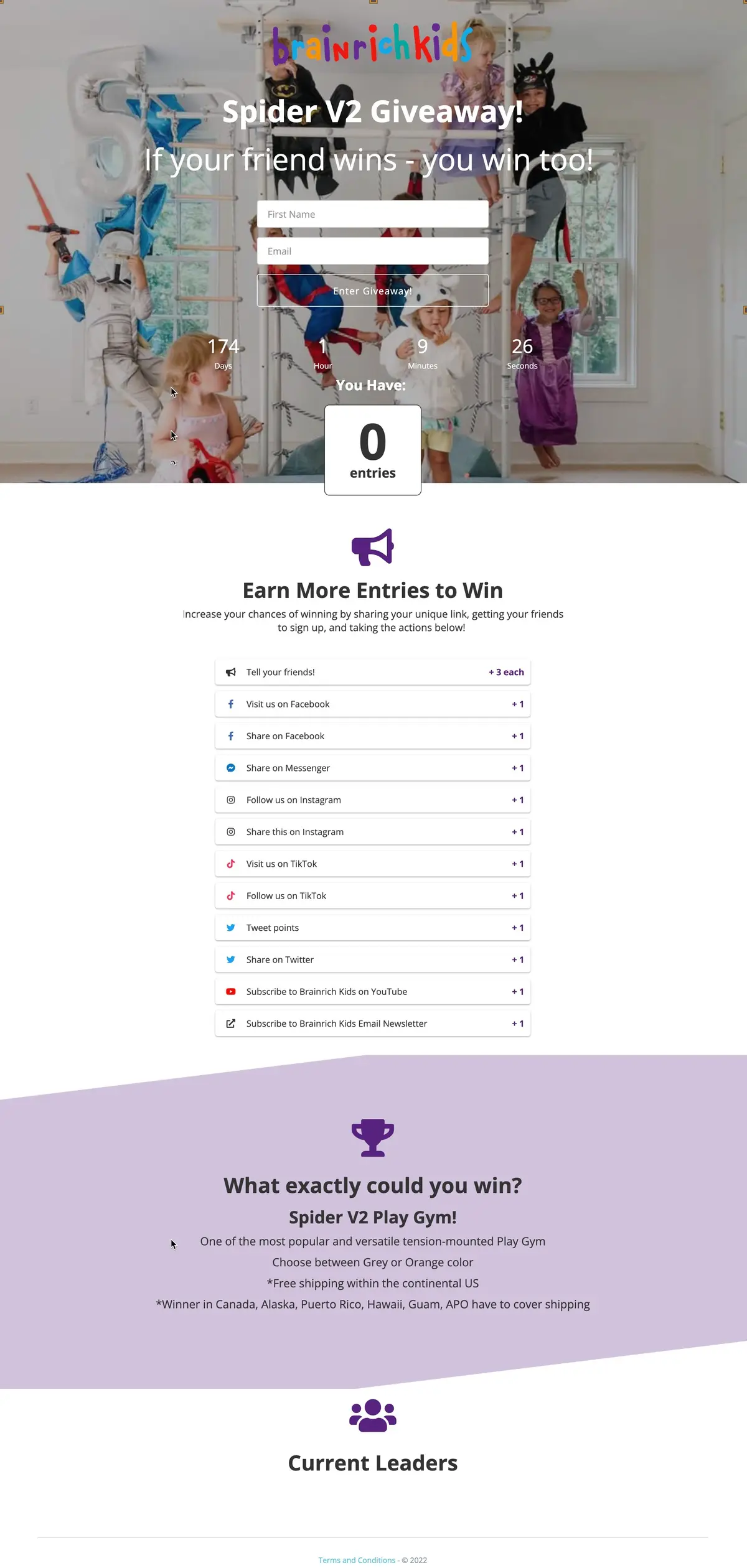
Waitlist giveaway
A waitlist giveaway combines launch validation with a prize.
People join the waitlist, share with friends, and move up for better odds, early access, or rewards. This is especially useful for startups, communities, events, courses, and product launches.
Start here: waitlist with giveaway.
Reward-level giveaway
Reward levels give people milestone incentives: refer 3 friends, get one perk; refer 10, get another; refer 25, get the premium reward.
This works when you want more than one winner and you want participants to feel progress.
Start here: reward levels.
Common giveaway mistakes
The biggest giveaway mistakes are predictable:
- Picking a prize that attracts the wrong people.
- Running the whole campaign inside a social post.
- Forgetting official rules.
- Asking for too many actions before the first entry.
- Letting fake referrals pollute the leaderboard.
- Announcing a winner but never following up with the rest of the list.
- Measuring entries only, instead of referrals, source quality, and email engagement.
You do not need a complicated campaign. You need a focused one.
Start with one prize, one page, one primary entry action, one referral loop, and one follow-up offer. Add complexity only when it helps the entrant or improves lead quality.
How to run a giveaway with KickoffLabs
Here is the practical setup:
- Choose the campaign type: sweepstakes, leaderboard, waitlist giveaway, or reward levels.
- Pick a relevant prize.
- Build the entry page and thank-you page.
- Add email capture and any qualifying questions.
- Turn on referral sharing and bonus actions.
- Add rules, eligibility, deadlines, and winner-selection details.
- Connect your email provider or use KickoffLabs follow-up emails.
- Promote the page through email, social, partners, ads, and your website.
- Monitor referrals, source quality, fraud signals, and conversion rate.
- Pick a winner, announce the result, and follow up with everyone else.
KickoffLabs was built for this exact workflow: launch the page, capture leads, track referrals, prevent obvious fraud, pick winners fairly, and follow up without duct-taping five tools together.
Final take
A giveaway is not a magic growth hack.
It is a focused campaign that gives people a reason to act now. When the prize fits the audience and the campaign has a referral loop, you can turn a simple prize into email growth, social reach, launch validation, and qualified leads.
Start with the campaign goal. Pick the prize around that goal. Then build the entry, sharing, rules, winner-picking, and follow-up system around it.
That is how a giveaway becomes more than free stuff.
It becomes a growth engine.