Contents
- The referral waitlist meaning, in plain English
- How does a referral waitlist work?
- Referral waitlist vs. plain waitlist vs. referral program
- Four ways to structure the incentive
- When a referral waitlist is the right tool
- When you should not use one
- What should count as a successful referral?
- Build trust before you build “virality”
- The numbers worth watching
- A simple referral waitlist setup
- Referral waitlist FAQ
- Sources and further reading
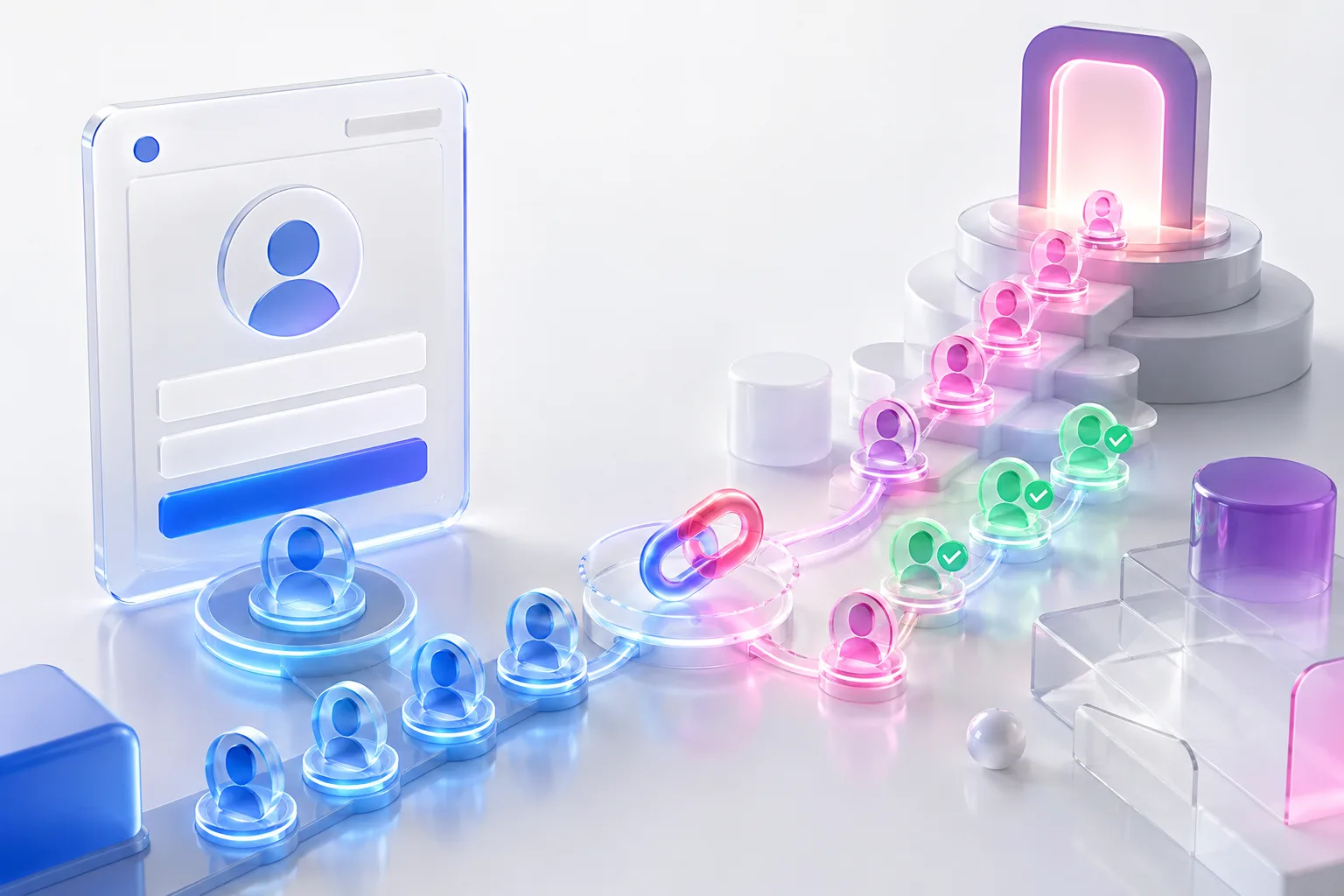
A referral waitlist is a pre-launch signup list with a sharing engine attached.
Each person joins, gets a unique referral link, and earns a better position, earlier access, status, or milestone rewards when qualified friends sign up.
That is the whole idea. Not “viral magic.” Not a form that somehow promotes itself.
A referral waitlist takes existing demand and gives excited people a reason to bring in more of the right people. If you want the mechanics already wired together, KickoffLabs referral waitlist software handles the landing page, personal links, verified referrals, ranking, rewards, follow-up, and fraud controls.
The important word is referral. A normal waitlist tells you who is interested. A referral waitlist also shows who is willing to spread the word.
Ready to set one up? The referral waitlist guide walks through reward design, referral tracking, fraud controls, and launch waves step by step.
The referral waitlist meaning, in plain English
Think of a product-launch referral waitlist as a queue where sharing can change what happens next.
A person signs up for something that is not generally available yet: a beta, product drop, app, course, community, newsletter, crowdfunding launch, or limited opening. The campaign gives that person a personal link. When a new person joins through it and meets the campaign’s qualification rules, the original participant gets credit.
That credit might:
- Move them closer to the front of the line.
- Unlock a guaranteed perk after a set number of referrals.
- Add points toward a leaderboard.
- Earn bonus entries in a launch giveaway.
- Improve their chance of receiving an invitation.
The referral system and the access system are related, but they are not the same thing. Someone can earn first place without your team being ready to admit them that afternoon. You still control when invitations go out, how many people enter each cohort, and what “early” actually means.
That distinction matters. A ranking is a promise about priority. It should not become a promise your product or operations cannot keep.
How does a referral waitlist work?
The best versions are simple on the surface and disciplined underneath.

1. Someone joins the waitlist
Your landing page makes one clear promise and asks for minimal information. Email is usually enough. Add one qualifying question only when you will actually use the answer.
New participants normally start with a position based on join time or a score based on your campaign rules.
2. They receive a personal referral link
The thank-you page and confirmation email show the participant a link tied to their account. That link lets the campaign attribute future signups to the right person.
Do not hide it in email number four. The highest-intent moment is immediately after signup.
3. A friend joins through that link
A click alone should not usually count as a successful referral. The referred person needs to complete the signup event you defined.
For most launches, a verified email signup is the clean default. It raises the bar above a click, blocks obvious junk, and is still easy for a real person.
For a closed beta, you might award preliminary credit at signup and reserve access until the new person is approved. For a paid launch, you might use signup for queue progress and purchase for a larger reward.
4. The campaign updates progress
The original participant moves up, earns points, or advances toward a milestone. Show that progress clearly.
People should be able to answer three questions without reading a policy manual:
- What is my current status?
- What action improves it?
- What do I get if I succeed?
5. You communicate until launch
A referral waitlist is not finished when someone shares once. Send position updates, product previews, useful founder notes, reward progress, and clear launch instructions.
KickoffLabs’ current waitlist campaign documentation recommends previewing the signup and post-signup states, testing a real signup and referral journey in separate browser sessions, and confirming the expected score, rank, reward, and email behavior before promotion. That is less exciting than drawing a rocket on a launch plan. It is also what prevents angry emails on launch day.
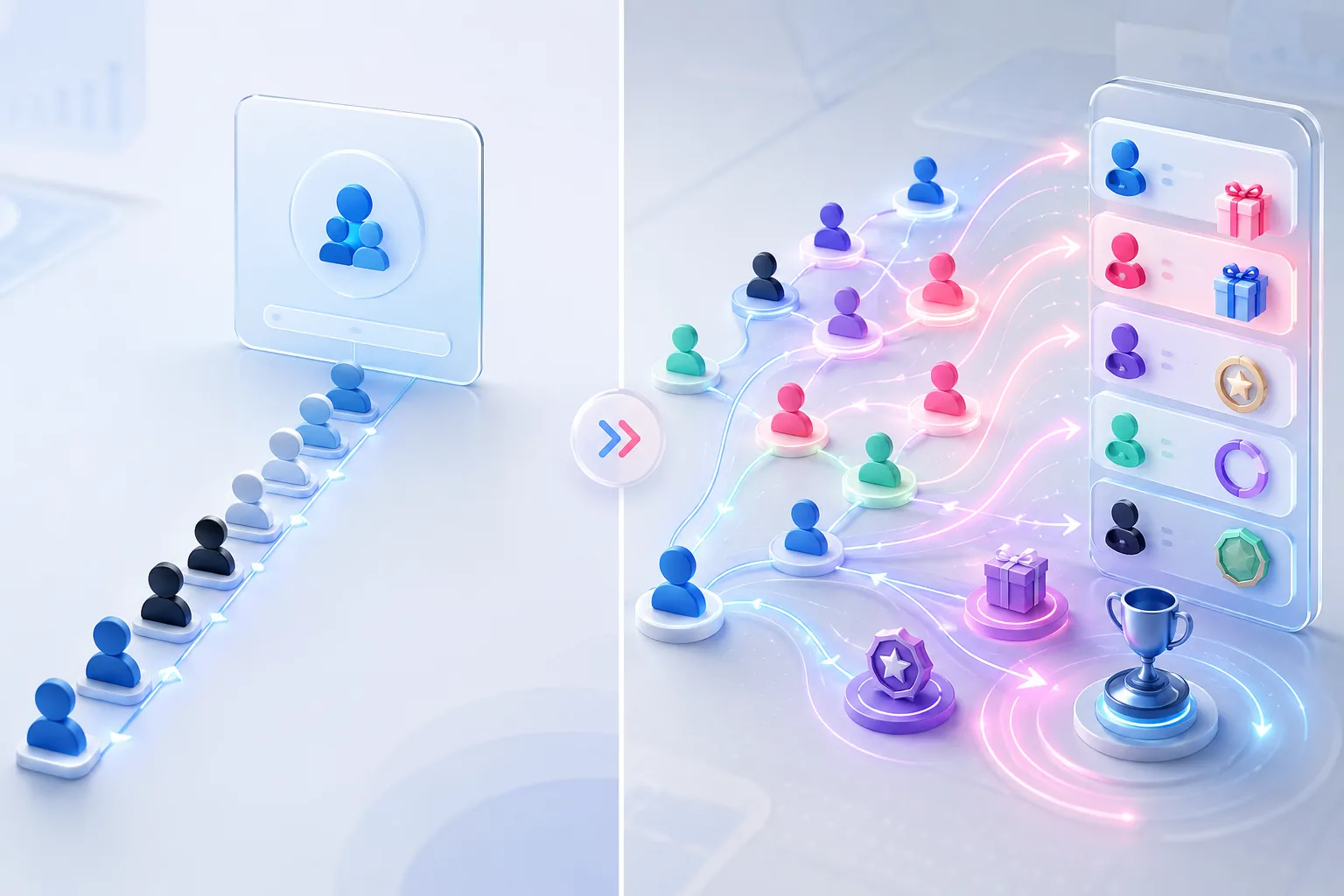
Referral waitlist vs. plain waitlist vs. referral program
These three ideas overlap, but they solve different jobs.
Swipe to compare all columns
| Mechanic | When it runs | What participants do | Typical incentive | Best job |
|---|---|---|---|---|
| Plain waitlist | Before or during limited availability | Join and wait | Updates or access | Measure demand and control admission |
| Referral waitlist | Before launch or while access is limited | Join, share, and refer | Earlier access, rank, milestones, or status | Measure demand and amplify it |
| Customer referral program | Usually after purchase or activation | Recommend a product they use | Credit, cash, discounts, or perks | Acquire customers through existing customers |
A product launch waitlist does not have to include referrals. It can simply collect interest and release access in batches.
A referral waitlist adds attribution and an incentive loop. It is a launch-stage form of a referral program, but participants do not need to be customers yet.
“Viral waitlist” is usually another name for the same category. We prefer referral waitlist because it describes the actual mechanism without promising an outcome you have not earned.
Four ways to structure the incentive
There is no universal “move every referral up 100 spots” rule. Choose the model that matches your real constraint.

Queue position
Each qualified referral improves priority. This is the classic skip-the-line model.
It works when earlier access has real value and you can explain how ranking works. It gets messy when a fixed jump means wildly different things on day two and day twenty. Ranking people by verified referrals or points is often easier to defend than promising the same giant position jump forever.
Milestone rewards
Participants unlock something after one, three, five, or ten qualified referrals.
Milestones make progress predictable. A person knows exactly what three referrals earn even if the list doubles overnight. Use product-connected rewards: an earlier cohort, premium onboarding, launch credit, an accessory, a private demo, or a useful template.
See our pre-launch referral waitlist template for page copy, reward structures, and follow-up emails.
Leaderboard status
Participants compete on referrals or points, and top performers receive status or a limited reward.
This can work for competitive communities. It can also produce spam if “first place” matters more than the product. Keep public identity private by default, explain tie-breakers, and review suspicious leaders before fulfillment.
Giveaway entries
Each verified referral earns bonus chances in a drawing.
Use this when the launch naturally supports a giveaway, not because you could not think of a better reason to share. Publish clear eligibility, timing, winner-selection, and reward terms. A giveaway adds legal and operational work that queue position alone may not require.
When a referral waitlist is the right tool
Use one when all four statements are true:
- People understand the promise now. The product can be unfinished. The outcome cannot be fuzzy.
- Early access or launch status has value. There is a real reason to join before general availability.
- Potential users know other potential users. A developer tool shared between developers is a better loop than a specialized procurement product nobody discusses with friends.
- You can fulfill what you promise. Rankings, milestones, rewards, and admission rules must survive contact with launch day.
Strong fits include beta programs, consumer apps, limited product drops, crowdfunding launches, newsletters, courses, communities, and venues with phased openings.
The mechanic is especially useful when you need to learn, not just collect. Referral behavior can help identify your most motivated advocates. Signup answers can reveal promising segments. Source tracking can show which partners and channels bring people who verify, share, and eventually activate.
When you should not use one
Do not bolt referrals onto a weak offer and call it growth.
Skip the mechanic when:
- You cannot explain why someone should join before launch.
- “Limited access” is fake scarcity.
- Everyone will receive access at the same moment and position means nothing.
- Your reward attracts people who do not care about the product.
- Your audience has no natural reason to share with peers.
- You cannot verify referrals or review abuse.
- You are unwilling to keep people informed while they wait.
A plain waitlist is better than a dishonest referral waitlist. Less clever. More trustworthy.
What should count as a successful referral?
This decision controls lead quality and fraud risk.
You have four common qualification points:
- Click: easiest to create and abuse; useful as an analytics signal, not usually as reward credit.
- Signup: simple, but disposable or mistyped addresses may still count.
- Verified signup: the best default for most pre-launch campaigns.
- Approved or activated user: strongest quality signal, but slower and harder for participants to understand.
Write the rule in one sentence and show it near the sharing controls. For example: “Your friend must join through your link and verify their email before your position updates.”
Do not quietly change the definition halfway through a campaign.
Build trust before you build “virality”
A referral waitlist asks people to promote a product they cannot use yet. Trust is not a decorative extra.

Use these guardrails:
- Verify referred email addresses before awarding full credit.
- Block obvious self-referrals and duplicate identities.
- Review sudden spikes, repeated devices, suspicious domains, and impossible activity.
- State whether rewards are guaranteed, limited, or winner-based.
- Explain how ties and deleted fraudulent referrals affect rank.
- Avoid exposing full names or emails on a public leaderboard.
- Use real queue numbers and real scarcity.
- Keep a fulfillment record before announcing winners or access.
Referral fraud is not only a cost problem. It makes honest participants feel stupid for playing by the rules.
The numbers worth watching
A large list can still be a bad list. Track the steps that show genuine momentum:
- Landing-page visitor-to-signup rate.
- Verified signup rate.
- Share rate: the percentage of participants who share.
- Referred signup rate.
- Qualified referrals per participant.
- Referral conversion by source or partner.
- Reward attainment and fulfillment.
- Email engagement while people wait.
- Invitation acceptance or launch activation.
- Paid conversion after launch, when applicable.
Do not assume “viral” means each signup creates more than one new signup. Most campaigns will not sustain that. Referral mechanics amplify good positioning and distribution; they do not replace them.
A simple referral waitlist setup
Start smaller than your imagination wants.
- Write one specific launch promise.
- Ask for email and, at most, one useful qualifier.
- Give each participant a personal link immediately.
- Count verified signups as successful referrals.
- Pick either queue position or three simple milestones.
- Send confirmation, progress, and launch emails.
- Test the full loop with different real inboxes.
- Review fraud before granting access or rewards.
- Measure activation after launch, not only list size.
If you need the complete page and email structure, use the pre-launch waitlist guide. If you want to see the famous queue mechanic broken down, read our Robinhood waitlist walkthrough.
Or skip rebuilding the machinery. Create a referral waitlist with KickoffLabs, then spend your time making the offer worth sharing.
Referral waitlist FAQ
What is a referral waitlist?
A referral waitlist is a pre-launch signup list that gives each participant a unique sharing link and rewards successful referrals with a better queue position, milestone perks, or both.
How does a referral waitlist work?
A visitor joins, receives a personal referral link, shares it, and earns credit when a qualified friend signs up. The campaign then updates the participant’s position, points, or reward progress.
What is the difference between a waitlist and a referral waitlist?
A plain waitlist records interest and usually ranks people by signup time. A referral waitlist also tracks who invited whom and lets verified referrals affect position, access, status, or rewards.
Do referral waitlists need prizes?
No. Earlier access or a better queue position can be the entire incentive. Milestone perks or prizes are optional and should reinforce demand for the product rather than distract from it.
What counts as a successful referral?
The safest default is a new person who joins through a participant’s unique link and verifies their email. Higher-consideration launches may require approval, activation, or another quality event before awarding the full benefit.
Are referral waitlists effective?
They can amplify real demand when the product promise is clear, sharing is easy, and the reward matters. They cannot manufacture interest in a vague offer, and they do not guarantee exponential growth.
Sources and further reading
- KickoffLabs: Referral Waitlist campaigns
- KickoffLabs support: Create a waitlist campaign — updated September 23, 2026
- Prefinery: How referrals are tracked
- Prefinery: Referral systems vs. invitation systems
- GetWaitlist documentation
- Waitlister referral-program documentation
- Harry’s cofounder account of its pre-launch referral campaign