Contents
- Decide whether skip-the-line is actually the right mechanic
- Build the referral waitlist around one clean promise
- Make the status page do the real work
- Choose queue rules you can defend
- Set rewards that attract future customers
- Protect the campaign before fraud becomes the campaign
- Send emails based on status, not your boredom
- Launch in waves without breaking your promise
- Measure the loop, not just the list
- Test the full referral waitlist before promotion
- Common referral waitlist mistakes
- Referral waitlist FAQ
- Build the loop, then earn the launch
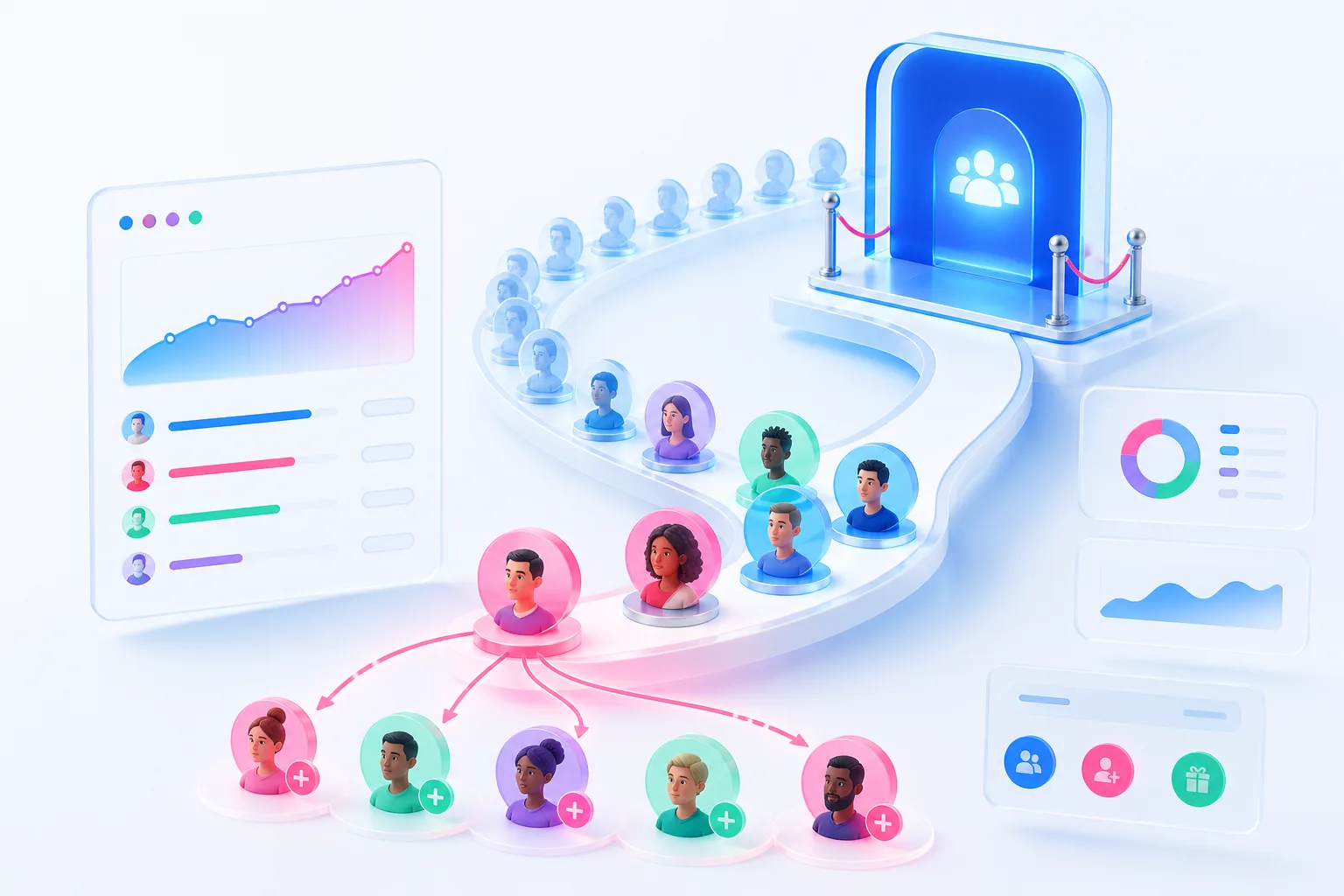
A waitlist that only collects emails is storage. A referral waitlist is distribution.
The difference is one loop: every person who joins gets a unique link and a reason to invite the right friends. Verified referrals move them up the queue, unlock a perk, or improve their launch access. The new person gets their own link, and the loop starts again.
But “add referrals” is not a strategy. A referral waitlist works only when the product promise is sharp, the reward matters, the rules are believable, and the post-signup experience makes sharing stupidly easy.
This guide shows you how to build that system without turning your launch into a points casino.
Quick answer: A referral waitlist is a prelaunch signup campaign where each subscriber receives a personal sharing link. When qualified friends join through it, the subscriber moves up the list or unlocks a product-related reward. The clean setup is: focused landing page → short form → immediate status page → verified referral credit → useful emails → access in controlled launch waves.
If you want the campaign software rather than another spreadsheet, start with the KickoffLabs waitlist campaign builder. It handles personal links, queue position, rewards, email follow-up, fraud checks, and reporting in one campaign.
Decide whether skip-the-line is actually the right mechanic
Skip-the-line rewards are powerful because they cost almost nothing to fulfill. Earlier access is the reward.
They are also easy to fake. If everyone receives access on the same day, moving from position 8,000 to 800 meant nothing. You borrowed urgency from your audience and never paid it back.
Use a position-based referral waitlist when:
- Access will genuinely happen in waves.
- Earlier users receive a real advantage.
- Capacity, inventory, onboarding, or beta seats are limited.
- Your audience understands why a queue exists.
- You can explain how referrals affect position.
Use milestone rewards instead when position would be arbitrary. For example, give a useful template at one verified referral, founder pricing at three, and priority onboarding at five.
Use a normal signup list when there is no meaningful reward for sharing. Not every form needs gamification bolted onto it.
For page copy and section templates, keep the prelaunch referral waitlist template guide open beside this one. For the broader landing-page and email strategy, read the pre-launch waitlist setup guide.
Build the referral waitlist around one clean promise
Your visitor is not excited about joining a database. They want the outcome on the other side of the waitlist.
“Join our waitlist” is a button label, not a reason to care.
Try this structure:
Get early access to [specific product outcome] for [specific audience]. Join now, then invite friends to move up the launch queue.
A good promise passes three tests:
- The right person recognizes themselves. “Inventory planning for independent coffee roasters” beats “better operations software.”
- The outcome is concrete. Save a weekly task, get first choice of inventory, receive a beta seat, or lock in launch pricing.
- The referral reward connects to the outcome. Earlier access to the desired product is coherent. A random television is not.
If people will not join for the product, a bigger referral prize usually makes the list worse, not better.
Keep the signup form short—but useful
Ask for email. Add first name if you will use it. Add one qualifying question only when the answer changes who gets access or what you send next.
Good qualifying questions include:
- Which role best describes you?
- What are you using today?
- Which problem do you want solved first?
- When do you expect to buy?
Do not make a cold visitor complete your customer research survey before you have earned the right to ask.
Make the status page do the real work
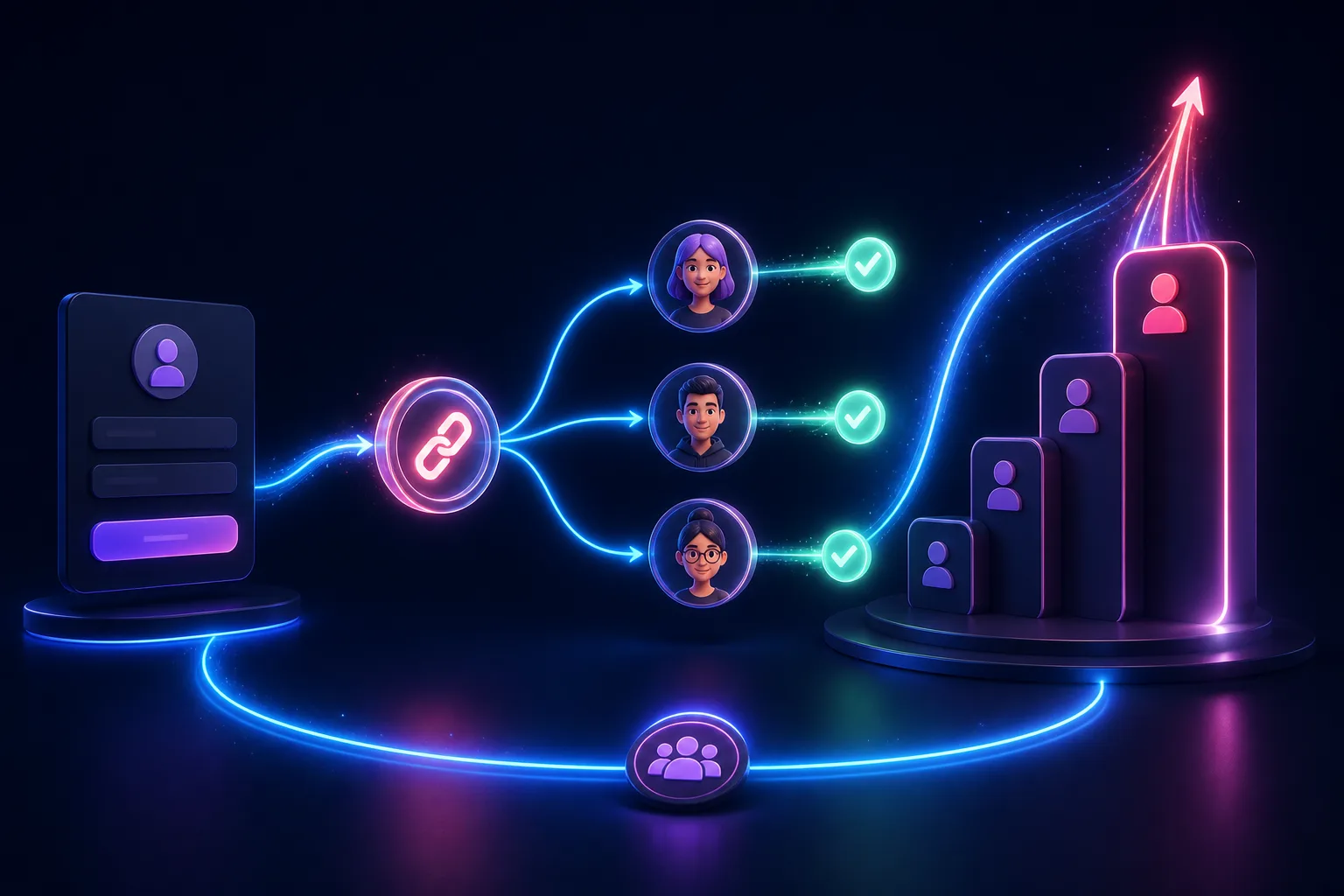
The landing page earns the signup. The status page earns the share.
Right after someone joins, show five things:
- Their current position or reward progress. Make status visible.
- Their personal referral link. Put copy-to-clipboard beside it.
- What a verified referral does. “Each verified friend moves you closer to the first access wave” is clearer than “earn points.”
- A prewritten message. Give them a human starting point they can edit.
- The next reachable goal. One referral away feels possible. Fifty does not.
Do not hide the referral link in an email that may arrive ten minutes later or land in Promotions. Email should repeat the opportunity. The status page should introduce it.
Write share copy a person would actually send
Bad share copy sounds like unpaid ad inventory:
I am thrilled to announce I have joined the revolutionary future of productivity. Sign up today!
Nobody texts like that. Nobody should.
Better:
I’m trying this planning tool when the beta opens. It’s built for solo consultants who hate project-management overhead. Join here if that sounds useful: [link]
Give people channel-sized options:
- A one-sentence text or DM.
- A short email note.
- A LinkedIn version for professional launches.
- A plain link with no forced message.
If a subscriber receives a benefit for posting an endorsement, disclosure rules can apply. The FTC says material connections should be clear and hard to miss. Do not bury the relationship under a pile of hashtags.
Choose queue rules you can defend
This is where a fun idea becomes an operating system.
Write down the rules before traffic arrives:
- What counts as a referral?
- Does the friend need to verify their email?
- Does every referral move someone a fixed number of places?
- Do higher-quality actions earn more credit?
- When is position recalculated?
- What happens when a referral is removed as fake?
- When does ranking freeze?
- How are ties handled?
The simplest model is usually best: one verified new signup equals one referral credit. Rank participants by valid credits, then use signup time as the tiebreaker.
You can award points for other actions, but complexity has a cost. If people need a flowchart to understand why they are number 4,913, they will not trust the number.
Queue movement versus milestone rewards
Queue movement creates ongoing competition. Milestones create clear finish lines.
Choose queue movement when early-access rank has real value. Choose milestones when you want predictable rewards and simpler communication.
A practical hybrid can work:
- Join: receive a queue position.
- 1 verified referral: move into the priority group.
- 3 referrals: unlock founder pricing.
- 5 referrals: receive access in the first beta wave.
Keep the first milestone achievable. The job of the first reward is to teach the loop.
Set rewards that attract future customers
The best referral waitlist rewards make the product more valuable.
For SaaS:
- Earlier beta access.
- Priority onboarding.
- Product credits.
- A useful launch template.
- Founder office hours.
For ecommerce or a limited drop:
- Earlier shopping access.
- First choice of color or size.
- Free shipping.
- A product-specific add-on.
- Founding-customer pricing.
For a newsletter, community, or course:
- A private issue or lesson.
- First choice of cohort dates.
- A member-only discussion.
- A useful resource tied to the topic.
Generic cash and gadgets can produce more signups. They can also produce a beautifully large list of people who never intended to buy.
Your waitlist is supposed to reduce launch risk. Do not pay to hide that risk behind the wrong audience.
Protect the campaign before fraud becomes the campaign
Any valuable reward creates an incentive to cheat.
That does not mean you need airport security for a small beta. It means you should decide what “real” means before awarding access.
At minimum:
- Require email verification before referral credit becomes final.
- Reject obvious self-referrals and duplicate addresses.
- Flag sudden referral bursts from one device or network for review.
- Watch disposable email domains and suspicious naming patterns.
- Delay expensive or limited rewards until a manual review.
- State that fake, automated, or duplicate signups can be removed.
Use referral tracking to connect each new signup to the correct advocate and fraud protection to surface suspicious entries. Automation catches patterns. A human should still review edge cases before removing a top referrer or granting a costly reward.
Do not announce a winner, revoke access, or accuse someone of cheating based on one odd signal. Preserve an audit trail and apply the same rule to everyone.
Send emails based on status, not your boredom
A referral waitlist goes cold when every subscriber receives the same generic “we are still building” update.
Use a short sequence tied to what happened:
Immediately after signup
Confirm the promise, show status, include the personal link, and explain the first goal.
Two or three days later
Send the most useful product proof you have: a screenshot, prototype clip, specific decision, or answer to a common objection.
For people with zero referrals, repeat the easiest share action. For people one referral from a milestone, show the exact gap.
Weekly during the campaign
Share progress without manufacturing hype. Explain what changed, what you learned, and what early users will receive.
Before ranking freezes
Publish the deadline, timezone, qualification rule, and what happens to earned status. Send it early enough for a subscriber to act.
At launch
Give access instructions before telling people to share again. They did the work. Deliver the benefit.
Commercial launch emails still need accurate sender information and a working opt-out process. The FTC’s CAN-SPAM guidance explains that prior consent does not erase the other requirements.
Launch in waves without breaking your promise
A skip-the-line campaign needs a landing plan.
Before promotion starts, define:
- The referral window.
- The ranking freeze date.
- The size of each access wave.
- The interval between waves.
- The criteria that can override rank, such as geography or required device.
- What people outside the first wave should expect.
Then tell people.
A sample rollout might look like this:
- Wave 1: the top qualified referrers plus a small set of best-fit testers.
- Wave 2: the next ranked group after the first feedback cycle.
- Wave 3: broader access once onboarding and support can handle it.
- Public launch: everyone remaining receives a clear invitation or timeline.
If product fit matters more than raw rank, say so before signups begin. A B2B beta may need ten operations leaders more than a hundred random enthusiasts. Position can prioritize access without becoming the only qualification.
Do not quietly reset positions because the queue became inconvenient. Freeze the campaign, keep a record, and communicate any necessary change.
Measure the loop, not just the list
A raw signup count cannot tell you whether the campaign works.
Track the path:
- Landing-page conversion: signups divided by unique visitors.
- Activation: signups who verify and reach the status experience.
- Advocate rate: verified signups who create at least one valid referral.
- Referral conversion: referred visitors who become verified signups.
- Viral contribution: valid referred signups divided by all valid signups.
- Qualified-lead rate: signups who match your launch criteria.
- Email engagement: clicks and replies by campaign status.
- Reward liability: the cost and quantity of rewards earned.
- Launch activation: waitlisted people who actually start, buy, book, or attend.

Compare referred and non-referred leads after launch. Do referred users activate? Do they buy? Do they stay?
If the list grows but launch activation stays flat, the referral incentive attracted attention without demand. That is not a growth win. It is a louder warning.
Test the full referral waitlist before promotion
Run the campaign like a stranger would.
- Open the landing page on a phone.
- Join with a new address.
- Verify the email.
- Confirm the status page shows the right position and personal link.
- Copy and open the referral link in a separate browser session.
- Join as the referred friend.
- Verify the friend.
- Confirm the original subscriber receives credit.
- Trigger a milestone or position change.
- Check every email, mobile layout, share button, and return visit.
- Try a duplicate and a self-referral.
- Export or segment the first launch wave.
Tiny failures kill referral loops: a share link copied without the code, an email that loses the status URL, a mobile button hidden behind a popup, or credit that appears hours later without explanation.
Test the boring stuff. The boring stuff is the campaign.
Common referral waitlist mistakes
Copying Robinhood without Robinhood’s reward
Robinhood’s queue mattered because earlier access mattered. The visual position was not the strategy by itself.
Our Robinhood waitlist breakdown is useful because it explains the whole system: promise, signup, position, sharing, and follow-up. Copy the logic, not the screenshot.
Starting with a giant milestone
“Refer 25 friends” is a wall. Give people a reachable first win, then show the next one.
Rewarding every unverified email
You will teach people to create junk. Credit qualified behavior, not form submissions.
Hiding the access plan
A queue without rules feels fake. Publish the freeze date and launch waves.
Going silent
People forget why they joined. Product proof and useful updates keep the promise alive.
Treating every lead as equal
Track referral source, qualification, and launch behavior. A smaller group of right-fit users beats a giant list that vanishes on launch day.
Referral waitlist FAQ
What is a referral waitlist?
A referral waitlist collects prelaunch signups, gives each subscriber a unique referral link, and rewards verified friend signups with a better queue position or useful perks.
How does a skip-the-line waitlist work?
Each subscriber receives a position and personal link. Valid referrals improve that subscriber’s rank according to rules you set before launch. The people near the front receive earlier access or another real benefit.
What should I reward?
Reward product-related value: earlier access, launch pricing, product credit, priority onboarding, limited inventory access, or a useful bonus. The reward should attract the person most likely to become a customer.
How many referrals should a milestone require?
Make the first milestone reachable—often one valid referral—then increase later goals based on the value and cost of each reward. Test your economics before publishing the ladder.
How do I prevent referral fraud?
Verify emails, block obvious self-referrals and duplicates, flag suspicious bursts, delay expensive fulfillment until review, and publish clear disqualification rules.
When should I close the waitlist?
Freeze ranking before launch once you have enough qualified users for your planned waves. Announce the cutoff, preserve earned status, and tell every segment what happens next.
Build the loop, then earn the launch
A referral waitlist is not viral because it has a share button.
It grows when the product promise is worth repeating, the first reward is reachable, the rules feel fair, and every status update tells a subscriber exactly what to do next.
Build the campaign around that truth. Test every handoff. Watch qualified referrals, not vanity signups. Then deliver access in the order you promised.
KickoffLabs was built for this exact job. Start a referral-powered waitlist, give every subscriber a personal link, and turn early demand into a launch audience you can actually activate.