Contents
- Referral marketing software: what it should actually do
- What is a referral program?
- Referral program vs. referral marketing
- The core parts of a referral program
- Types of referral programs
- What makes referral programs work?
- When should you use a referral program?
- How to build one without overcomplicating it
- Ready to launch your referral program?
Most brands already have word-of-mouth.
They just don’t have a system for it.
People mention your product in group chats. They forward your newsletter. They tell a friend, “You should check this out.” Then the signal disappears because nobody tracked it, rewarded it, or made the next share easier.
That is what a referral program fixes.
Quick answer: A referral program is a structured way to get customers, subscribers, or early fans to invite other people. The program usually gives each participant a referral link or code, tracks who signs up through that link, and rewards the person who shared when the referred person takes the right action. The best referral programs are simple, clearly rewarded, easy to share, and connected to email follow-up so the momentum does not die after the first signup.
A referral program can help you grow a waitlist, launch a product, promote a giveaway, build a newsletter, or turn happy customers into a repeat acquisition channel. The trick is not making the program complicated. The trick is making the value obvious enough that people actually share.
Referral marketing software: what it should actually do
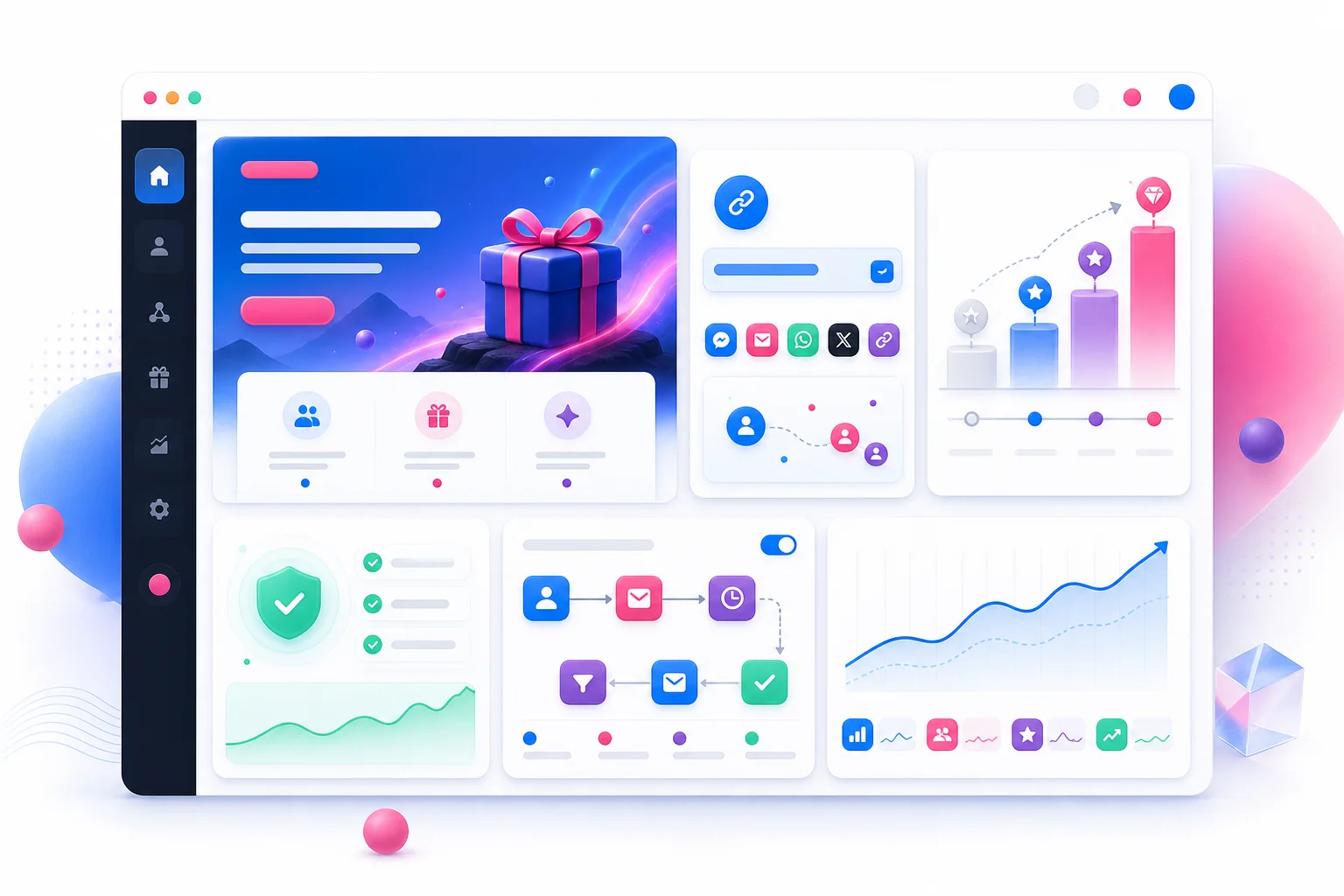
Referral marketing software should do five jobs: capture the lead, give each person a unique referral link or code, track referred signups, show progress toward rewards, and send follow-up emails that keep the loop moving.
That is the answer. Everything else is packaging.
If a referral tool cannot connect the landing page, reward rules, fraud checks, and email follow-up, you end up duct-taping the program together. That usually works for the first 50 signups. It gets ugly when the campaign starts moving.
Use this checklist before you pick a referral marketing platform:
- Campaign pages: Can you launch a waitlist, giveaway, newsletter referral program, or reward-level campaign without rebuilding your site?
- Referral tracking: Does every participant get a unique link or code you can trust?
- Reward logic: Can you run bonus entries, milestone rewards, double-sided offers, or VIP tiers?
- Email follow-up: Can you send the referral link, progress updates, and winner or reward emails from the same campaign flow?
- Integrations: Can it pass leads to your email platform, CRM, ecommerce store, or custom app?
- Fraud controls: Can you catch duplicate, suspicious, or low-quality entries before the leaderboard turns into a mess?
- Analytics: Can you see which pages, channels, and participants drove real growth?
KickoffLabs is strongest when your referral program is part of a launch campaign: a pre-launch waitlist, viral giveaway, newsletter referral loop, ecommerce reward campaign, or product announcement where the landing page and sharing mechanic need to work together.
If you only need a simple coupon field at checkout, use your ecommerce platform. If you need a full referral campaign that captures leads before the sale, use a dedicated campaign builder.
What is a referral program?
A referral program is a marketing system that encourages people to invite friends, coworkers, subscribers, or followers to take an action.
That action might be:
- joining a waitlist
- entering a giveaway
- subscribing to a newsletter
- buying a product
- booking a demo
- creating an account
- sharing a campaign with friends
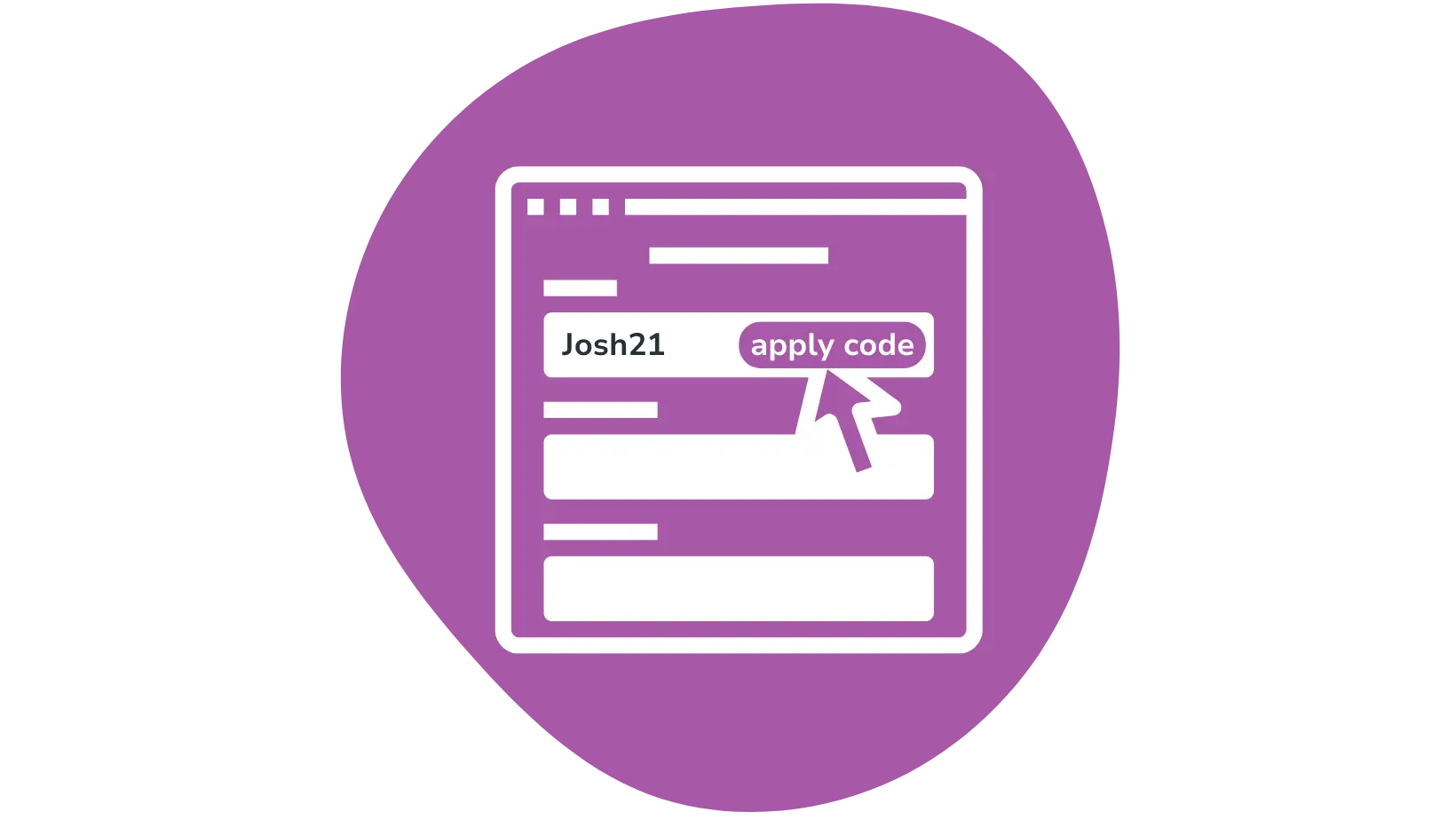
The person who shares gets a unique referral link or referral code. When someone new signs up through that link or code, the program gives credit to the original referrer.
Then you can reward the referrer, the new signup, or both.
That is the whole idea: make sharing easy, track it cleanly, and give people a reason to keep going.
Without the tracking layer, you are guessing. With the tracking layer, you know which customers are bringing new leads and which rewards are actually moving people.
Referral program vs. referral marketing
Referral marketing is the bigger strategy.
A referral program is the actual mechanism.
Referral marketing might include customer advocacy, influencer relationships, ambassador programs, social sharing, and word-of-mouth campaigns. A referral program is the structured version with rules, links, rewards, and reporting.
Think of it like this:
- Referral marketing: “We want people to tell their friends about us.”
- Referral program: “Share this link. Get three friends to join. Unlock the first reward.”
The second one is easier to understand, easier to track, and easier to improve.
The core parts of a referral program
A good referral program has five moving pieces.
1. A clear reason to share
Nobody shares because your marketing team wants more leads.
They share because the offer gives them a reason.
That reason could be a prize, discount, early access, free product, status, account credit, exclusive content, or a chance to unlock something better.
If the reward is vague, people hesitate. If the reward is obvious, the program has a shot.
2. A simple share path
The participant should not have to think.
After they sign up, show the referral link, prewritten share copy, and progress toward the next reward. Email the link too, because people lose tabs and forget.
KickoffLabs campaigns can show share buttons, referral links, reward progress, and thank-you page instructions immediately after signup. That matters because the highest-intent moment is right after someone joins.
3. Tracking that does not break
Referral tracking is the difference between a real program and a vibes-based campaign.
You need to know:
- who shared
- who signed up
- which link or code drove the signup
- how many referrals each person has
- whether referrals look legitimate
- which rewards have been earned
That is why referral tracking and fraud detection matter. A referral program gets messy fast if you cannot trust the scoreboard.
4. Rewards people understand
Rewards do not have to be expensive.
They do have to feel worth the effort.
For a product launch, early access can be enough. For a consumer giveaway, the prize may do the heavy lifting. For a newsletter, a useful template or bonus issue might beat a generic coupon.
The reward should match the audience and the action.
5. Follow-up after the share
A referral program is not one landing page.
You need emails that remind people what they can earn, show progress, and bring them back when they are one referral away from the next level. You also need a plan for new referred leads so they do not land in a silent inbox.
Use email marketing to keep the loop moving.
Types of referral programs
You do not need the fanciest model. You need the model that matches the campaign.
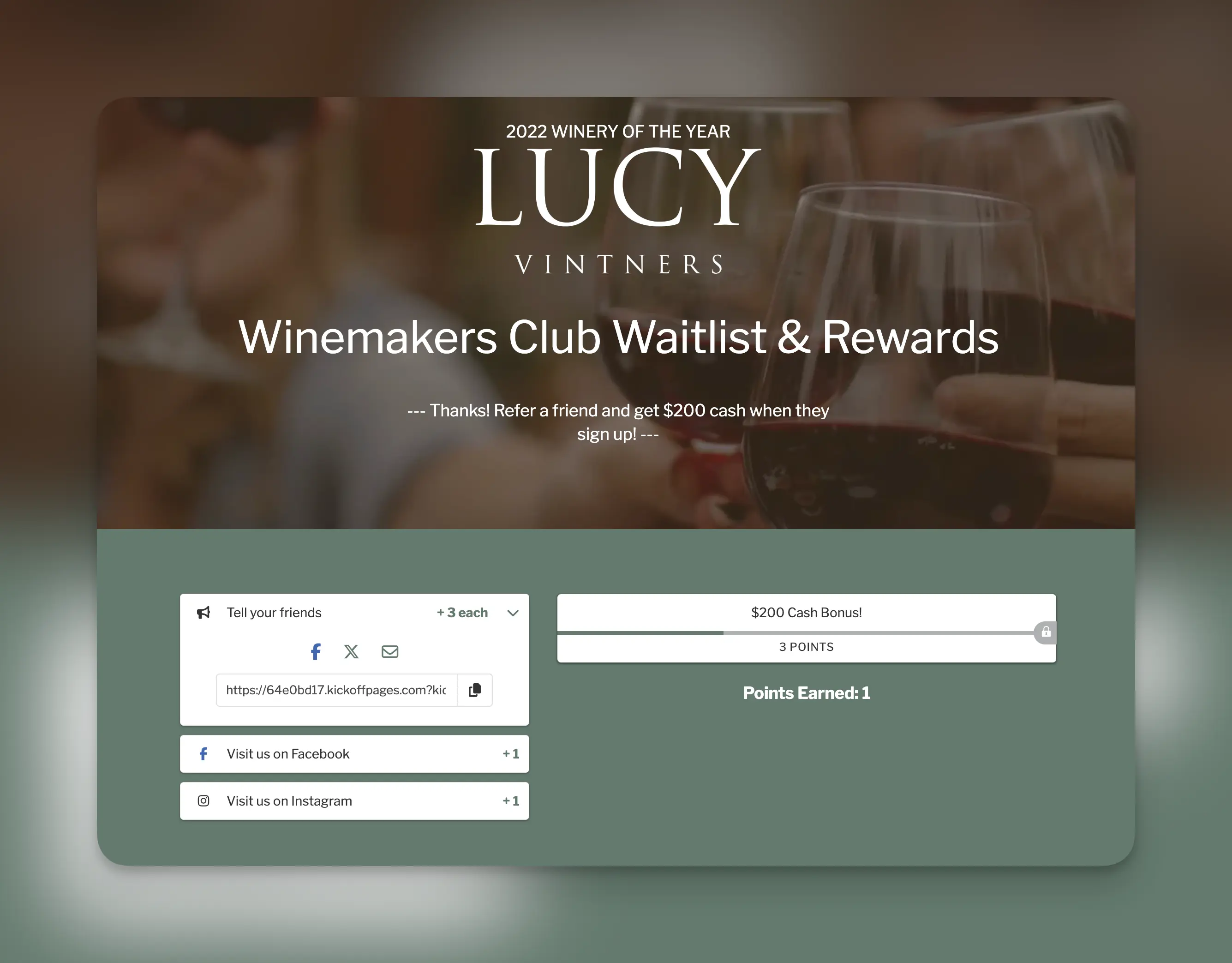
One-sided refer-a-friend programs
A one-sided program rewards the person who makes the referral.
Example: “Invite a friend. Get $10 credit when they buy.”
This is simple and easy to explain. It works well when your existing customers already like you and need a small push to share.
Two-sided referral programs
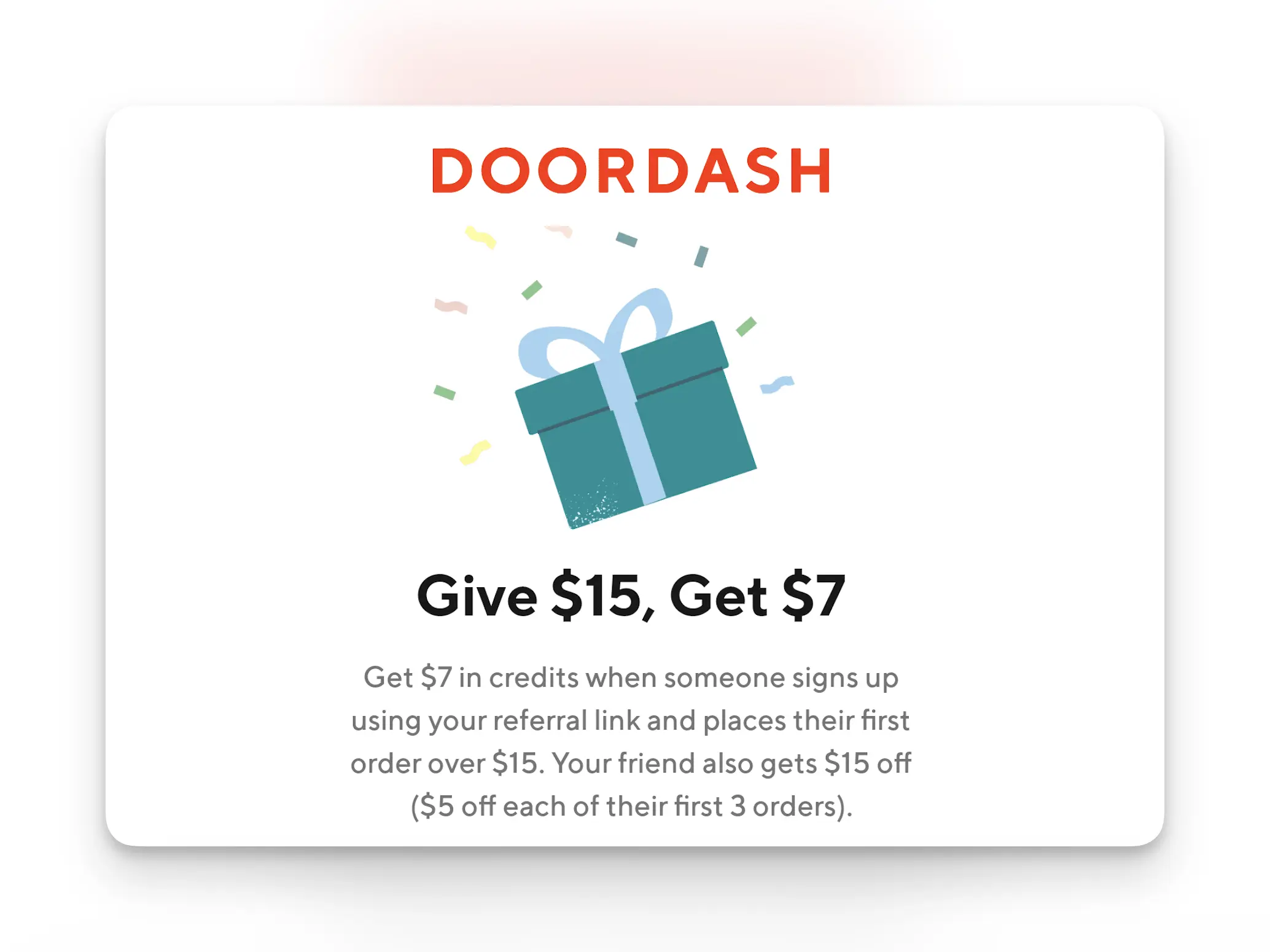
A two-sided program rewards both people.
Example: “Give your friend $10 off. Get $10 when they order.”
This usually feels more natural because the referrer is not just asking for a favor. They are giving their friend something useful too.
Milestone and reward-level programs
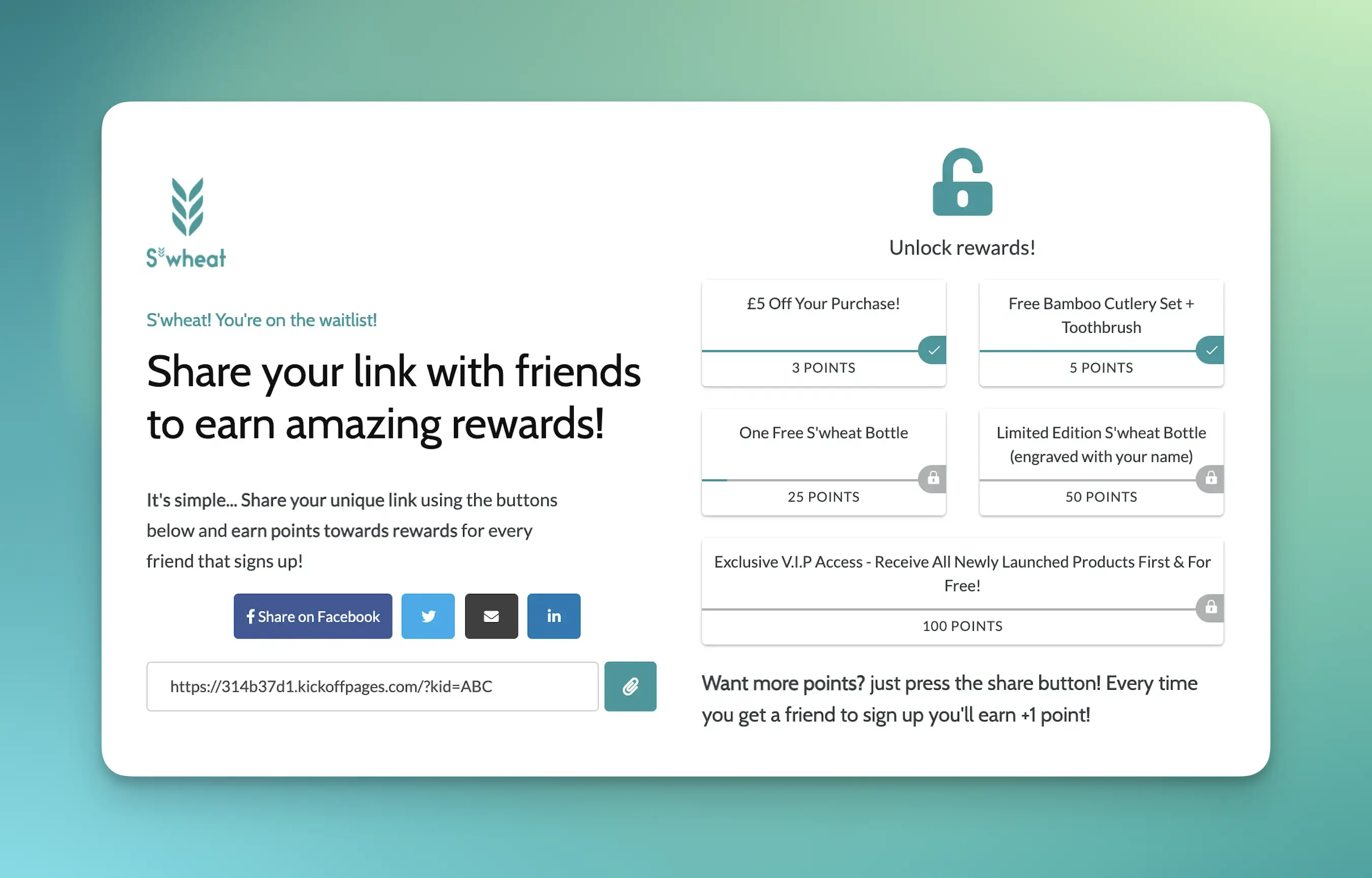
A milestone program gives better rewards as people refer more friends.
Example:
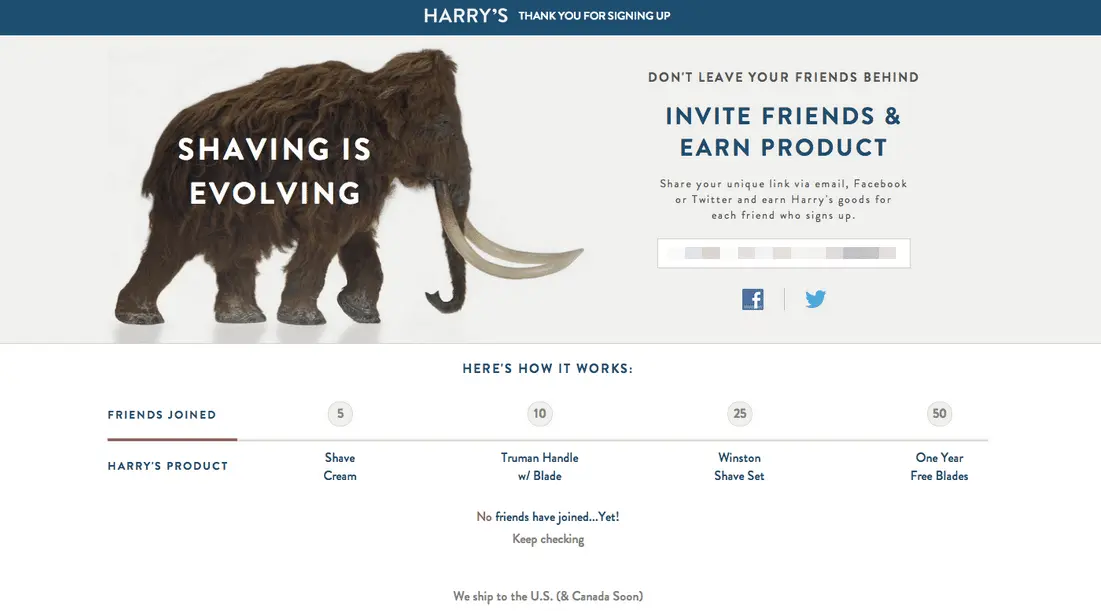
- 1 referral: bonus entry
- 3 referrals: sticker pack
- 5 referrals: early access
- 10 referrals: VIP prize tier
This is where reward levels work well. People can see the next target, and that little progress bar does a surprising amount of motivational work.
Newsletter referral programs
Newsletter referral programs reward subscribers for bringing in more subscribers.
The reward might be a private article, a checklist, a community invite, a discount, or a premium content sample.
This is especially useful because newsletters already have a built-in sharing habit. If someone likes an issue, make the next step obvious: forward it, share the link, and earn something.
Affiliate-style referral programs
Affiliate programs usually pay commissions for purchases.
Referral programs can do that, but they do not have to. Many referral campaigns happen earlier in the funnel: joining a waitlist, entering a launch, or subscribing before there is a purchase to track.
If you are trying to validate demand, do not jump straight to a complex affiliate system. Start with a simple referral campaign that proves people care enough to share.
What makes referral programs work?
The best programs have three traits.
They are easy to explain.
They are easy to share.
They are easy to track.
If you need a paragraph to explain the rules, simplify the program. If users have to copy a weird URL from a hidden account page, fix the share flow. If you cannot see who referred whom, fix tracking before you launch.
A clean referral program should pass the group-chat test: could someone explain it to a friend in one sentence?
Examples:
- “Join the waitlist and move up when friends sign up.”
- “Enter the giveaway and get bonus entries for every friend you invite.”
- “Give your friend a discount and get credit when they buy.”
- “Share the newsletter and unlock the founder checklist after three referrals.”
That is enough.
When should you use a referral program?
Use a referral program when your audience has a reason to talk about the offer.
Good fits:
- product launches
- beta waitlists
- giveaways and sweepstakes
- Kickstarter or crowdfunding campaigns
- newsletters
- membership communities
- ecommerce launches
- creator products
- local events with a strong audience identity
Bad fits:
- boring offers nobody wants to share
- products with unclear value
- campaigns where the reward is weaker than the effort
- programs with complicated rules
- audiences that do not trust you yet
Referral programs amplify what is already interesting. They do not magically make a dull offer exciting.
How to build one without overcomplicating it
Start small.
- Pick one campaign goal.
- Pick one action you want referred people to take.
- Pick one reward structure.
- Create a landing page with a clear offer.
- Give every participant a referral link.
- Show progress on the thank-you page.
- Send follow-up emails that remind people to share.
- Watch the referral data and adjust.
KickoffLabs is built for this exact flow. You can launch a referral reward program, milestone rewards campaign, newsletter referral campaign, or waitlist with giveaway without stitching together landing pages, forms, reward tracking, fraud checks, and email follow-up by hand.
Ready to launch your referral program?
If you are just learning the mechanics, read what referral links are and what referral codes are.
If you want inspiration, scan these referral program examples.
If you want to build one, start with the simplest version that could work: one landing page, one clear offer, one referral link, one reward, and one follow-up email.
You can make it fancier later.
First, make it shareable.