Contents
- Why Holiday Giveaways Still Work
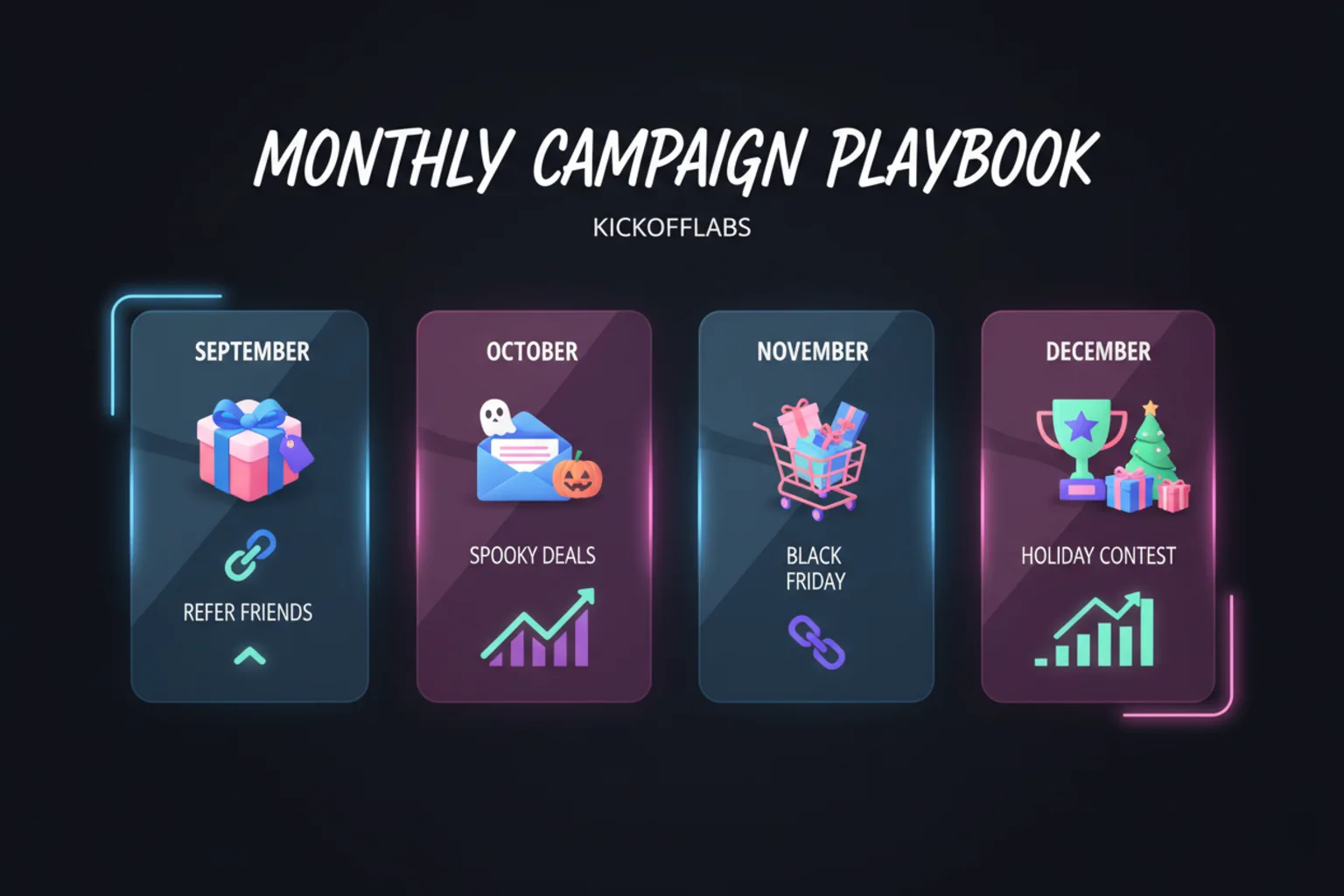
- The Four-Month Holiday Giveaway Timeline
- September: Build the List Before Everyone Starts Screaming
- October: Warm the Audience Before the Giveaway Opens
- November: Launch Around BFCM Without Becoming Another Discount Email
- December: Announce the Winner, Then Sell to Everyone Else
- Holiday Giveaway Ideas by Month
- Prize Strategy: Pick Something That Qualifies, Not Just Excites
- The Landing Page Checklist
- Promotion Plan: Where to Push the Giveaway
- Metrics That Actually Matter
- Build the Campaign Before the Holiday Rush Builds It for You
Free tools: Pick a seasonal prize with the Giveaway Prize Idea Generator and build the campaign calendar with the Contest Promotion Calendar Generator.
Holiday giveaways fail when you treat them like a last-minute coupon with wrapping paper on it.
The good ones start months before the biggest shopping days. They build an email list before the discounts hit. They warm that list before Black Friday. They use referrals when attention is expensive. Then they keep selling after the winner is announced.
Quick answer: A holiday giveaway plan should start in September with list building and prize selection, continue in October with audience warming and content teasers, peak in November around Black Friday and Cyber Monday, and shift in December toward winner announcements, customer conversion, and post-holiday re-engagement. The best holiday giveaways are built around a prize your audience actually wants, a simple landing page, email capture, referral sharing, clear rules, and a follow-up plan for every non-winner.
The mistake is thinking the giveaway is the campaign.
It is not. The giveaway is the door. The real campaign is everything around it: landing page, referral loop, email sequence, promotion calendar, winner announcement, and non-winner offer.
This guide walks through the whole September-to-December plan.
No fake “run a giveaway and magically go viral” nonsense. Just the pieces that give your holiday campaign a fighting chance.
Why Holiday Giveaways Still Work
The holiday season is noisy, expensive, and emotionally weird.
People want deals. They also want inspiration. They are buying for themselves, their kids, their partners, their clients, their dogs, and that one cousin who somehow becomes impossible to shop for every year.
That is why a good giveaway can cut through.
A discount asks someone to buy right now. A giveaway asks them to raise their hand, join your list, and maybe share with a friend. That matters when shoppers are not ready to buy today but are absolutely planning to buy soon.
Adobe forecasted U.S. online holiday spending for November and December 2025 at $253.4 billion, with Cyber Week expected to drive 17.2% of the season’s online spend. Mobile was expected to account for 56.1% of online holiday spend.
Translation: your giveaway page has to work on a phone, and your plan cannot start on Black Friday morning.
A Northwestern Medill analysis of NRF and Prosper Insights data found that shoppers are starting early, hunting for value, and comparing prices more often. Their 2025 research said 55.2% of consumers reported the economy was affecting their holiday behavior, with 46.8% shopping sales more often and 35.4% comparing prices online more often.
That is not bad news for giveaways.
It means shoppers are open to value. But they are picky about it.
The Four-Month Holiday Giveaway Timeline
You do not need a 47-tab spreadsheet.
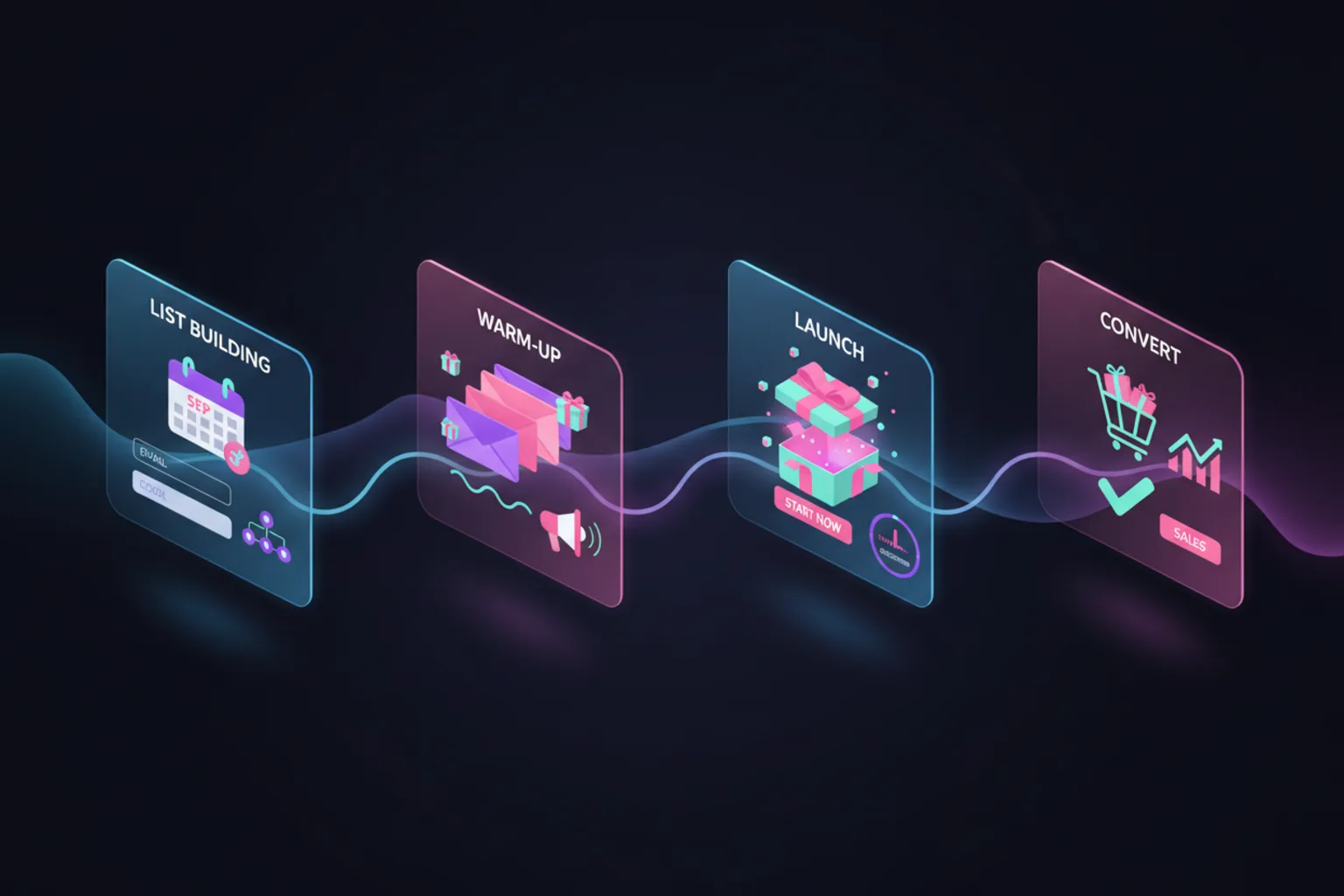
You need a clear monthly job.
| Month | Your main job | Giveaway focus |
|---|---|---|
| September | Build the foundation | Pick the offer, prize, audience, landing page, and rules |
| October | Warm the audience | Tease the prize, collect early interest, publish gift content |
| November | Push hard | Launch around BFCM, referrals, social proof, countdowns |
| December | Convert and re-engage | Announce winners, sell to non-winners, learn from the data |
If September and October are empty, November becomes panic with a promo code.
September: Build the List Before Everyone Starts Screaming
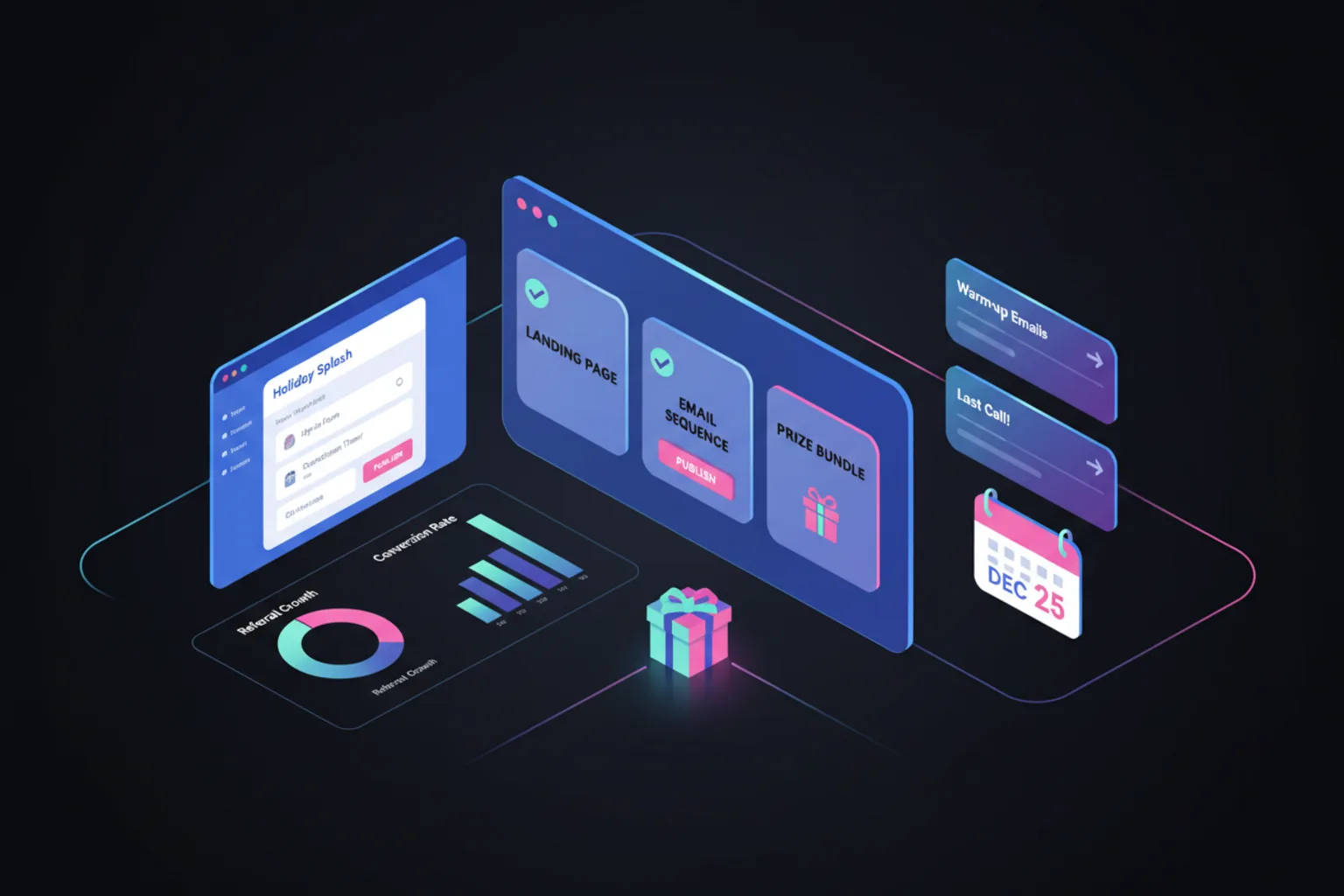
September is for setup.
Not perfection. Setup.
Pick the audience first. A holiday giveaway for “everyone” becomes a junk lead magnet. You want people who would plausibly buy from you, subscribe to you, or refer someone who would.
Ask:
- Who should this campaign attract?
- What prize would make that person excited?
- What would make them share without feeling silly?
- What do we want them to do after the giveaway ends?
Then choose the campaign type.
A classic sweepstakes works when your goal is broad email capture. A referral rewards campaign works when you want every entrant to bring friends. A waitlist campaign works when you are launching a product, seasonal drop, or early-access offer. A reward levels campaign works when you want participants to keep earning points instead of entering once and disappearing.
For holiday planning, I like a hybrid: sweepstakes entry plus referral bonuses.
The base ask is simple: enter to win.
The growth loop is better: share with friends for more chances, bonus entries, early access, store credit, or a secondary prize tier.
September is also when you write the rules. Not after the campaign goes live. Use this month to define eligibility, geography, age restrictions, prize value, entry methods, winner selection, and the exact closing date. Read our contest law best practices and then talk to a legal professional for your specific campaign.
KickoffLabs can help with the landing page, entry form, referral tracking, winner selection, and email integrations. It cannot make vague rules legally sound. Do that work early.
October: Warm the Audience Before the Giveaway Opens
October is where most brands waste easy momentum.
They have the prize. They have the page. Then they sit on it until November.
Do not do that.
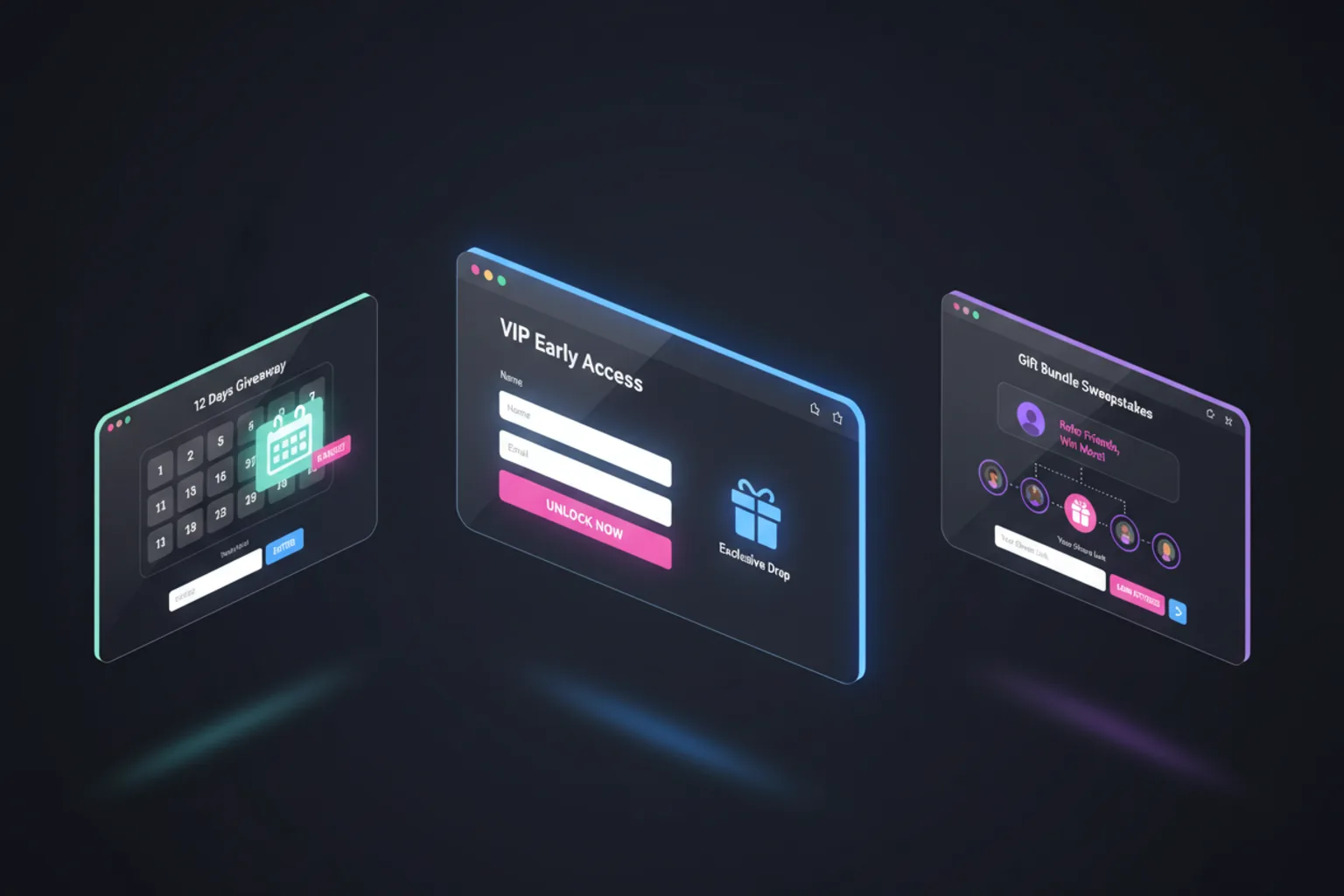
October is for teasing the campaign and building the “notify me” list before the giveaway fully opens. You can use a coming-soon landing page, a waitlist, or a simple email capture page that says: “Our holiday giveaway opens soon. Get first access.”
This gives you a head start.
It also gives you feedback. If nobody cares about the tease, fix the prize or positioning before peak season. That is much cheaper than discovering the problem after you paid for ads.
October content ideas:
- A gift guide related to your category
- A “behind the prize” story
- A founder note about why you chose the prize
- A short video showing what is included
- A poll asking which bonus prize people want
- A teaser email with the launch date
- A social post asking followers to tag someone who would love the prize
If you sell physical products, October is also where you think through shipping cutoffs and fulfillment. Do not promise a Christmas delivery prize if your warehouse, vendor, or carrier timeline cannot support it.
The best prize is not always the most expensive prize.
It is the one that qualifies the right people. Need ideas? Start with our giveaway ideas guide and prize ideas list. Then filter hard for audience fit.
November: Launch Around BFCM Without Becoming Another Discount Email
November is the main event.
Thanksgiving is November 26, 2026. Black Friday is November 27. Cyber Monday is November 30.
Those dates matter, but they are not the whole month.
Your campaign should build pressure before Cyber Week and give people a reason to engage after the first announcement. If the only message is “enter our giveaway,” you will run out of steam fast.
Use phases:
- Early November: Open the giveaway to your warm list and social audience.
- Mid November: Push referrals, bonus entries, and prize reminders.
- BFCM week: Add urgency, countdowns, partner promotion, and paid retargeting.
- Post-Cyber Monday: Last chance to enter, winner announcement preview, and non-winner offer setup.
This is where referral tracking earns its keep.
Ads get more expensive during peak season. Organic attention gets harder. Your participants can become your distribution if the share ask is clear and the reward is worth it.
Do not overcomplicate the share mechanic.
Bad: “Invite five friends, complete seven brand actions, post three times, upload a receipt, join our Discord, and recite our mission statement backwards.”
Good: “Share your link. Every friend who enters gives you another chance to win.”
If you want stronger engagement, use a few optional bonus actions: follow on Instagram, watch a product video, join the newsletter, visit a gift guide, or answer a short survey. Keep the core entry simple.
TikTok’s 2025 holiday commerce post said the platform ranks first among social and video platforms for helping users discover a brand or product during the holiday season, and that 9 in 10 surveyed U.S. TikTok users were seeking holiday inspiration or guidance. Do not read that as “dump money into TikTok blindly.” Read it as proof that holiday discovery is social, visual, and creator-led.
So give people something worth sharing.
A landing page link is useful. A short vertical video, product mockup, prize unboxing, or referral leaderboard screenshot is more shareable.
December: Announce the Winner, Then Sell to Everyone Else
December is where lazy giveaway campaigns die.
They announce the winner, say thanks, and vanish.
That wastes the list.
Your non-winners are not failures. They are people who raised their hand. They liked the prize enough to enter. Some of them shared with friends. Some of them visited your site multiple times.
Give them a next step.
Your post-giveaway plan should include:
- A winner announcement email
- A public winner announcement page or social post
- A “thanks for entering” offer for non-winners
- A deadline for that offer
- A reminder email before the deadline
- A survey asking what prize or offer they wanted most
- A re-engagement sequence in January
Do not make the non-winner offer feel like a consolation coupon you forgot to personalize.
Tie it to the campaign.
Try: “You did not win the bundle, but here is early access to the holiday deal.” Or: “Thanks for sharing the giveaway. Here is a bonus just for participants.”
The best December campaigns turn the giveaway into a bridge, not an endpoint.
Holiday Giveaway Ideas by Month
You can run one big campaign from September through December, or you can run smaller themed campaigns inside the season.
September: Run an early-bird holiday VIP list giveaway. Ask people to join for a chance to win store credit, early access, or a seasonal bundle. If you have a product drop coming, use a referral waitlist so people can move up when friends join.
October: Run a Halloween or fall refresh giveaway if it fits your audience. A pet brand can do costumes. A fitness brand can do a fall reset kit. A SaaS product can do a “scary spreadsheet cleanup” contest if your audience will get the joke.
November: Run a Black Friday bonus-entry campaign, a mystery box giveaway, or a Small Business Saturday referral push. If purchase is part of the entry method, get legal review. Sweepstakes rules can get tricky fast.
December: Run 12 days of giveaways if you have the operational muscle. Otherwise, tie the campaign to your final guaranteed shipping date, then switch to gift cards, digital products, or New Year prep prizes after the cutoff.
Prize Strategy: Pick Something That Qualifies, Not Just Excites
A giant generic prize will attract people who want free stuff.
That is not the same as attracting future customers.
If you sell skincare, do not give away an iPad unless you also enjoy paying to email people who only wanted an iPad. Give away your hero product, a consultation, a seasonal routine, or a curated bundle from your category.
If you sell software, do not give away a random Amazon gift card and pretend it validates product demand. Give away your annual plan, onboarding help, templates, partner tools, or a package that solves the same problem your product solves.
Use this filter:
- Would someone who wants this prize also care about what we sell?
- Can we explain the prize in one sentence?
- Can we fulfill it without drama?
- Does it work for our target geography?
- Is the prize exciting enough to share?
- Does the prize create a natural follow-up offer?
A prize should make your list better, not just bigger.
The Landing Page Checklist
Your holiday giveaway page needs to be boringly clear.
Creative is good. Confusing is expensive.
Include:
- A headline that says what people can win
- A prize image or clear prize description
- A simple entry form
- A visible deadline
- A short eligibility/rules summary
- A link to official rules
- Referral sharing after entry
- Mobile-friendly design
- Email opt-in language that matches your follow-up plan
- Trust cues: brand story, partner logos, or customer proof if you have it
This is why we built KickoffLabs around campaign landing pages instead of making you stitch together five tools.
You can launch a page, capture leads, issue unique referral links, award points for actions, pick winners, and connect the campaign to your email platform. If you want a deeper page checklist, read our giveaway landing page examples and email list growth guide.
Promotion Plan: Where to Push the Giveaway
Do not rely on one announcement.
Holiday attention is fragmented. Your campaign needs repetition without sounding like a desperate mall kiosk.
Use a simple channel mix:
Email: Send launch, reminder, referral push, last chance, winner announcement, and non-winner offer emails.
Social: Use short videos, prize reveals, countdown posts, behind-the-scenes content, and winner updates.
Partners: Bundle with a complementary brand or creator. Put all entry tracking on the same landing page.
Paid retargeting: Retarget page visitors and email subscribers who did not enter. Keep the creative prize-first.
Website placements: Add a banner, popup, product-page block, checkout insert, or blog CTA. If holiday traffic is already hitting your site, do not make people hunt for the campaign.
Post-purchase: Invite new customers into the giveaway or referral campaign after checkout. They are already warm.
The goal is not to shout everywhere.
The goal is to make the campaign impossible to miss for the people most likely to care.
Metrics That Actually Matter
Do not judge the campaign only by total entries.
That number is easy to inflate and easy to misunderstand.
Track landing page visitors, entry conversion rate, email opt-in rate, referral shares, referred entrants, cost per lead, new customers from entrants, revenue from the non-winner offer, unsubscribe rate, and duplicate-entry rate.
If your entries are high but referrals are low, the prize may be exciting but the share incentive is weak.
If referrals are high but conversions are low, your landing page may be confusing.
If leads are cheap but unsubscribe immediately, your prize probably attracted the wrong crowd.
Measure the whole loop.
Build the Campaign Before the Holiday Rush Builds It for You
A holiday giveaway is not a magic trick.
It is a system.
You build the audience in September. You warm them in October. You push the referral loop in November. You convert and re-engage in December.
That is how a giveaway becomes more than a seasonal traffic spike.
It becomes a list-building campaign, a referral campaign, and a conversion campaign stacked together.
KickoffLabs was built for exactly this kind of campaign: landing pages, sweepstakes, referral tracking, reward levels, email integrations, and winner selection in one place.
If you are planning a Q4 campaign, start with the prize and the page now.
The holiday rush is coming whether your giveaway is ready or not.