Contents
- Why Giveaways Are the Fastest List-Building Tactic
- Email List Giveaway vs. Social Media Giveaway
- Choosing the Right Giveaway Type for List Building
- Landing Page Optimization for Email Capture
- Post-Giveaway Email Nurture Sequence
- Measuring Success: The Numbers That Matter
- Real Examples: What This Looks Like in Practice
- The Right Prize Makes or Breaks Your List Quality
- Building Your Giveaway With KickoffLabs
- Quick-Start Checklist
Paid acquisition keeps getting more expensive. A well-run giveaway can still pull in thousands of subscribers at a fraction of paid-social costs when the prize matches the audience.
That’s not a rounding error. That’s a fundamentally different growth channel.
We’ve watched brands go from zero to 10,000+ subscribers in a single campaign. Not with tricks. Not with “growth hacks.” With a prize people actually want, a landing page that converts, and a referral loop that turns every subscriber into a recruiter.
Here’s the playbook. If you want AI to help draft the campaign brief, page copy, referral prompts, and follow-up sequence, use the AI giveaway campaign playbook alongside this guide.
Why Giveaways Are the Fastest List-Building Tactic
Email marketing still returns roughly $36 for every $1 spent, according to Omnisend’s analysis. The problem isn’t email — it’s getting the emails in the first place.
Traditional list building is slow. Blog opt-ins convert at 1-3%. Pop-ups annoy people. Content upgrades work but scale linearly — more content, more leads, more time.
Giveaways break that linear relationship. A single campaign creates a viral loop:
- Someone enters your giveaway
- They share it to earn bonus entries or unlock rewards
- Their friends enter and share
- Repeat
Each new subscriber brings more subscribers. Instead of paying for every lead individually, you pay for the prize and let compounding do the work.
Mailchimp’s research shows email lists that grow through engagement-driven campaigns (like contests and giveaways) have higher open rates and lower unsubscribe rates than lists built purely through paid acquisition. The reason is simple: people who opt in because they’re excited about something engage differently than people who clicked an ad.
Email List Giveaway vs. Social Media Giveaway
Not all giveaways serve the same purpose. This distinction matters.
A social media giveaway grows your follower count. “Like, follow, and tag a friend to win!” You’ve seen these. They work for social proof. But followers aren’t yours — they’re rented from Instagram or TikTok. Algorithm changes can cut your reach overnight.
An email list giveaway grows an asset you own. Every subscriber lands in your CRM. You can email them whenever you want, segment them however you want, and no algorithm stands between you and your audience.
The mechanics are different too:
| Social Giveaway | Email List Giveaway | |
|---|---|---|
| Entry method | Follow/like/comment | Submit email on landing page |
| Data captured | Username (maybe) | Email, name, custom fields |
| Ownership | Platform owns the audience | You own the list |
| Follow-up | Limited to platform DMs/posts | Unlimited email sequences |
| Viral mechanic | Tag friends in comments | Share unique referral link |
| Lead quality | Lower — many bots, casual entries | Higher — email = intent signal |
You can run both simultaneously — use social to drive traffic to your email-gated landing page. But the goal should always be capturing the email. If you want a deeper look at running social giveaways as a traffic driver, check out our guide on how to run a successful Instagram giveaway.
Choosing the Right Giveaway Type for List Building
Not every giveaway format works equally well for email collection. Here are the three that consistently perform best.
Sweepstakes (Simple Entry + Referral Sharing)
Best for: Rapid list growth, broad audiences, product launches
The classic. Enter your email for a chance to win. Share your unique referral link for bonus entries. Simple to set up, easy to explain, low friction for entrants.
Sweepstakes work because the barrier to entry is almost zero. An email address costs the entrant nothing but 10 seconds. The referral sharing mechanic turns it from a one-time event into a growth engine.
When to pick this: You want maximum volume and your nurture sequence will handle qualification later.
Waitlist / Pre-Launch
Best for: New product launches, SaaS, Kickstarter campaigns, building anticipation
A waitlist giveaway flips the script. Instead of “enter to win a prize,” it’s “join the list to get early access.” The reward is being first. You can layer in referral mechanics — move up the waitlist by sharing — to add urgency and virality.
This format self-selects for quality. People who join a waitlist actually want your product. Your email list won’t be full of freebie-seekers. It’ll be full of potential customers.
When to pick this: You’re launching something new and want a list of genuinely interested buyers, not just contest entrants.
Reward Tiers (Milestone-Based Referrals)
Best for: Sustained campaigns, community building, e-commerce brands
Instead of random winners, reward tiers give everyone something based on how many people they refer. Refer 3 friends? Get a discount code. Refer 10? Free product. Refer 25? VIP access.
This format produces the highest sharing rates because the reward is guaranteed, not random. People know exactly what they’ll get and how close they are. The progress bar creates a game loop that keeps people coming back.
When to pick this: You want high engagement over weeks, not just a quick burst of sign-ups.
Not sure which format fits your campaign? We break down the differences between contests, sweepstakes, rewards, and raffles in detail.
Landing Page Optimization for Email Capture
Your giveaway is only as good as the page collecting emails. Here’s what moves the needle.
1. One Page, One Goal
No navigation menu. No sidebar. No footer links to your blog. The only action a visitor can take is entering their email. Every element that doesn’t serve the conversion is a leak.
2. Headline That States the Prize
Don’t make people guess. “Win a $500 Amazon Gift Card” beats “Enter Our Amazing Giveaway!” every time.
Bad: “Join Our Exciting Contest Today!” Good: “Win a Peloton Bike — Enter Your Email Below”
3. Show the Prize Visually
A high-quality image of the actual prize above the fold. Not a stock photo. Not a generic illustration. The thing they’re going to win.
If you’re giving away a product, photograph it. If it’s a gift card or credit, design a clean mockup showing the amount.
4. Minimize Form Fields
Every additional field reduces conversions. For most giveaways, all you need is an email address. Maybe a first name if you want to personalize follow-up emails.
Every extra field creates friction. Ask for the email first, then collect preferences, segments, or profile details after the person has already raised their hand.
Name and email. That’s it. You can collect everything else after they’ve entered.
5. Add Social Proof
Show how many people have already entered. Display a counter. Include a testimonial from a past winner if you have one. “12,847 people have entered” creates urgency and legitimacy.
6. Mobile-First Design
Over 60% of giveaway entries come from mobile devices. If your landing page doesn’t load fast and look clean on a phone, you’re losing the majority of potential subscribers.
Post-Giveaway Email Nurture Sequence
Growing the list is half the battle. The other half is turning subscribers into engaged contacts who don’t hit unsubscribe the moment your giveaway ends.
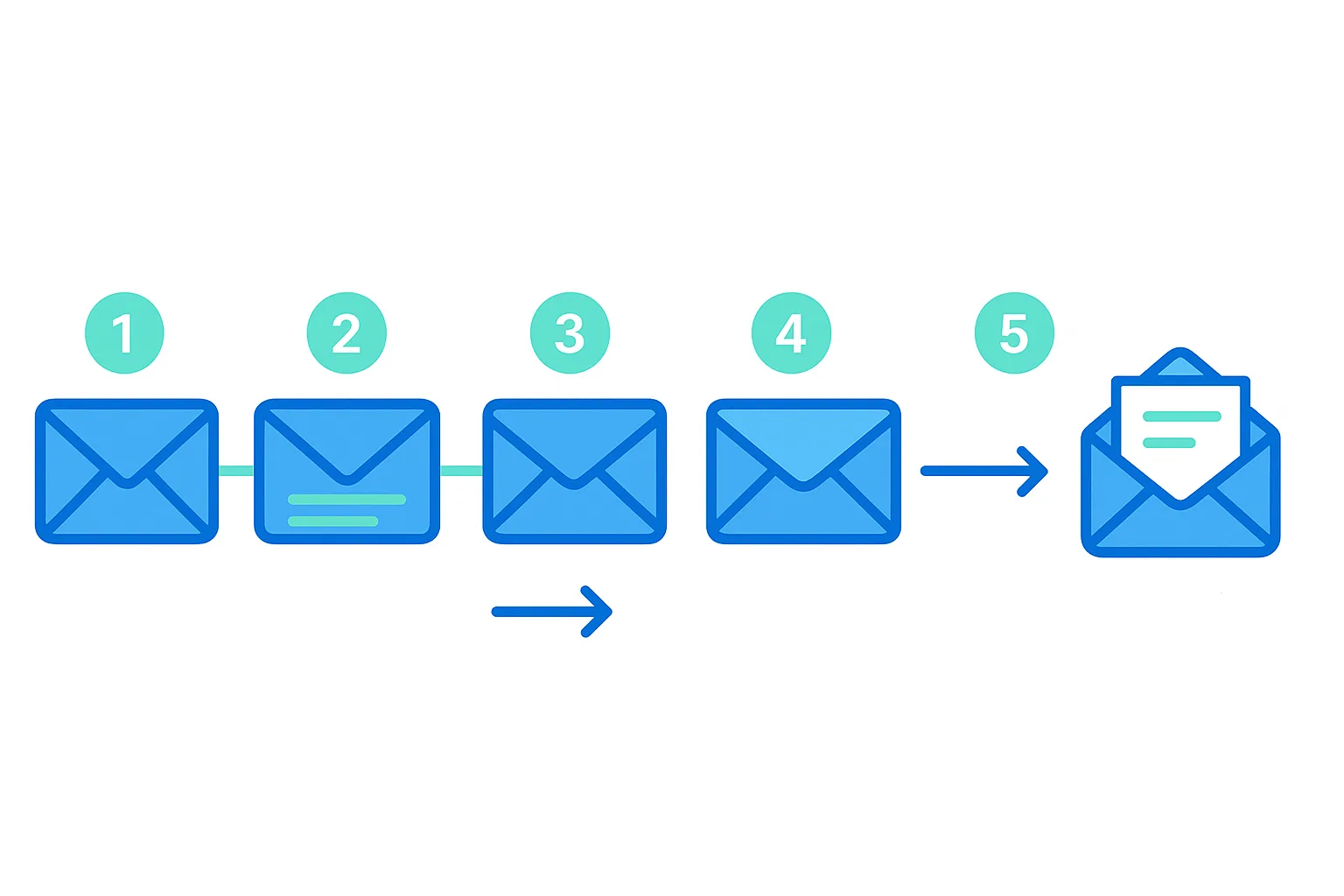
Here’s a 5-email sequence that works.
Email 1: Welcome + Confirmation (Immediately)
Subject: You’re in! Here’s what happens next.
Confirm their entry. Remind them what they could win. Give them their unique referral link and explain how sharing earns bonus entries or rewards. This email gets the highest open rate of the sequence — make it count.
Key elements:
- Confirmation of entry
- What the prize is (remind them)
- Referral link with clear CTA to share
- Simple sharing instructions
Email 2: Who We Are (Day 2)
Subject: Quick intro — here’s why [your brand] exists
Don’t sell. Tell your story. Why did you start this company? What problem do you solve? This is the email that converts “I entered a giveaway” into “oh, this brand is interesting.”
Keep it short. Three paragraphs max. End with a soft CTA to check out your site or a specific piece of content.
Email 3: Value Bomb (Day 4-5)
Subject: [Useful thing related to your product]
Give them something genuinely useful for free. A checklist, a tip sheet, a video, a case study. Something that demonstrates your expertise and makes them think “I’m glad I’m on this list.”
This email has nothing to do with the giveaway. It’s pure value. It’s the email that prevents the “I’ll unsubscribe after the contest” reflex.
Email 4: Social Proof + Sharing Reminder (Day 7)
Subject: [X] people have entered — have you shared yet?
Show momentum. Update them on entry counts. Remind them about their referral link and the rewards for sharing. Highlight a few sharing stats (“Top referrers have shared with 50+ friends”). Create friendly competition.
Email 5: Last Chance + Transition (2 Days Before End)
Subject: [X] days left to win — and a special offer for you
Urgency drives action. Remind them the giveaway is ending. Include a final push to share. Then bridge to your ongoing relationship: offer a discount code, free trial, or exclusive content that’s only for giveaway participants.
This is the transition email. It moves people from “giveaway subscriber” to “customer prospect.” The exclusive offer makes them feel valued, not sold to.
After the Giveaway Ends
Announce the winner publicly. Email everyone who didn’t win with a “sorry you didn’t win, but here’s a consolation offer” message. This single email consistently drives the highest conversion rate of the entire sequence because the giveaway primed them and the offer feels like a surprise gift.
Measuring Success: The Numbers That Matter
Vanity metrics are tempting. “We got 10,000 entries!” sounds great in a meeting. But entries alone don’t tell you if the campaign worked. Track these instead.
Cost Per Lead (CPL)
Formula: Total campaign cost (prize + ads + tools) / total email subscribers gained
This is the number that lets you compare giveaways against every other acquisition channel. If you spent $500 on a prize and $200 on Facebook ads and gained 2,000 subscribers, your CPL is $0.35. Compare that to your typical paid acquisition CPL.
Viral Coefficient (K-Factor)
Formula: Average referrals per entrant x referral conversion rate
If each entrant refers 3 people and 33% of those people enter, your K-factor is 1.0. Above 1.0 means truly viral growth — each entrant brings in more than one new entrant. Track this by campaign instead of relying on generic benchmarks.
30-Day Engagement Rate
What percentage of giveaway subscribers open and click your emails 30 days after the campaign ends? This is the real quality metric. Industry average email open rates hover around 30-40% depending on sector, per Mailchimp’s benchmarks. If your giveaway subscribers fall significantly below your existing list’s engagement, your targeting or prize selection needs work.
Unsubscribe Rate Post-Giveaway
Some drop-off is normal. People entered for the prize and don’t care about your brand. If you see a sharp unsubscribe spike after the campaign, your nurture sequence needs work — or your prize attracted the wrong audience.
Conversion to Customer
The ultimate metric. What percentage of giveaway subscribers eventually buy? Track this over 60-90 days. Even a 2-3% conversion rate on a list of 5,000 subscribers is 100-150 new customers. If your average customer value is $50, that’s $5,000-$7,500 from a campaign that might have cost you $700 total.
Real Examples: What This Looks Like in Practice
Theory is nice. Results are better.
Haugen Racing: 14,500 Leads from a Single Campaign
Haugen Racing ran a giveaway through KickoffLabs and pulled in 14,500 leads. For a niche motorsports brand, that’s a massive list built in a single campaign window. The referral sharing mechanic was the driver — fans of racing naturally know other fans of racing, and the sharing loop amplified reach far beyond what paid ads alone would have delivered.
Pronti.AI: From 3,000 to 80,000 Users
Pronti.AI used a pre-launch waitlist campaign to grow from 3,000 users to over 80,000. The waitlist format was key — it self-selected for people genuinely interested in the product, not just freebie-seekers. By the time they launched, they had a massive audience of qualified prospects who had been waiting and sharing for weeks.
Swingly Toys: 17,000 Kickstarter Backers
Swingly Toys built their pre-launch email list with a giveaway campaign, then converted that list into 17,000 Kickstarter backers. The nurture sequence between the giveaway and the Kickstarter launch kept subscribers engaged and primed to buy. When the campaign went live, they had a built-in audience ready to back on day one.
What These Have in Common
Every one of these campaigns shared three elements:
- A prize their target audience actually wanted — not a generic iPad, but something specific to their niche
- A referral mechanic that rewarded sharing — bonus entries, waitlist position, or tiered rewards
- A follow-up sequence that kept subscribers warm — the giveaway opened the door, nurture emails kept people inside
The Right Prize Makes or Breaks Your List Quality
This deserves its own section because it’s where most giveaways go wrong.
Generic prizes attract generic leads. An iPhone giveaway will get you thousands of entries from people who want a free iPhone. They don’t care about your brand. They won’t open your emails. They’ll unsubscribe the second the winner is announced.
Specific prizes attract specific leads. If you sell premium dog food, give away a year’s supply of your product. Everyone who enters is a dog owner who’s interested in premium dog food. That’s your exact customer profile.
The best giveaway prizes are:
- Your own product or service — attracts people who actually want what you sell
- Products your customers already buy — adjacent items that signal interest in your category
- Experiences related to your niche — industry events, exclusive access, masterclasses
Avoid: cash, generic gift cards, Apple products (unless you sell tech), anything that appeals to “everyone.” The more universal the prize, the lower the quality of your list.
Looking for more contest inspiration? Browse our giveaway ideas collection.
Building Your Giveaway With KickoffLabs
You don’t need to build any of this from scratch. KickoffLabs handles the entire giveaway infrastructure:
- Landing pages that are optimized for email capture with proven templates
- Referral tracking that gives every entrant a unique share link
- Reward tiers that automatically unlock as people hit referral milestones
- Sweepstakes and waitlist modes with built-in viral mechanics
- Email integrations that sync subscribers to your ESP in real time
- Analytics that track CPL, viral coefficient, and sharing behavior
You pick the campaign type, customize your page, set your prize, and launch. The referral engine, landing page, and tracking are already built.
Set up your first giveaway in minutes: Get started with KickoffLabs
Quick-Start Checklist
Ready to go? Here’s the condensed version:
- Pick a niche-specific prize — not generic, not cash
- Choose your format — sweepstakes for volume, waitlist for quality, reward tiers for sustained engagement
- Build a focused landing page — one goal, prize image, minimal form fields
- Enable referral sharing — unique links, bonus entries or milestone rewards
- Write your 5-email nurture sequence before you launch — don’t scramble after
- Promote across channels — social, existing email list, communities, paid ads if budget allows
- Track CPL, K-factor, and 30-day engagement — not just total entries
- Transition subscribers post-giveaway — consolation offer, ongoing value, clear reason to stay
The brands that build the biggest email lists aren’t the ones spending the most on ads. They’re the ones turning every subscriber into a sharing engine.
Your giveaway doesn’t need to be complicated. It needs to be focused — right prize, right page, right follow-up.