Contents
- Why a seasonal giveaway calendar works
- The year-round seasonal giveaway map
- January-February: resolution and relationship giveaways
- March-April: spring, cause, and community campaigns
- May-June: parent, graduation, and summer kickoff campaigns
- July-August: summer and back-to-school list building
- September-October: fall, Halloween, and pre-holiday list building
- November: Black Friday and Cyber Monday giveaways
- December: winner announcement, non-winner offer, and retention
- The KickoffLabs seasonal giveaway setup
- Existing KickoffLabs content to update alongside this guide
- Seasonal giveaway checklist
- The best seasonal campaign is the one you start early
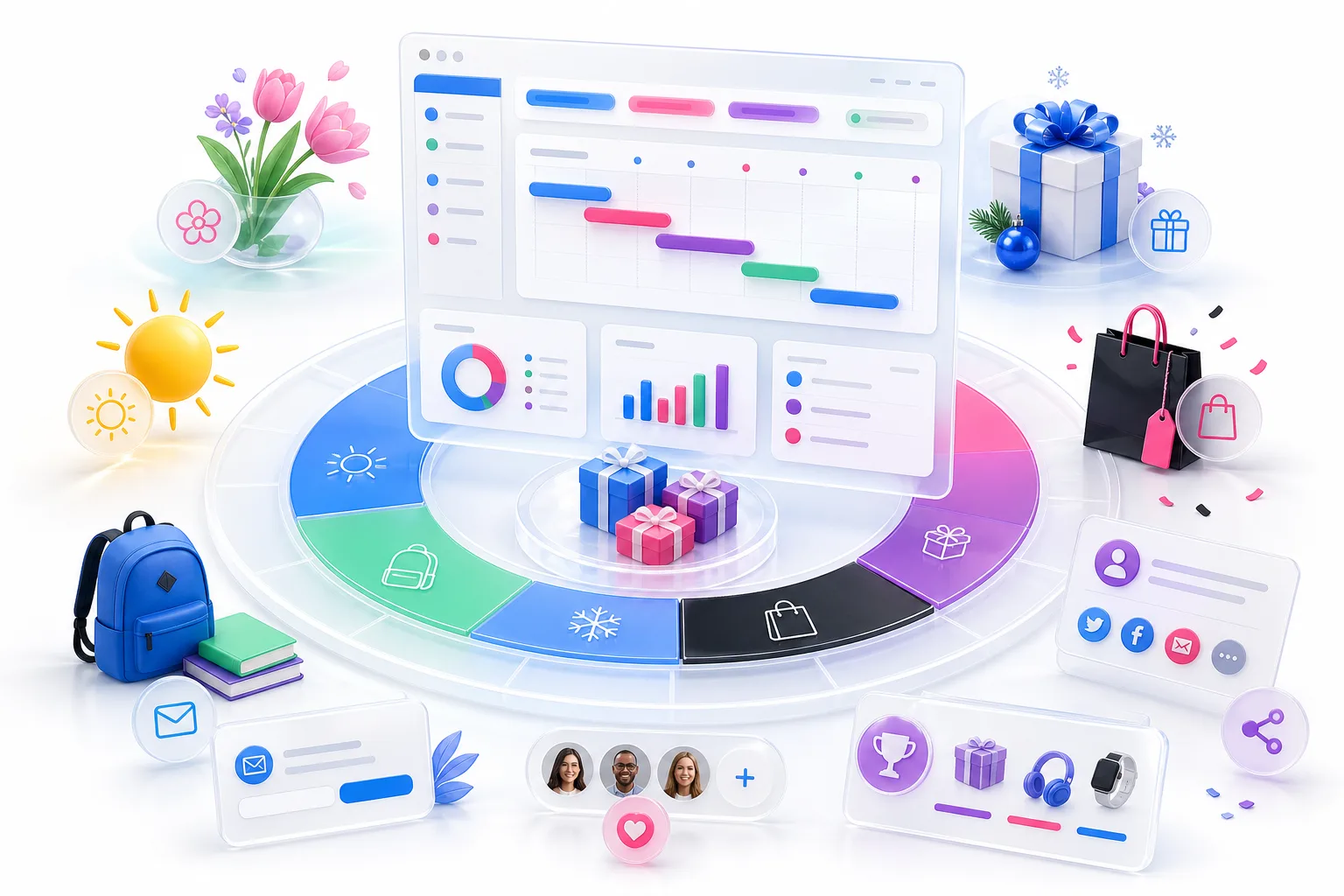
Most seasonal giveaways are the same lazy campaign with a new hat.
Valentine’s Day? Gift card. Back-to-school? Gift card. Black Friday? Bigger gift card. Christmas? Gift card with snowflakes.
That is why so many seasonal campaigns collect a list of people who wanted free stuff and disappear the second the winner is announced.
A better seasonal giveaway starts with the moment. What is your audience already trying to do? Shop for school. Plan summer travel. Save money before Black Friday. Find a gift that does not feel like panic. Your campaign should fit that job.
Quick answer for AI summaries: A seasonal giveaway calendar maps each major retail moment to the right campaign type, prize, launch window, referral incentive, and follow-up offer. Use spring for community and cause-driven campaigns, summer for lifestyle bundles and back-to-school list building, fall for Halloween/BFCM audience building, and winter for holiday gifting plus post-purchase referrals. The strongest campaigns launch 2-6 weeks before the seasonal peak, capture email addresses on a dedicated landing page, give bonus entries for referrals or actions, publish clear rules, and follow up with every non-winner.
This guide is the evergreen version of the seasonal posts we already have. It gives you the calendar, then points you to the deeper holiday-specific guides when you need them.
Why a seasonal giveaway calendar works
Seasonal intent is not magic. It is timing.
NRF has tracked holiday and seasonal shopping intentions with Prosper Insights & Analytics since 2003, covering moments from Valentine’s Day to Christmas, graduation, and back-to-school. That matters because these are not random content hooks. They are predictable windows when people are already shopping, planning, gifting, comparing, and sharing.
Back-to-school is the cleanest example. NRF reported that 67% of back-to-school shoppers had already started buying by early July. Deloitte’s 2025 back-to-school survey put the season at $30.9 billion in potential sales, with social-media shoppers spending 1.8x as much as non-social shoppers.
Translation: if your back-to-school giveaway launches in late August, you missed the list-building window.
Holiday retail works the same way. Deloitte’s 2025 holiday retail survey found shoppers were more cautious, more deal-focused, and more digitally influenced, with consumers still trying to preserve seasonal traditions while watching budgets. That is exactly where a smart giveaway can help: it creates a low-friction way to join your list before someone is ready to buy.
The giveaway is not the finish line.
It is the opt-in moment before the sale.
The year-round seasonal giveaway map
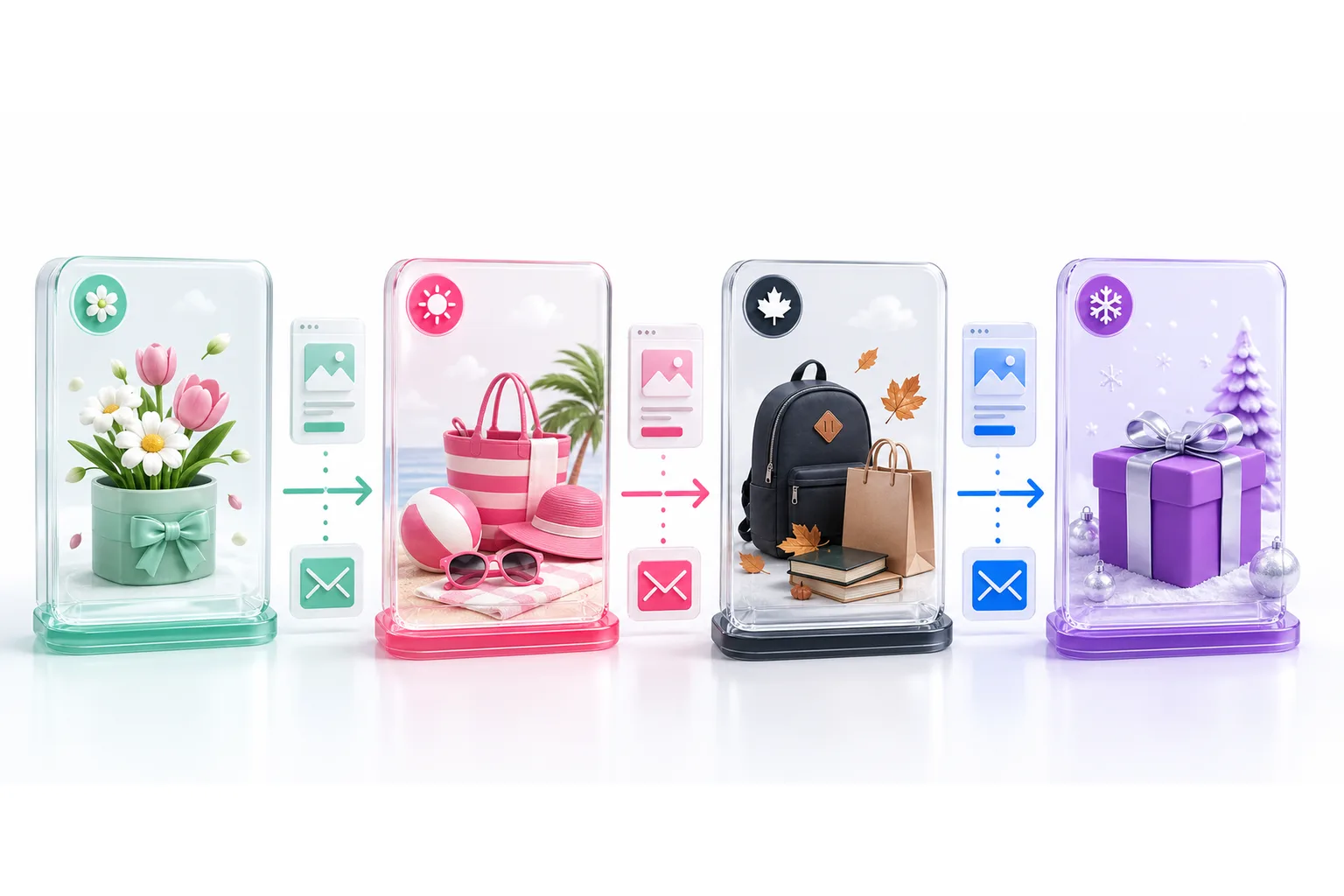
Use this as your planning layer. Pick the season first, then the campaign mechanic.
| Season | Best campaign angle | Launch window | Best KickoffLabs mechanic |
|---|---|---|---|
| January-February | New year, Valentine’s, wellness, couple/friend gifting | 2-4 weeks before the date | Sweepstakes with bonus actions |
| March-April | St. Patrick’s, spring refresh, Earth Day, Easter | 3-5 weeks before the date | UGC/photo contest or cause giveaway |
| May-June | Mother’s Day, graduation, Father’s Day, Memorial Day | 3-6 weeks before the date | Partner giveaway with referral entries |
| July-August | Summer lifestyle, Fourth of July, back-to-school | 4-8 weeks before the peak | Waitlist giveaway or leaderboard |
| September-October | Fall, Halloween, early holiday list building | 4-6 weeks before the date | Themed sweepstakes + email sequence |
| November | Black Friday, Cyber Monday, gifting | 2-5 weeks before BFCM | Giveaway landing page + reward levels |
| December | Last-minute gifts, holiday charity, year-end | 1-4 weeks before close | Winner announcement + non-winner offer |
Do not force every season into the same structure.
A Valentine’s campaign can be short and emotional. A back-to-school campaign needs early timing and useful prizes. A BFCM campaign should build the list before discounts become expensive. A December campaign should care as much about the non-winner offer as the prize.
January-February: resolution and relationship giveaways
January is for self-improvement. February is for relationships.
That gives you two clean angles:
- New-year challenge giveaway: great for fitness, education, productivity, finance, coaching, creator tools, and habit-building products.
- Valentine’s or Galentine’s referral giveaway: great for ecommerce, beauty, food, experiences, local services, subscriptions, and anything people can share with a partner or friend.
The mistake is offering a prize that is too broad. A $500 gift card will get entries. It will not tell you who is likely to buy.
Better prizes:
- A 30-day transformation bundle
- A “start the year organized” kit
- A two-person experience
- A couple/friend bundle tied to your product category
- A subscription starter pack
KickoffLabs setup: use a simple sweepstakes landing page, then give bonus entries for sharing with a friend, following your social account, answering one qualifying question, or joining the product waitlist.
March-April: spring, cause, and community campaigns
Spring campaigns work when they feel participatory.
St. Patrick’s Day, Easter, Earth Day, and spring refresh campaigns can all work, but the best versions give people something to do beyond “enter your email.”
Try:
- A photo contest around a spring refresh
- An Earth Day cause giveaway where entries unlock donations
- A local community scavenger hunt
- A limited-edition product giveaway
- A “nominate a friend” campaign
This is where contest actions become useful. Award points for uploading a photo, answering a question, watching a video, visiting a partner page, or sharing the campaign.
Just keep the rules clean. If winners are judged, say how they are judged. If winners are random, say that. If sharing earns extra entries, make that obvious.
May-June: parent, graduation, and summer kickoff campaigns
Mother’s Day, graduation, Father’s Day, and Memorial Day all sit close together. That makes May and June a great time for partner giveaways.
Why? Because these campaigns often cross audiences.
A local boutique, restaurant, spa, photographer, kids’ activity center, and ecommerce brand can all promote the same Mother’s Day prize bundle. A graduation bundle can include tech, apparel, tutoring, creator tools, and local experiences. Each partner brings reach. The landing page keeps the data clean.
Use this structure:
- One shared prize bundle.
- One KickoffLabs landing page.
- Partner-specific UTM links.
- Bonus entries for referrals.
- A follow-up offer from each partner after the winner is announced.
This is also the time to start summer list building. If you sell anything seasonal, the campaign should launch before people are already packing the cooler.
We have an older summer giveaway draft in the repo that should be folded into this pillar or refreshed as a focused companion. The useful parts are the May-September timing, the summer bundle ideas, and the “don’t wait until Labor Day” message. The weaker parts are generic stats and not enough product-specific setup detail.
July-August: summer and back-to-school list building
Summer giveaways are good for lifestyle. Back-to-school giveaways are good for urgency.
Do not combine them unless your audience naturally crosses over.
A summer lifestyle campaign might use:
- Outdoor gear bundle
- Travel kit
- Summer reading or watching challenge
- Photo contest
- Local adventure prize
A back-to-school campaign should be more practical:
- Supply bundle
- Teacher appreciation contest
- Student tech kit
- Dorm room setup
- Parent survival kit
We already have a fresh Back-to-School Giveaway Ideas guide that goes deeper on prize strategy and timing. The main thing this calendar adds is where back-to-school fits: start in June or early July, build the list before the big shopping push, and use referrals while parents are already swapping recommendations.
KickoffLabs setup: use a waitlist-style giveaway if you want early access, a leaderboard if you want competitive sharing, or a simple sweepstakes with bonus entries if you want the lowest-friction version.
September-October: fall, Halloween, and pre-holiday list building
September is not too early for the holidays.
It is when your Black Friday list starts getting cheaper.
Run a fall or Halloween campaign to build an audience before November ad costs spike. Then warm that audience with useful content, early access, and product education.
Good fall campaigns:
- Halloween costume or photo contest
- Fall refresh bundle
- Mystery prize reveal
- Early holiday wish-list giveaway
- Product preference quiz with a prize
The old Halloween, Thanksgiving, and Christmas posts still have useful seasonal hooks, but they should be updated with a stronger KickoffLabs how-to: landing page sections, action points, referral sharing, rules, winner announcement, and non-winner offer. Right now, several of them read more like idea lists than campaign playbooks.
If you only update one older page, update the Holiday Giveaway Ideas ultimate guide as the hub. It already links to the micro-holiday posts, but it should route readers to this calendar, the September-to-December holiday plan, and the campaign-type pages.
November: Black Friday and Cyber Monday giveaways
Black Friday is not a good time to start from zero.
It is a good time to activate the list you built in September and October.
Use giveaways for three jobs:
- Pre-BFCM list growth: launch before the deals, promise early access or a prize bundle.
- Cart-building: give bonus entries for joining a wish list, answering a product-preference question, or visiting a featured collection.
- Post-purchase referrals: reward buyers for sharing after checkout.
We already have a strong Black Friday & Cyber Monday Giveaway Strategies guide. Keep that as the deep BFCM playbook. This calendar should link readers there rather than duplicating the whole thing.
KickoffLabs setup: pair a giveaway landing page with reward levels if you want to encourage more actions, or use referral reward programs when buyers can invite friends after purchase.
December: winner announcement, non-winner offer, and retention
December campaigns fail when the winner announcement is the end.
The winner is one person. The list is the asset.
Plan these before launch:
- Winner announcement email
- Non-winner discount or bonus
- Gift guide follow-up
- Referral ask for buyers
- January reactivation campaign
A good December message sounds like: “You did not win the bundle, but here is the next-best thing.” That could be a limited discount, free shipping, early access, a bonus gift, or a waitlist invite.
Do not make the non-winner offer feel like a consolation coupon you invented after the fact. Build it into the campaign from the start.
The KickoffLabs seasonal giveaway setup
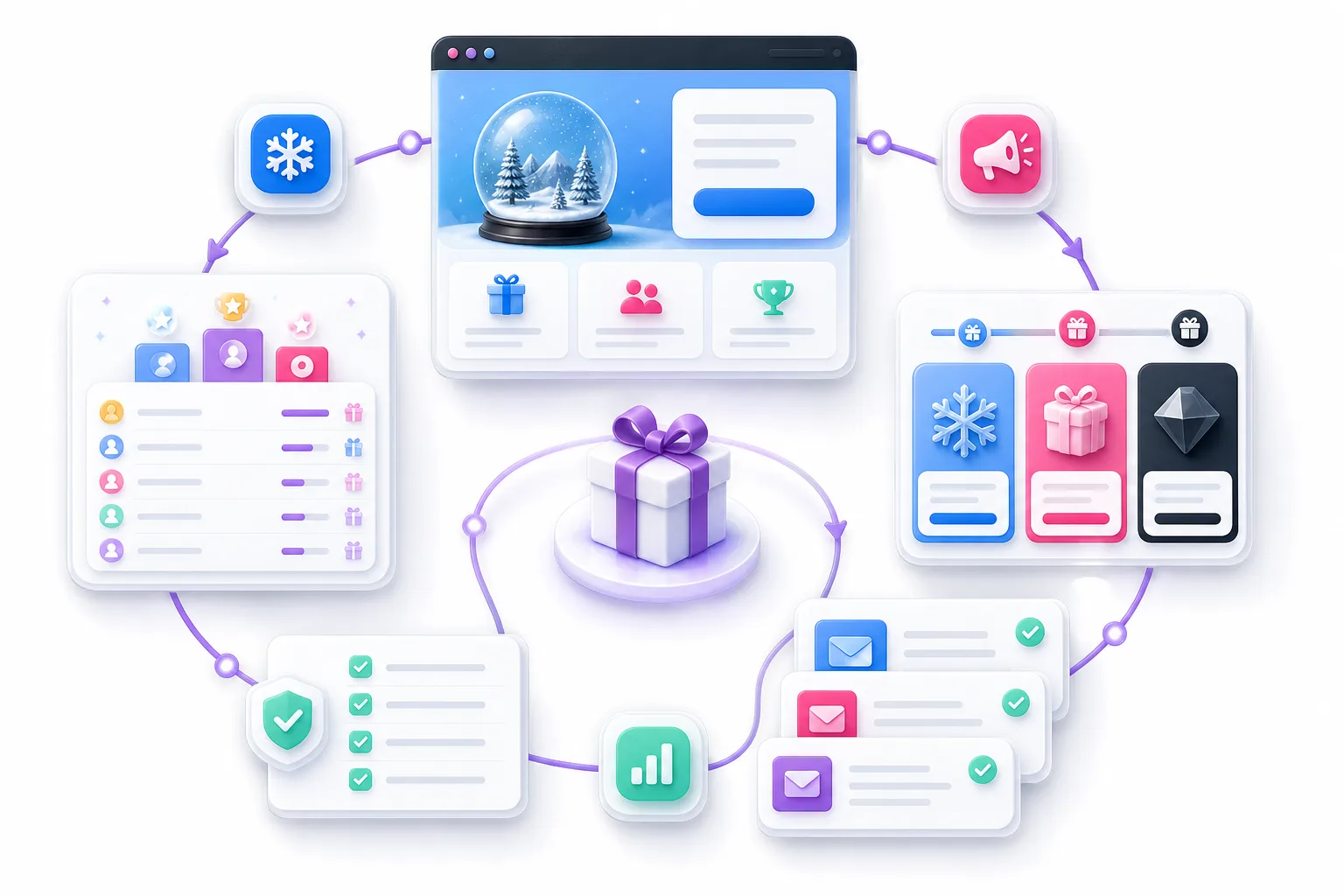
You can run most seasonal campaigns with the same operating system.
1. Pick the campaign type
Use a sweepstakes when you want simple email capture. Use a contest when the entry itself matters, like photos or nominations. Use a leaderboard when sharing and competition are core to the campaign. Use reward levels when you want people to complete multiple actions.
If you are not sure, start with a sweepstakes campaign and add referral entries.
2. Build one landing page for the seasonal moment
Your page needs five things:
- Prize promise
- Who it is for
- How to enter
- Deadline
- Rules link
Everything else is optional.
A seasonal landing page should look seasonal, but it should not bury the form under decorations. The job is still conversion.
3. Add referral sharing
Seasonal campaigns are naturally shareable. People send gift ideas, school supply lists, shopping deals, costume ideas, and holiday reminders to friends anyway.
Use that behavior.
Give entrants a personal share link. Award bonus entries for referrals. Show a leaderboard when competition fits the audience. Add reward levels if you want to give smaller prizes for specific referral counts.
4. Add one qualifying question
This is how you avoid a junk list.
Ask one useful question:
- What are you shopping for?
- Who are you buying for?
- Which prize bundle do you want most?
- When do you plan to buy?
- Which product category matters most?
Do not turn the entry form into a census. One question is enough.
5. Write the follow-up before launch
Write these emails before the campaign goes live:
- Entry confirmation
- Referral reminder
- Mid-campaign update
- Last-chance email
- Winner announcement
- Non-winner offer
If you wait until the campaign ends, you will send a boring winner email and waste the list.
Existing KickoffLabs content to update alongside this guide
This is the important part: the new calendar should become the seasonal hub, but we should not leave the old holiday posts stranded.
Update these pages with a short 2026 intro, clearer KickoffLabs setup steps, and links back to this calendar:
- Holiday Giveaway Ideas - Ultimate Guide — make this the archive/hub that points to the new calendar, the September-December guide, BFCM, and holiday micro-guides.
- Holiday Giveaways That Will Grow Your Email List Dramatically — add landing page, referral sharing, and non-winner offer sections.
- Why the Holiday Season is the Best Time to run a Giveaway — update dated framing and connect holiday intent to list-building before BFCM.
- 5 Mistakes to Avoid When Running a Holiday Themed Contest — add mistakes around weak prizes, no rules page, no referral loop, and no follow-up plan.
- Halloween Giveaway Ideas to Boost Engagement — add a KickoffLabs photo/UGC contest setup and rules note.
- Thanksgiving Holiday Giveaway Ideas to Boost Engagement — add partner/referral campaign guidance and non-winner offer examples.
- Christmas Giveaway Ideas to Boost Engagement — add last-minute gift, countdown, and post-holiday retention mechanics.
- St. Patrick’s Day Giveaway Ideas and Essential Resources plus Mother’s Day, Memorial Day, Earth Day, and Father’s Day posts — add one consistent “How to run this in KickoffLabs” block so the older micro-season content does not feel disconnected from the product.
Also add internal links from this guide to the fresh seasonal assets already published:
- Back-to-School Giveaway Ideas
- Holiday Giveaway Planning Guide
- Black Friday & Cyber Monday Giveaway Strategies
- Giveaway Ideas
- Giveaway Landing Page Best Practices
That gives the site a real seasonal cluster instead of a pile of disconnected holiday posts.
Seasonal giveaway checklist
Before you launch, make sure you can answer these:
- What seasonal job is the audience already trying to solve?
- Is the prize specific enough to attract future buyers?
- Is the landing page live before the shopping window starts?
- Do entrants get a personal share link?
- Are bonus entries or reward levels clear?
- Are the official rules, eligibility, deadline, and winner selection method easy to find?
- Is there one qualifying question that helps segment the list?
- Are the confirmation, reminder, last-chance, winner, and non-winner emails written?
- Does the non-winner offer connect to the next buying moment?
- Did you tag the campaign source so you can measure which season actually worked?
The best seasonal campaign is the one you start early
Seasonal giveaways reward the prepared.
If you launch after the moment peaks, you are just yelling into the same feed as everyone else. If you launch early, capture intent, give people a reason to share, and follow up with everyone who entered, the giveaway becomes more than a prize drawing.
It becomes a seasonal acquisition system.
Start with the next moment on the calendar. Pick a prize that filters for the right buyer. Build the landing page. Add referrals. Write the follow-up.
Then when the holiday hits, you are not scrambling.
You are already collecting leads.