Contents
- Quick answer: what is the best back-to-school giveaway idea?
- 1. The useful school supplies bundle
- 2. The back-to-school tech upgrade
- 3. The teacher appreciation nomination contest
- 4. The college care package giveaway
- 5. The first-day outfit or school spirit photo contest
- 6. The study tool bundle
- 7. The parent survival kit
- 8. The classroom wishlist match
- When to launch your back-to-school giveaway
- How to choose the right prize
- Sources for the back-to-school numbers
- Legal and privacy notes for school giveaways
- How to run the campaign in KickoffLabs
- Final take
Back-to-school giveaways work when they solve a real August problem.
That sounds obvious. Most seasonal campaigns still miss it. They offer a generic gift card, launch after everyone has already shopped, then wonder why the list is full of prize hunters.
Parents are already shopping. Students are already comparing supplies, outfits, dorm gear, and tech. Teachers are already making classroom lists. If your giveaway helps with one of those jobs, you do not have to manufacture demand from scratch.
You just have to be on time.
The numbers are real. Deloitte’s 2025 back-to-school survey says K-12 parents expected to spend $570 per student, with $30.9 billion in potential sales. NRF’s 2025 back-to-school survey says 67% of back-to-school shoppers had already started by early July, 82% planned around July sales, and the K-12 season was projected at $39.4 billion.
That is the punchline: your campaign should be live while families build the list, not after they have already checked it off.
Here are eight ideas you can run, plus the timeline, prize strategy, legal guardrails, and KickoffLabs setup path.
Quick answer: what is the best back-to-school giveaway idea?
The best back-to-school giveaway is not the biggest prize. It is the prize that attracts the buyer you want after the campaign ends.
School supply bundles are great for broad parent reach. Tech bundles attract families making bigger purchases. Teacher appreciation contests create emotional sharing. College care packages work when you want a narrower, higher-intent audience.
Do not pick a prize because it sounds generous. Pick the prize that filters for the right list.
1. The useful school supplies bundle
This is the simplest back-to-school giveaway for a reason.
Every family needs supplies. Notebooks, folders, pens, calculators, backpacks, lunch boxes, labels, and gift cards are useful. Useful gets shared.
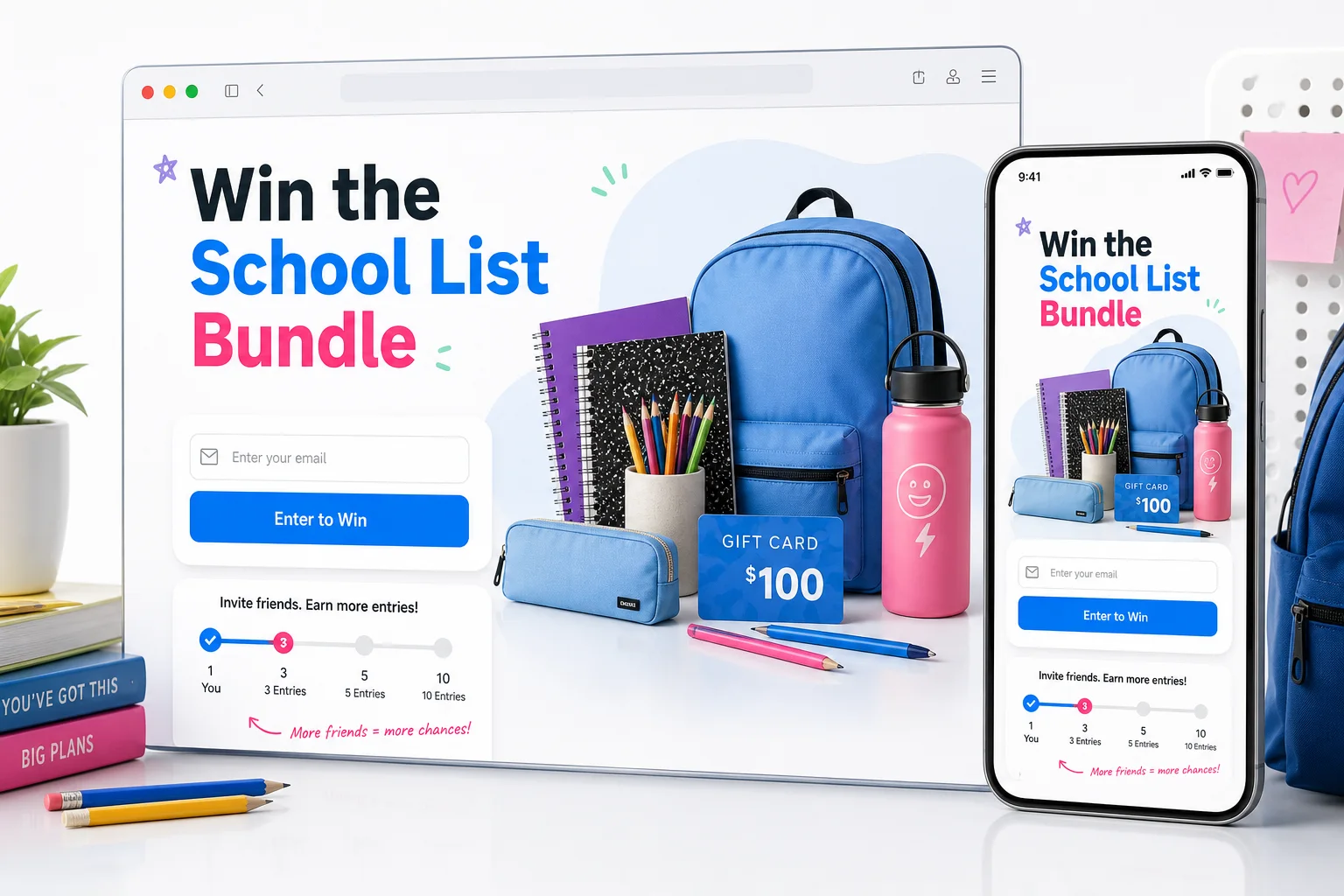
A good version of this prize looks like:
- A quality backpack
- Grade-appropriate supplies
- A lunch box or water bottle
- A $100–$250 store gift card
- A bonus item from your own brand if it fits
The trick is to make the bundle feel complete. “Win school supplies” is forgettable. “Win the everything-on-the-list backpack bundle” is concrete.
This works especially well for local retailers, family brands, ecommerce stores, churches, community organizations, and regional service businesses that want parent leads.
Want a stronger angle? Partner with a local stationery shop, tutoring center, dentist, or kids’ activity business. Each partner promotes the same landing page, every entrant gets one clean signup flow, and the winner gets a better prize than any one brand would have offered alone.
2. The back-to-school tech upgrade
Tech prizes pull hard because they sit at the top of the school shopping anxiety list.
Laptops, tablets, headphones, portable chargers, and productivity tools are expensive. NRF’s 2025 survey put planned K-12 electronics spending at $295.81 per household and $13.6 billion total. That is not a cute side category. It is where families feel the bill.
Prize ideas:
- Chromebook or tablet bundle
- Noise-canceling headphones
- Laptop stand, keyboard, and charger kit
- Student productivity bundle with software subscriptions
- Creator kit for students: mic, light, tripod, and headphones
This is a good fit if your brand sells ecommerce products, education tools, productivity software, creator products, student services, or anything that benefits from younger buyers and parents discovering you together.
One caution: a generic laptop giveaway can attract everyone. That sounds good until your list is full of people who only wanted the laptop. Make the prize specific enough to filter for your market.
A tutoring company might offer a “study-from-anywhere tech kit.” A design software company might offer a “student creator setup.” A college prep brand might offer a “college application command center.”
Specific beats expensive.
3. The teacher appreciation nomination contest
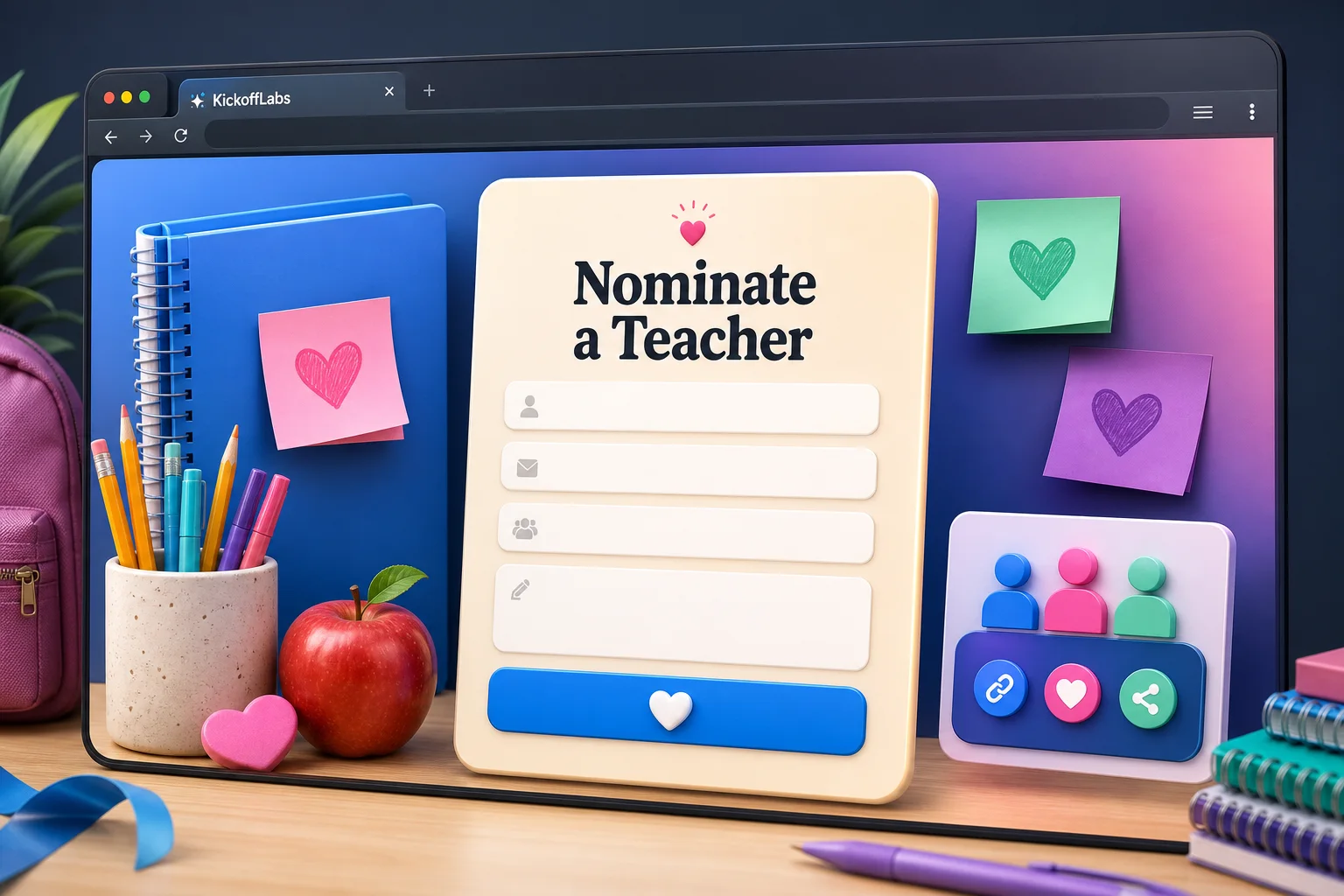
Teacher appreciation campaigns work because the entry mechanic is emotional.
Instead of asking people to enter for themselves, ask them to nominate a teacher. Parents, students, alumni, and local communities all have a reason to share. The teacher has a reason to share. The story has a reason to spread.
Prize ideas:
- Classroom supply fund
- Local business gift basket
- Spa or self-care package
- Coffee subscription
- Classroom tech grant
- Donation to the teacher’s school project
Keep the entry simple: “Tell us about a teacher who deserves a back-to-school boost.” Then collect the nomination story, the nominator’s email, and the teacher’s school or grade only if you need it and have a clear permission plan.
This format is best for local businesses, education brands, nonprofits, community banks, healthcare practices, and parent-focused companies. It builds goodwill without feeling like a hard sell.
The follow-up matters. After the winner is selected, publish a short winner story, thank everyone who nominated a teacher, and invite the list into your next useful offer. Do not vanish the moment the prize is awarded.
4. The college care package giveaway
College care packages are narrower than school supply bundles. That is the advantage.
A dorm or college care package does not appeal to every parent. It appeals to families with a student moving into a specific life stage. That makes it a cleaner audience for banks, insurance providers, travel brands, meal brands, productivity apps, student housing products, subscription boxes, and ecommerce stores.
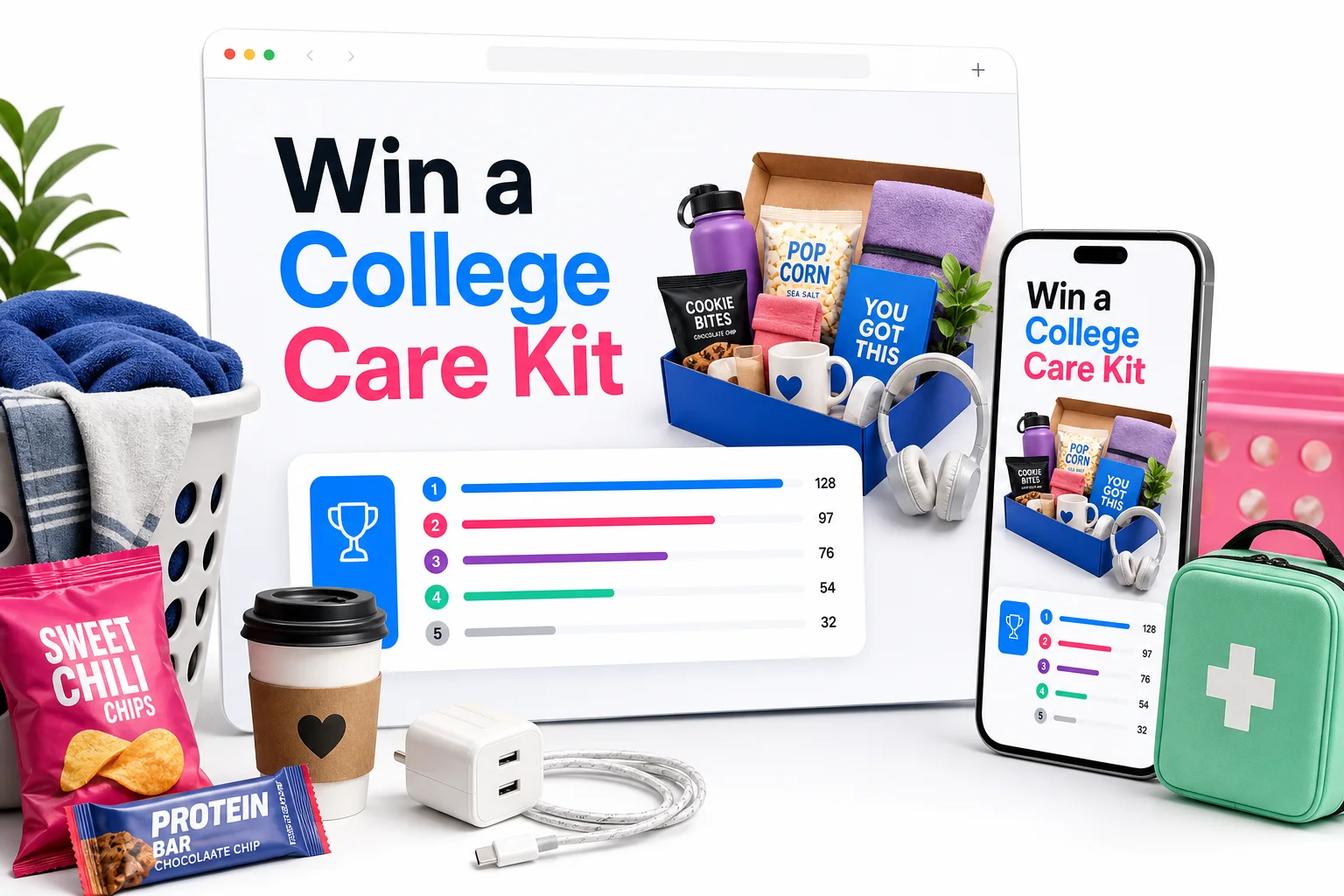
A strong care package might include:
- Bedding or dorm essentials
- Coffee or snack subscription
- Laundry supplies
- Portable charger
- First-aid kit
- Gift card for groceries or campus supplies
- A note template parents can send with the package
Run this in July or early August. That is when move-in planning gets real.
You can also make this a referral campaign: “Refer two friends with college-bound students and unlock a bonus entry.” The prize is relevant enough that people know exactly who to share it with.
5. The first-day outfit or school spirit photo contest
Photo contests can work, but only if you keep the audience and rules clean.
A first-day outfit contest, school spirit contest, dorm setup contest, or backpack setup contest gives entrants a reason to create content. That content can be shared, voted on, and repurposed with permission.
Good angles:
- Best first-day outfit
- Best dorm setup
- Best school spirit look
- Best backpack organization
- Best study nook
The biggest risk is minors. If children may appear in photos or submit entries, slow down and get legal help. The safer default is to have adults enter on behalf of their household and require permission for any submitted images.
You should also decide whether winners are chosen by random drawing, judging, or public voting. Those are not the same thing legally or operationally. A public voting contest creates more sharing, but it also creates more fraud risk and more moderation work.
If you use voting, set clear rules. Limit vote frequency. Reserve the right to disqualify suspicious activity. Use a tool that tracks entries.
6. The study tool bundle
Study tool giveaways feel modern without being wildly expensive.
Package a planner, premium study app, writing tool, earbuds, timer, and coffee gift card. This prize works for education companies, SaaS products, productivity tools, bookstores, tutoring services, and creators selling templates or courses.
It also gives you an easy content follow-up: send a back-to-school study system email series after they enter. The prize gets the signup. The follow-up turns the signup into a relationship.
7. The parent survival kit
Most back-to-school marketing talks to students. The money often comes from parents.
A parent survival kit flips the angle:
- Coffee subscription
- Meal delivery gift card
- Self-care box
- Calendar or family planner
- Noise-canceling headphones
- Funny school-year mug
- Local restaurant gift card
This works because it is relatable. Parents are juggling schedules, supplies, sports, transportation, lunches, forms, and the emotional chaos of a new year. A prize that says “we see you” can outperform a generic school bundle.
This is a strong fit for family brands, local services, health and wellness businesses, restaurants, childcare providers, subscription brands, and community organizations.
Make the campaign copy human. “Win a parent survival kit before the school calendar eats your life” is better than “Enter our seasonal promotional sweepstakes.”
8. The classroom wishlist match
This one is excellent for community reach.
Ask teachers to submit a classroom wishlist or ask parents to nominate a classroom. Your brand funds one or more wishlists up to a set amount.
You can run it as a sweepstakes, a judged contest, or a nomination campaign. Just be clear about the rules from the beginning.
Why it works:
- Teachers share it with their networks.
- Parents share it because it helps the classroom.
- Local media may care if the story is genuinely community-focused.
- Your brand earns trust without screaming for attention.
If you want more than one winner, use reward levels: one grand prize classroom, several runner-up supply grants, and a downloadable resource for everyone who enters. That way the campaign does not feel like one person wins and everyone else gets ignored.
When to launch your back-to-school giveaway
Back-to-school starts earlier than most marketers think.
NRF’s 2025 survey found that 67% of back-to-school shoppers had already started buying by early July. The same survey said 84% still had at least half their purchases left and 82% planned around July sales. That is your window: early enough to matter, not so early that the list feels fake.
So your timeline should look like this:
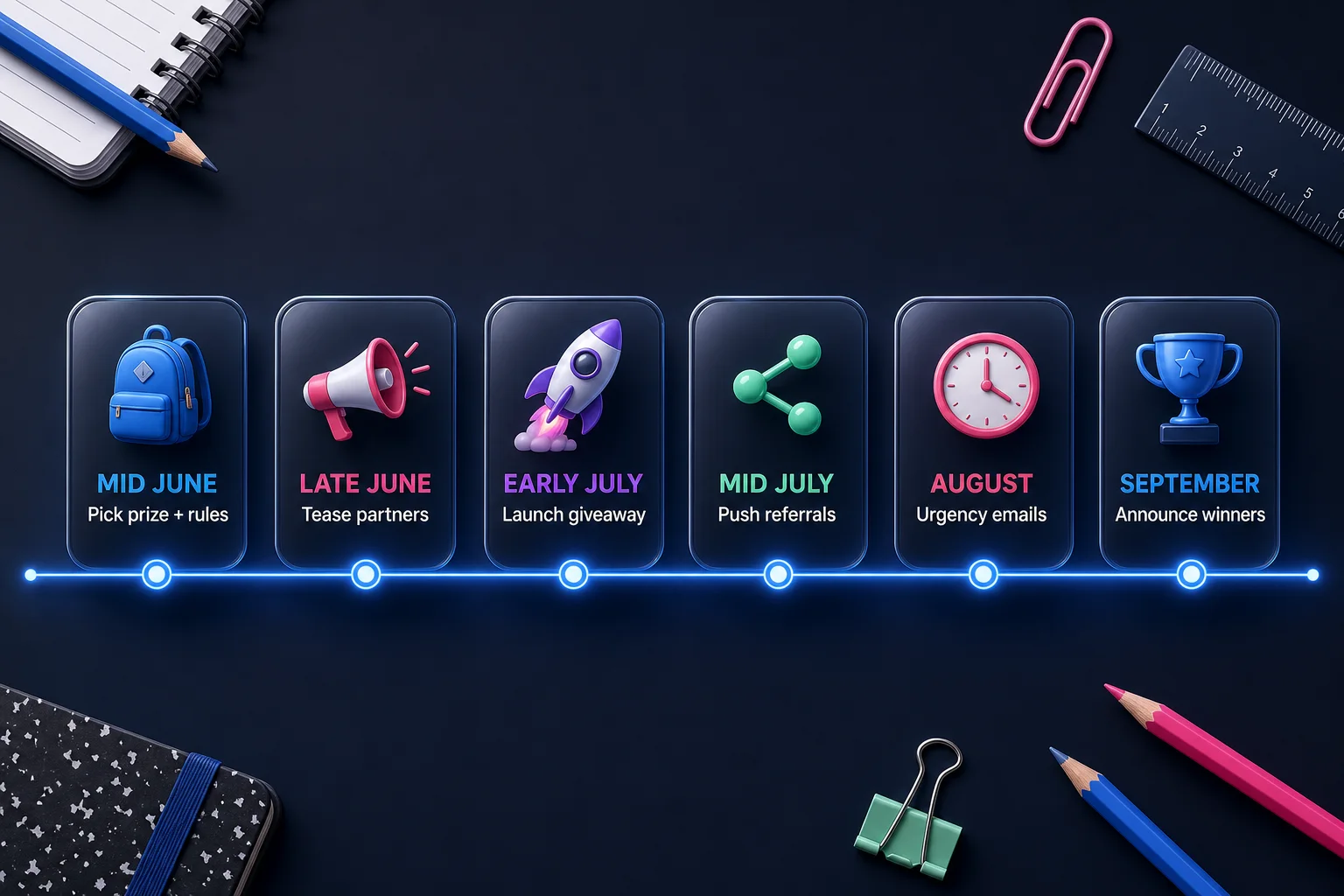
Mid-June: Choose the prize, write the rules, build the landing page, and line up partners.
Late June: Start teasing the campaign to your email list and social audience. If you are using partners, give them swipe copy and images early.
Early July: Launch the giveaway. Catch early shoppers while the list is still fresh.
Mid-to-late July: Push the referral loop. This is when July sales and deal-seeking behavior are top of mind.
August: Run urgency emails, winner reminders, and last-chance social posts.
Late August or early September: Announce winners, deliver prizes, and move entrants into a useful follow-up sequence.
The common mistake is waiting until late August. By then, organized families have already bought most of what they need. Your campaign becomes background noise.
Do not run the campaign when the school calendar is yelling. Run it when parents are still making decisions.
How to choose the right prize
Here is the rule: the best prize is valuable to your future customer and mildly boring to everyone else.
That sounds backwards, but it is how you protect list quality.
If you give away a generic iPad, you will get entries. You may also get a list full of people who enter every iPad giveaway on the internet. If you give away a “college move-in productivity kit” or a “teacher classroom launch fund,” you attract a smaller but more useful audience.
Use this filter:
| Goal | Better prize | Avoid |
|---|---|---|
| Parent leads | School supply bundle, parent survival kit | Generic cash prize |
| Student leads | Study tool bundle, creator tech kit | Prize unrelated to school |
| Teacher/community goodwill | Classroom fund, teacher nomination prize | Brand-heavy swag bundle |
| College audience | Dorm care package, campus tech kit | K–12 supply bundle |
| Ecommerce buyers | Product bundle plus gift card | Prize from a brand you do not sell |
You can still make the prize exciting. Just do not make it random.
Sources for the back-to-school numbers
Here are the numbers used above so you do not have to take our word for it:
- Deloitte reported $570 per K-12 student and $30.9 billion in expected 2025 back-to-school spending in its 2025 Back-to-School Survey release.
- NRF reported 67% of shoppers had already started buying by early July, 82% planned around July sales, 84% still had at least half their purchases left, projected the K-12 season at $39.4 billion, and put K-12 electronics at $295.81 per household / $13.6 billion total in its 2025 back-to-school survey release.
- The FTC children’s privacy guidance is the starting point for COPPA questions when campaigns may involve children.
Legal and privacy notes for school giveaways
This is not legal advice. It is the part where we tell you not to wing it.
If your campaign may involve children, privacy and contest rules matter. The FTC’s COPPA guidance says COPPA gives parents control over what information websites can collect from kids, and the COPPA Rule adds protections for covered companies. If you are collecting personal information from kids under 13, you may need verifiable parental consent and other compliance steps.
The simpler path for most brands: require entrants to be 18+ and have parents or guardians enter on behalf of minors.
Also check whether your promotion is a sweepstakes, contest, or giveaway; whether chance, skill, or purchase is involved; state registration or bonding requirements for higher-value prizes; platform rules; school policies; and permission requirements for photos, names, nominations, and winner stories.
If you need a starting point, read our guides to contest and giveaway laws by state and social media giveaway rules. Then have your rules reviewed by someone qualified before launch.
How to run the campaign in KickoffLabs
You do not need to duct-tape five tools together for this.
A clean back-to-school giveaway can run on a KickoffLabs landing page with referral tracking, bonus actions, emails, and winner selection in one workflow.
Here is the practical setup:
-
Pick the campaign type. Use a sweepstakes campaign for a straightforward enter-to-win offer. Use a waitlist campaign if you want to build anticipation before the prize opens.
-
Build the landing page around one promise. Show the prize, explain who it is for, tell people how to enter, and link to the rules. Do not turn the page into your whole product brochure.
-
Add referral rewards. Give each entrant a unique share link. Offer bonus entries for referred friends. If you want more sharing, add milestone rewards like “refer 3 friends for a bonus entry” or “refer 10 friends for a guaranteed digital resource.”
-
Use bonus actions carefully. Reward follows, social shares, newsletter subscriptions, surveys, or visiting a product page. Keep it focused. Ten actions feels like homework.
-
Connect email follow-up and pick winners cleanly. Send the welcome email immediately, remind entrants to share, announce winners according to your rules, and give non-winners a useful next step.
KickoffLabs has helped marketers generate over 100 million leads because the mechanics are simple: capture the lead, give them a reason to share, track the referral loop, and follow up before the attention disappears.
Final take
Back-to-school giveaways work because the audience already has urgency.
You are not convincing parents school is coming, students they need supplies, or teachers classrooms cost money. You are giving people a useful reason to raise their hand while they are already paying attention.
Pick a prize that filters for the audience you want. Launch earlier than feels natural. Add referral mechanics so every entrant can bring the next one. Follow up like the relationship matters.
Ready to build it? Start with a KickoffLabs sweepstakes campaign or a referral-powered waitlist before the July rush passes you by.