Contents
- Quick answers about referral codes
- How referral codes work
- Referral codes vs. referral links: which one wins?
- How to generate referral codes without creating a mess
- Referral code examples—and what they teach
- How to launch a referral code program that does not flop
- Build the referral system, not just the code
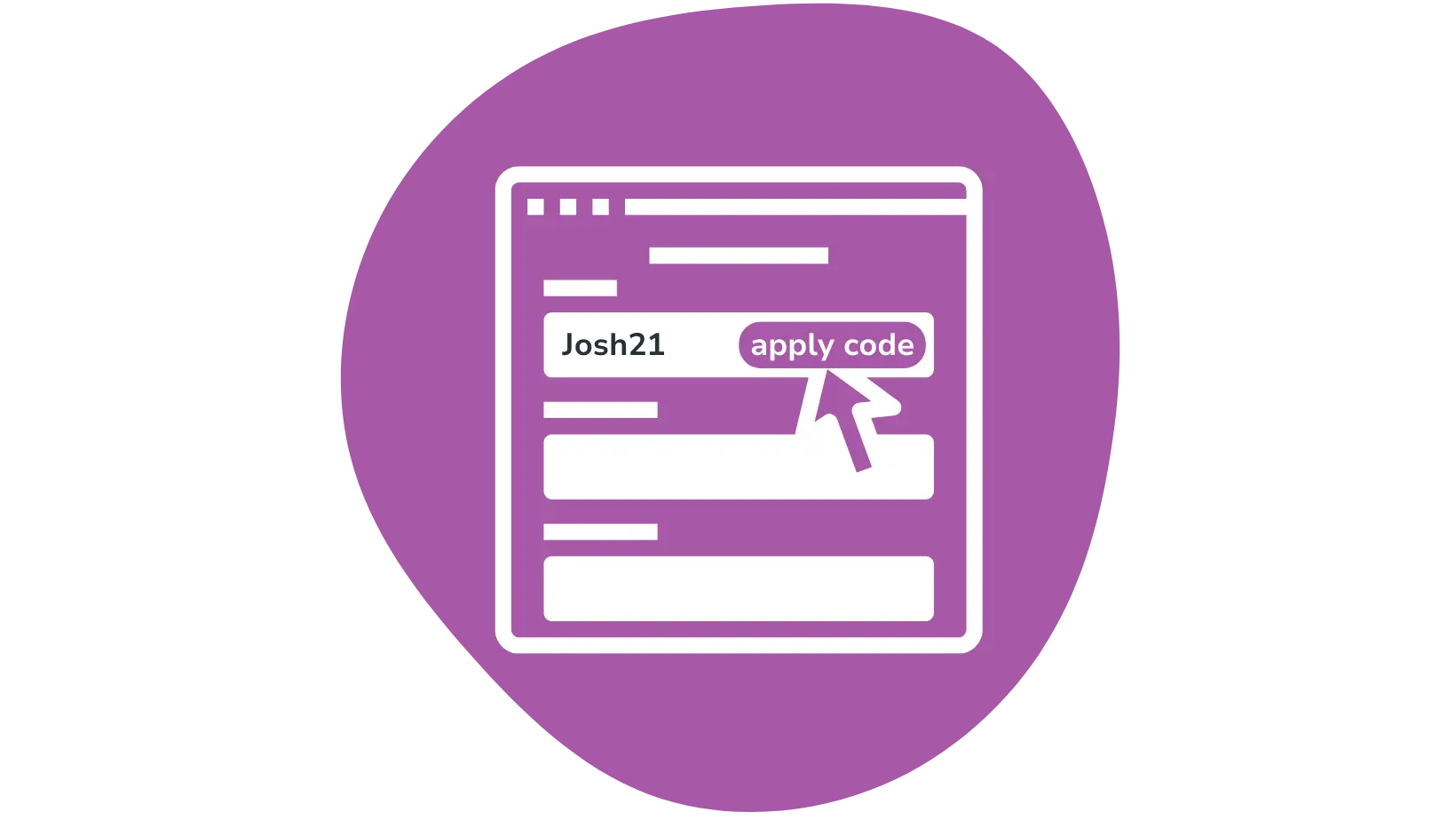
A referral code is a short, unique word, number, or mixed string—like JOSH20 or FRIEND15—that identifies who sent a new customer to a business. When the new customer enters that code, the referral system can credit the person who shared it and trigger the promised reward.
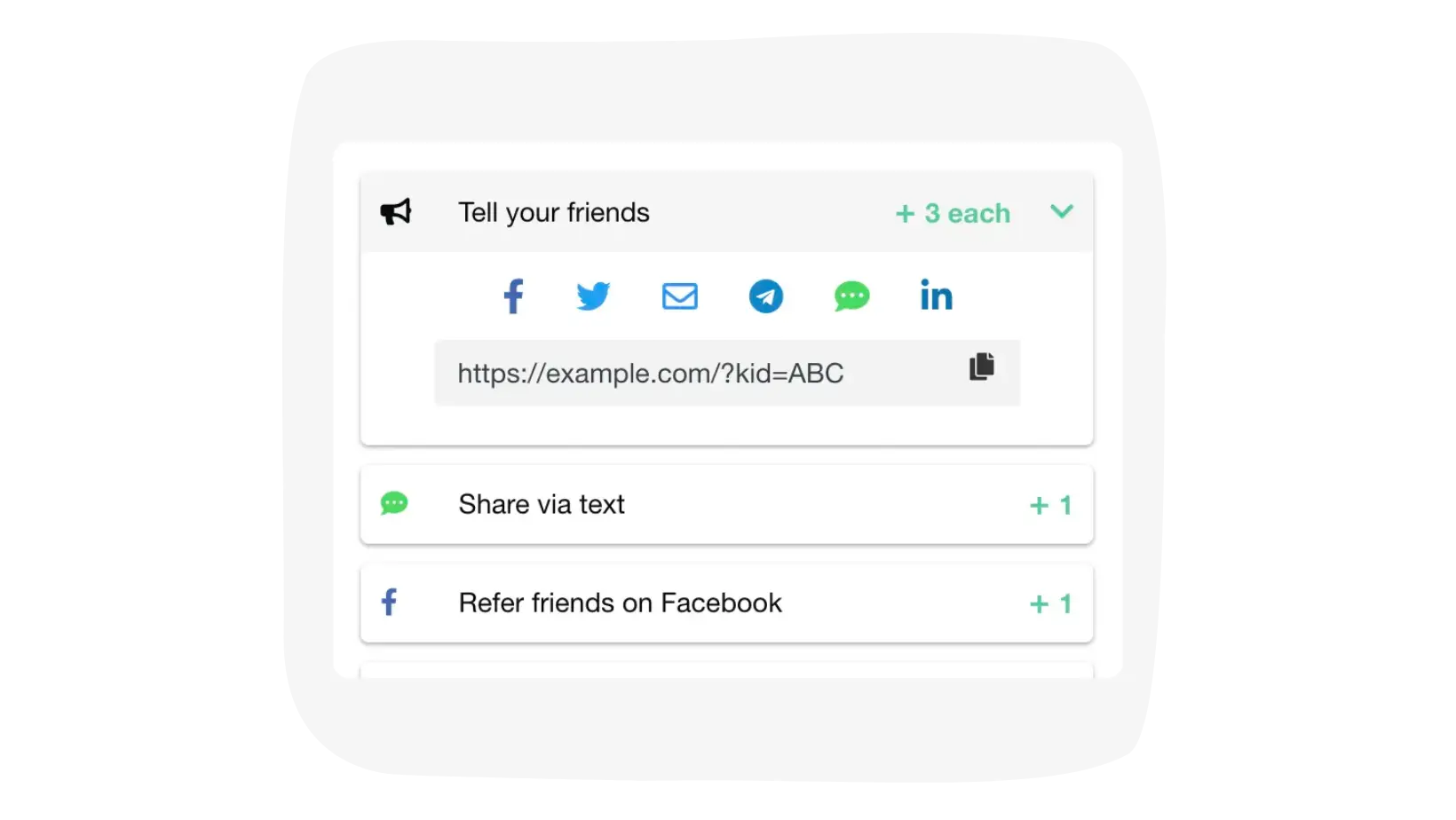
Codes make word-of-mouth measurable even when there is nothing to click. A customer can say a code on a podcast, print it on a card, put it in a social bio, or share it face to face.
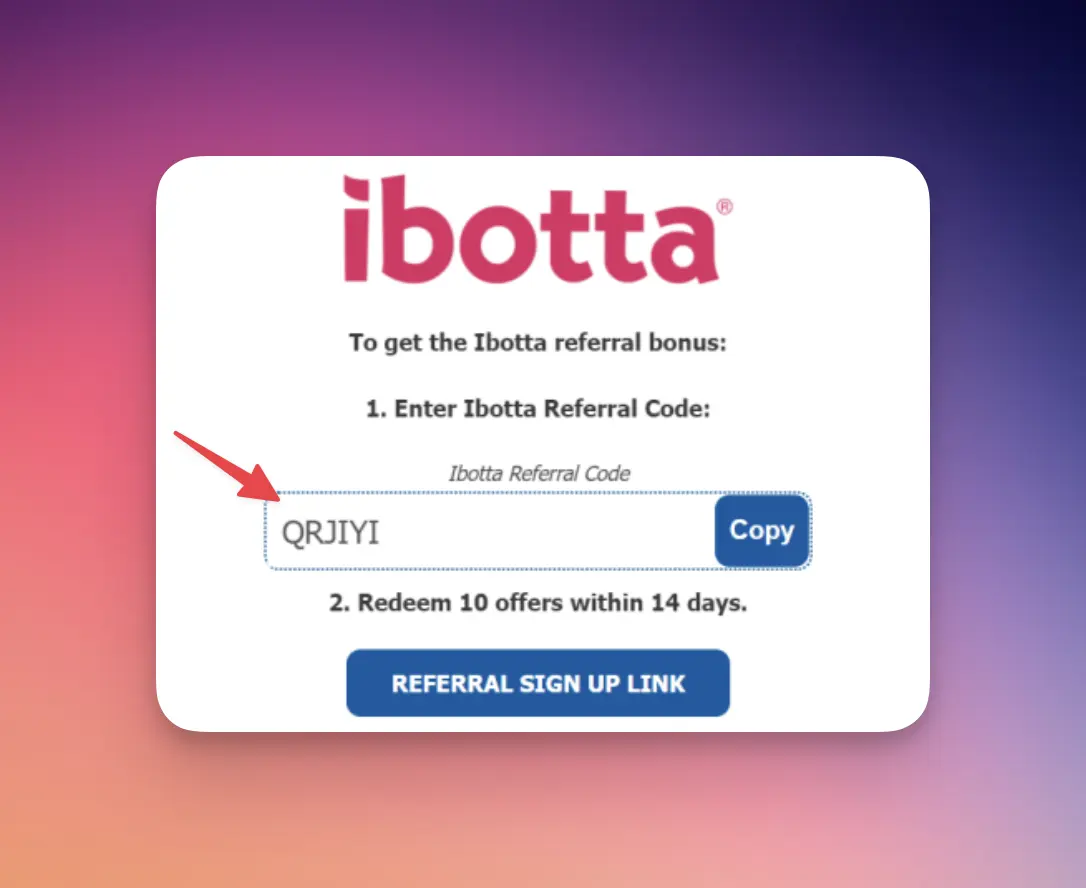
Looking for a referral code to enter? Use the code your friend or the referring organization gave you. If nobody referred you and the field says “optional,” leave it blank. KickoffLabs cannot find consumer promo or bank codes; this guide is for teams creating and tracking their own referral programs.
If you run the program, start with the code itself—but do not stop there. You still need attribution, reward rules, fraud checks, and a way for participants to see their progress. KickoffLabs referral rewards programs handle that referral loop without making you build the whole system from scratch.
Quick answers about referral codes
What is a referral code?
A referral code is a unique identifier assigned to a customer, subscriber, partner, or advocate. When someone new enters it during signup or checkout, your system connects that conversion to the person who made the referral.
What does referral code mean?
“Referral code” means the code used to give someone referral credit. It is not automatically a discount code, though a program can make it one. The code may trigger a reward for the referrer, the new customer, both people, or neither until another condition is met.
Referral code kya hota hai?
Hindi mein, referral code ka matlab hai ek unique code jo kisi customer ko diya jata hai taaki woh apne friends ko refer kar sake. Jab friend signup ya purchase karta hai, business us code se referral ko track karta hai.
The rest of this guide focuses on creating a referral system that can actually attribute and reward those introductions.
What should I enter when a form asks for a referral code?
Enter the code supplied by the person or organization that referred you. Do not invent one or copy a random code from a list. If the field is optional and nobody referred you, leave it blank.
Is a referral code the same as a referral link?
No. A referral code is typed or spoken; a referral link is clicked. Codes work well at checkout, inside apps, on podcasts, in stores, and anywhere else a clickable link is awkward. Links remove typing and usually make online sharing easier.
How do you create or generate referral codes?
Use the free Referral Code Generator to create a unique batch, map codes to customer rows, build matching referral links, and export a CSV. That gives you the assets. Your checkout, database, or referral platform must still enforce uniqueness and decide when a referral counts.
Where can I find my referral code?
Look for “Refer a friend,” “Invite,” “Rewards,” or “Share” inside the specific company’s app or account area. The code belongs to that company’s program. KickoffLabs cannot retrieve a code for a bank, shopping app, employer, or mobile service.
Can someone use their own referral code?
Your rules should normally prohibit self-referrals. Enforce that rule with the account, email, device, payment, and order checks appropriate to your program, and explain what happens when a referral is rejected.
How referral codes work
A working code program needs more than a clever string.
- Assign an owner. Every code maps to one customer, subscriber, partner, or campaign source.
- Capture the code. The new person enters it during signup, checkout, or another conversion step.
- Validate the referral. Your system checks that the code exists, the conversion qualifies, and the referrer is not referring themselves.
- Record attribution. Store the relationship between the referrer and the new customer.
- Issue the reward. Send the discount, credit, milestone progress, entry, or other benefit only after the qualifying event.
- Keep an audit trail. You need enough history to answer disputes and reverse fraudulent or refunded conversions.
The code is just the handle. Attribution and reward logic are the machine behind it.
A referral code is also different from an affiliate code. Affiliates are publishers, creators, or partners paid to promote an offer. Referral programs usually turn existing customers or subscribers into advocates. The mechanics can overlap, so define the relationship and disclosure rules clearly. We break down the choice in referral programs vs. affiliate programs.
Referral codes vs. referral links: which one wins?
Neither. They solve different sharing problems.
Referral codes travel anywhere. Someone can say “use JOSH20” in a conversation, a podcast, or a store. The downside is manual entry: people forget, mistype, or skip the field.
Referral links carry the identifier in the URL. One click can handle attribution without asking the new customer to remember anything. But links do not help much when someone hears about you offline.
| Referral code | Referral link | |
|---|---|---|
| Sharing | Voice, text, social, print, checkout | Clickable channels |
| Action | Type or paste the code | Click the URL |
| Best fit | Commerce, apps, podcasts, offline sharing | SaaS, subscriptions, digital signups |
| Main risk | Typos and missed entry | Broken tracking or stripped parameters |
| Good practice | Pair it with a link | Show the code as a fallback |
Our take: Give participants both. Let the channel decide. A friend in a group chat can tap the link; a podcast listener can type the code.
How to generate referral codes without creating a mess
Start by deciding how people will use the code.
If it will be spoken, keep it readable. Remove ambiguous characters such as 0/O and 1/I/L. If it will only be copied from an account screen, a longer random string may be fine.
Then follow this checklist:
- Choose one format. Do not mix six-character codes, email addresses, and order numbers in the same program.
- Set a uniqueness rule. Check every new code against all active and historical codes, not just the current export.
- Avoid personal data. Do not expose an email address, phone number, or customer ID inside a public code.
- Reserve obvious words. Block admin, support, brand names, offensive strings, and coupon terms you may need later.
- Decide whether codes expire. Expiration helps with short campaigns but creates support work if people share old codes.
- Pair every code with its owner. A spreadsheet can prototype this; your database should become the source of truth.
- Test capitalization and typos. Decide whether
JOSH20andjosh20are the same code before launch.
If you are prototyping a format or preparing an import, the free Referral Code Generator creates up to 500 codes, participant assignments, referral links, and a CSV in your browser.
That tool does not run the referral program. A static code list cannot verify conversions, block self-referrals, update rewards, or explain why a participant did not receive credit.
For the full loop, KickoffLabs referral tracking connects each referred signup to the right participant. Reward levels give people a reason to keep sharing, while fraud detection helps you review suspicious activity.
Referral code examples—and what they teach
Program terms change, so treat the mechanics as inspiration and verify the live terms before copying a reward.
YesStyle: pair the code with a link
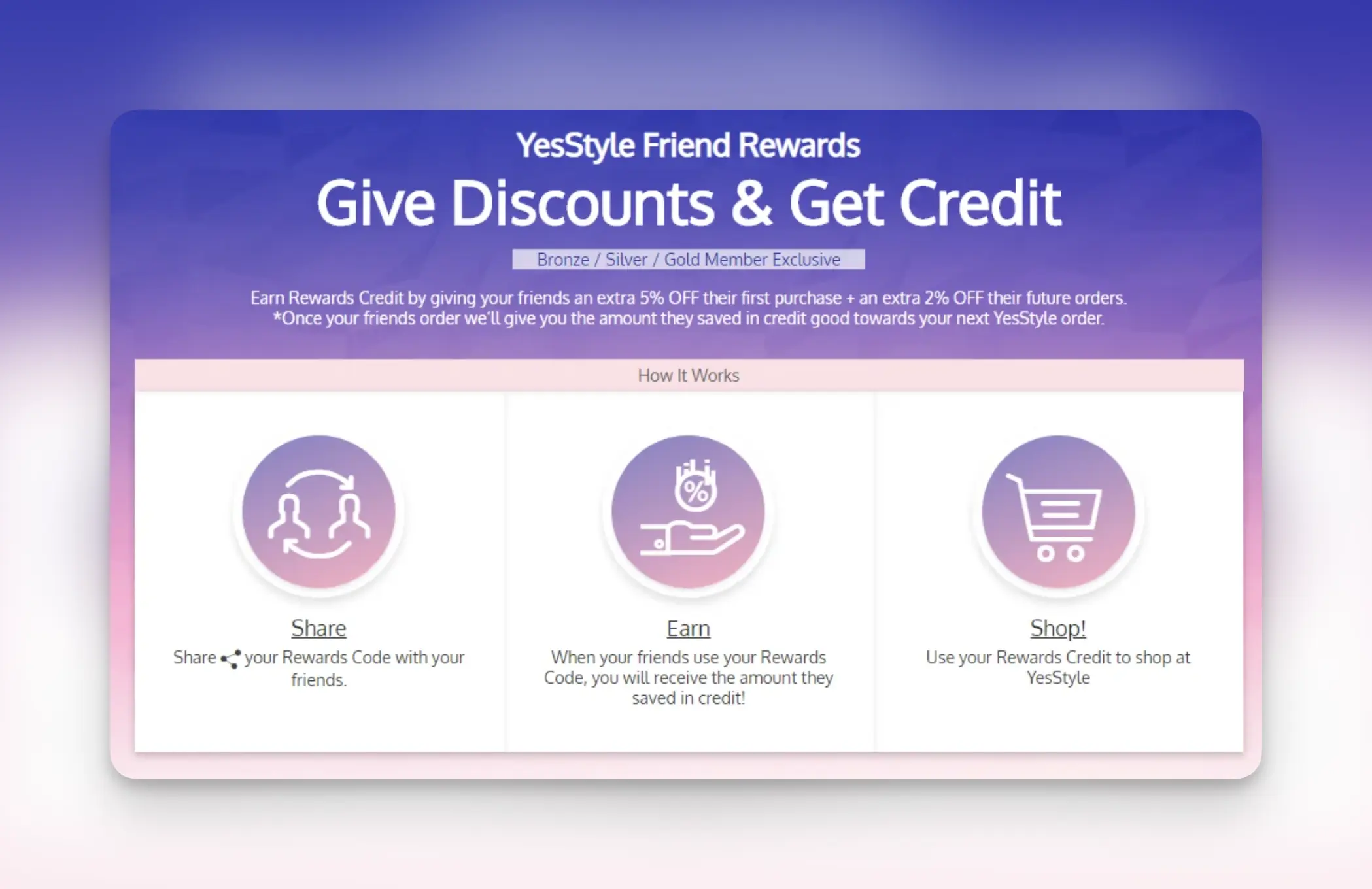
YesStyle’s current program gives influencers a customized code and link. Its official program terms explain that attribution and commission can differ depending on whether a customer uses the code, clicks the link, or does both.
That is the useful lesson: a code and a link are not competing assets. Together, they cover more sharing situations and give you clearer rules for attribution.
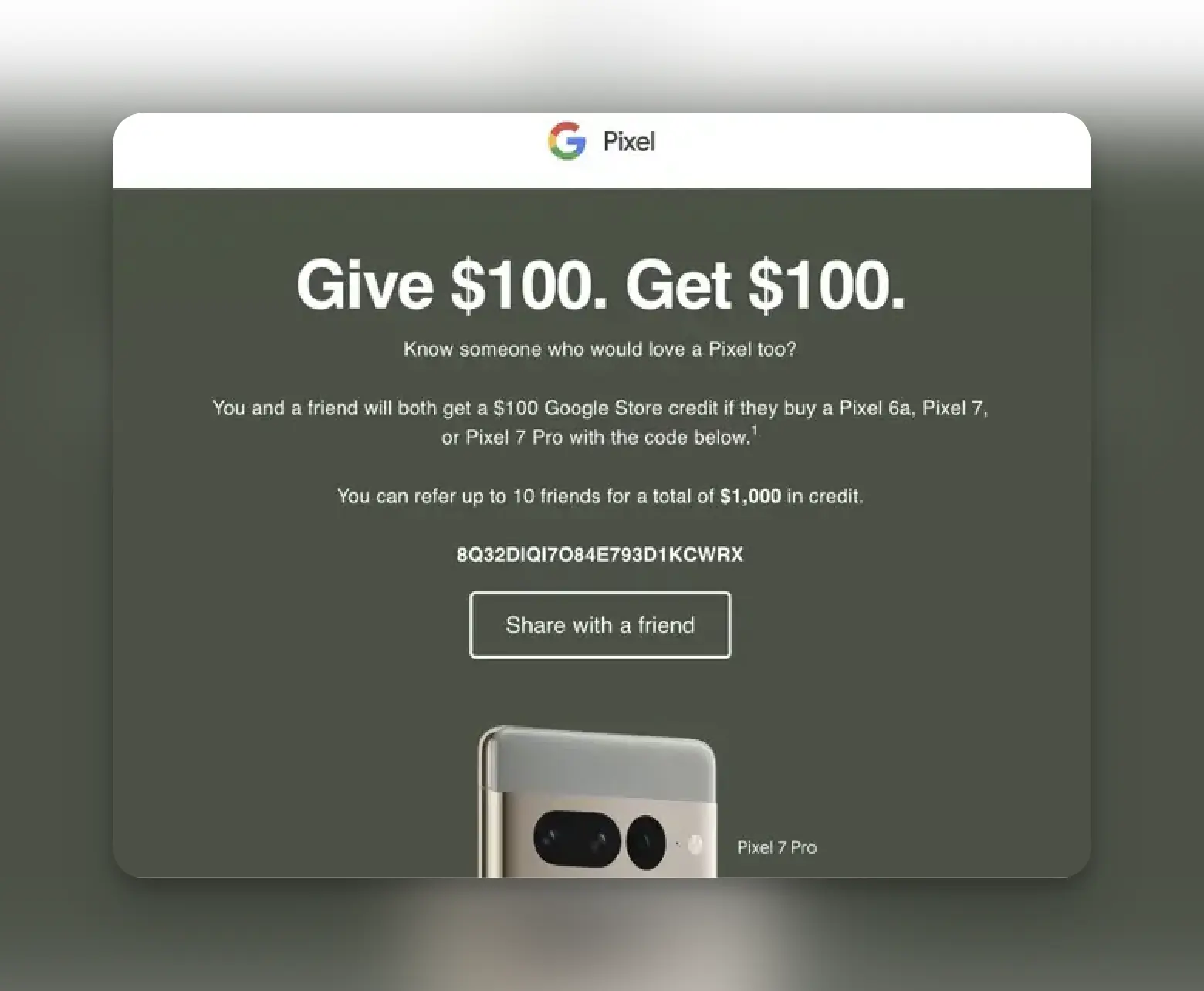
Google Store: the redemption field matters
Google Store’s current checkout instructions show the practical customer side of a code: sign in, enter the code in the promotional-code field, apply it, and follow the offer terms.
Your referral program needs the same clarity. Tell the new customer exactly where to enter the code and what happens next. A code nobody can find a field for is decoration.
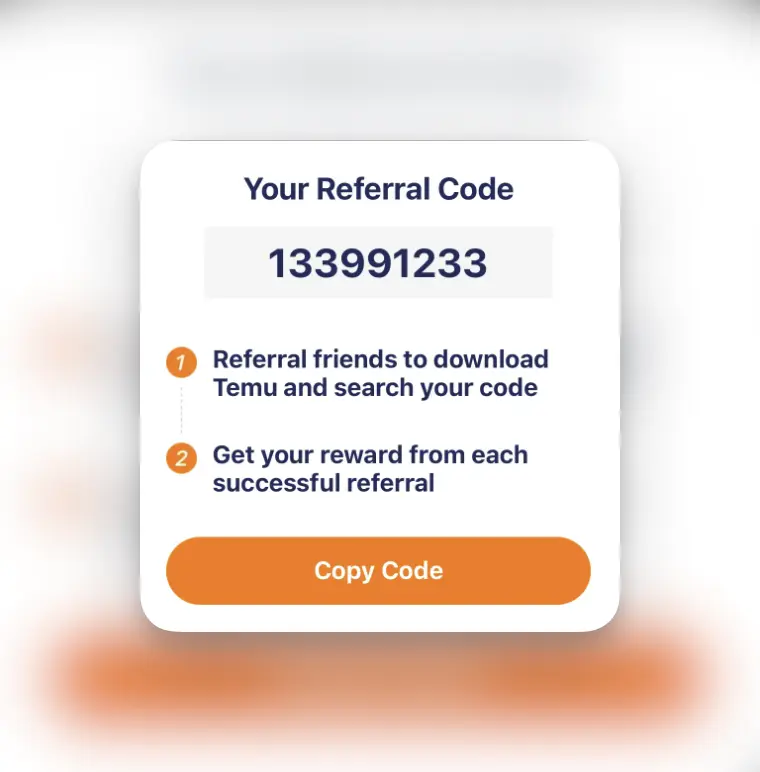
Temu: know when “referral” is really affiliate marketing
Temu’s official affiliate page describes unique links and codes used by affiliates to earn on qualifying actions. That is an affiliate program, even though the mechanics use referral language.
Name your program honestly. Customer referrals, creator affiliates, employee referrals, and partner deals can all use codes, but they need different terms, disclosures, and reward economics.
How to launch a referral code program that does not flop
Most weak programs fail in boring ways: the reward is unclear, the code is hard to use, or nobody knows the program exists.
- Make the value obvious on both sides. Say exactly what the referrer earns and what the friend receives.
- Keep the code shareable. A person should be able to read it, say it, and type it without a support ticket.
- Put the program where customers will see it. Use the post-purchase flow, account area, lifecycle email, or in-product moment—not a forgotten footer link.
- Define a qualified referral. A click, signup, verified email, paid order, and non-refunded order are not the same event.
- Block self-referrals. Write the rule, explain it, and enforce it with the account, device, payment, and order signals available to you.
- Show progress. People share more confidently when they can see which referrals counted and what reward comes next.
- Measure the whole loop. Track shares, referred visits, qualified conversions, reward cost, fraud, and support disputes.
Build the referral system, not just the code
A list of codes is easy. A reliable referral program is the attribution, validation, reward, and communication wrapped around that list.
Use the free Referral Code Generator when you need a clean batch or CSV. Use KickoffLabs referral rewards programs when you need participants to share, referrals to count, suspicious activity to be reviewed, and rewards to move automatically.
Keep exploring the cluster:
- What Is a Referral Link? — the click-based companion to codes
- How to Build a Referral Program — the full setup playbook
- Referral Program Examples — mechanics worth borrowing
- Referral Program ROI Calculator — model reward cost before launch
- Newsletter Referral Programs — reward subscribers who bring friends
- Referral Waitlists — move advocates up a prelaunch queue