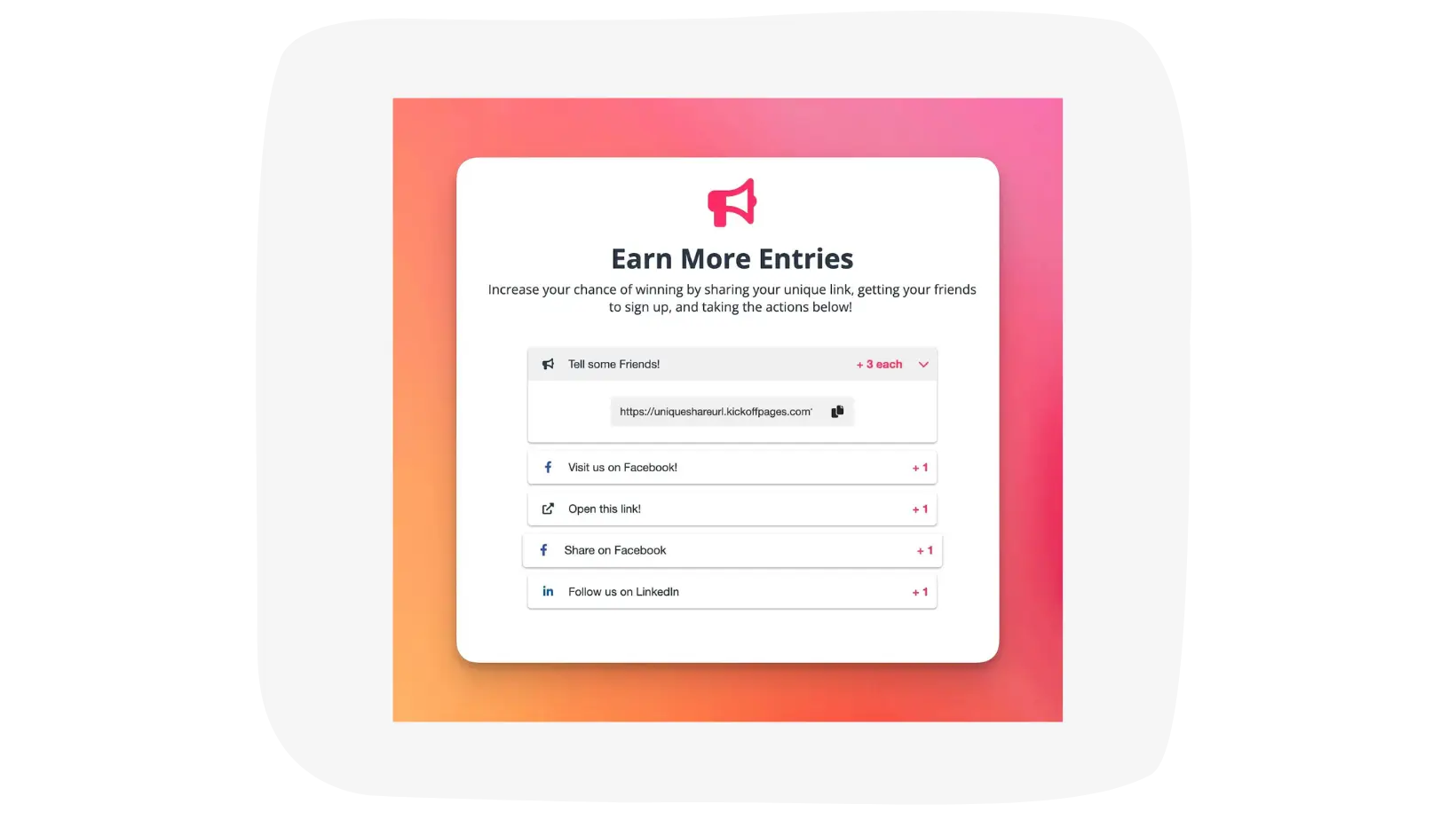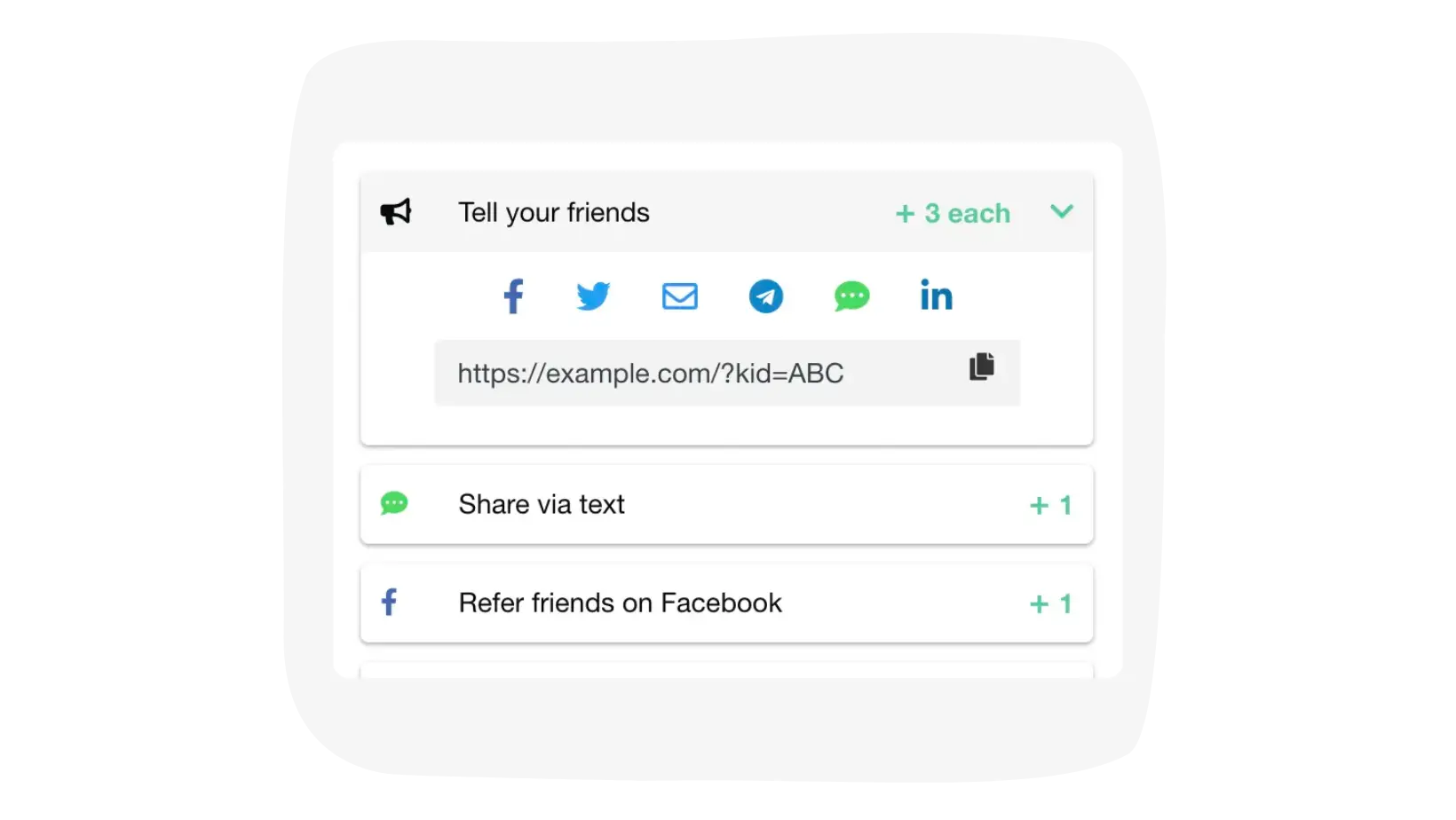
A referral link is a unique URL generated for each person in your referral program. When someone clicks it and signs up or buys, the person who shared it gets credit — automatically. No code to type, no friction, no “wait, what was that promo code again?” Just one click.
Here’s the thing nobody in marketing wants to admit: Facebook and Google ads get more expensive every single year. CPMs go up, click-through rates go down, and you’re running harder just to stay in place. Meanwhile, a recommendation from a friend? Still free. Still the most trusted signal in marketing. Still converts better than anything else you’ll try this quarter.
Referral links are how you turn that trust into a trackable, scalable growth channel. If you want the broader playbook first, start with our step-by-step guide to building a referral program.
What is a Referral Link?
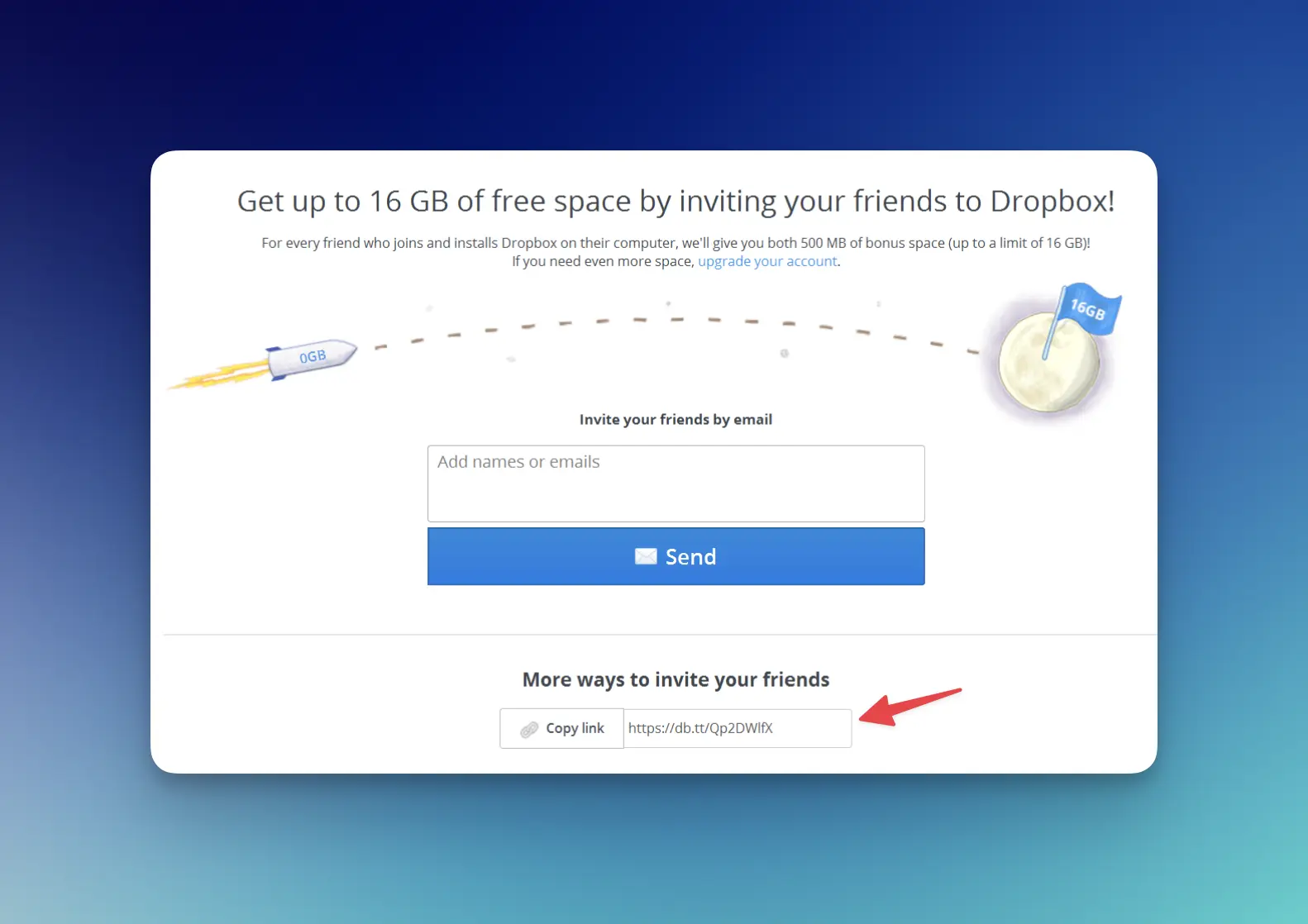
A referral link is a unique URL — generated automatically — that contains a tracking identifier tied to a specific person. When your customer shares their link and someone clicks through, you know exactly who sent them.
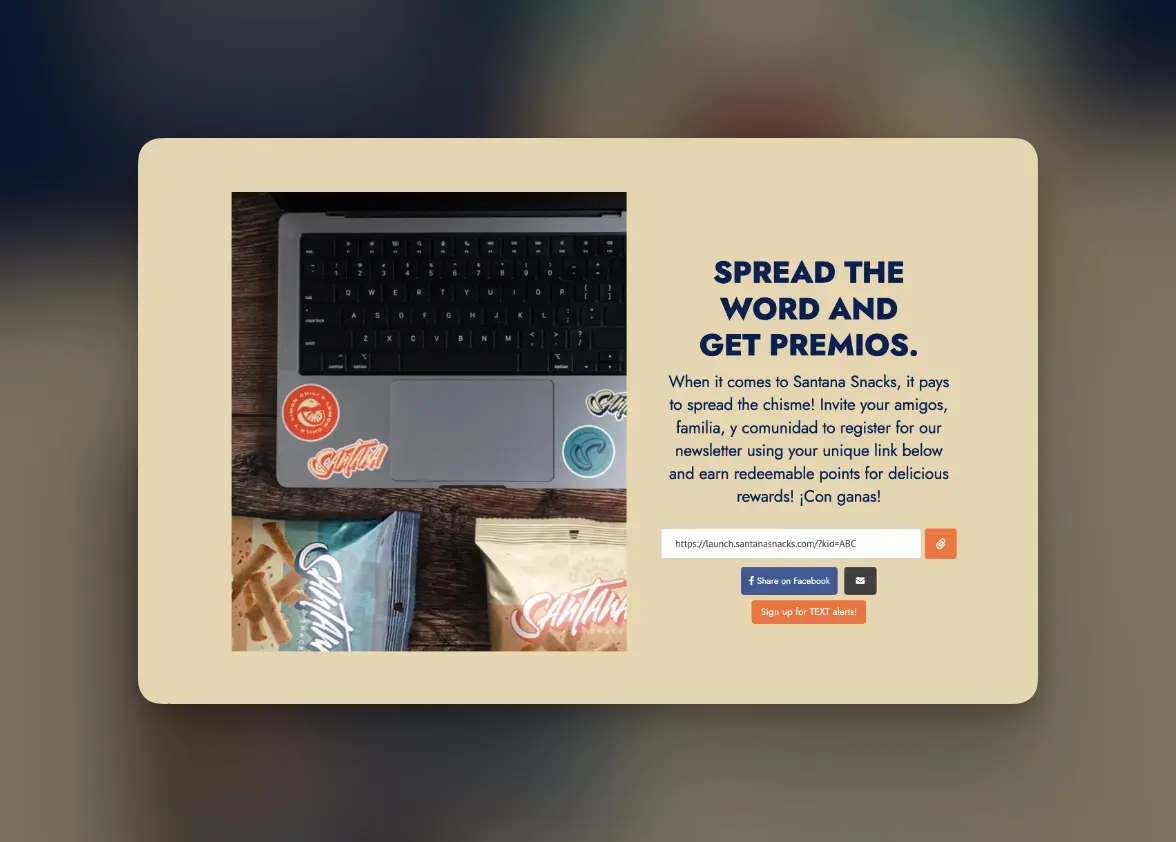
No manual attribution. No “how did you hear about us?” surveys that nobody fills out honestly. The link does the tracking for you.
Every person who joins your referral program gets their own link. They share it on social media, text it to friends, drop it in a group chat. When someone clicks through and converts, the referrer gets rewarded. That’s the entire loop.
Referral Links vs. Referral Codes
People confuse these constantly. They’re related but different.
A referral link hides the tracking inside the URL. The person clicking it doesn’t see or do anything special — they just click and land on your site. Tracking happens invisibly.
A referral code is a short string (like JOSH20) that someone types in at checkout or signup. It’s more personal — you can say it out loud — but it requires manual effort.
| Referral Link | Referral Code | |
|---|---|---|
| Experience | One click — invisible | Must type it in |
| Where it works | Anywhere links are clickable | Anywhere — voice, text, print |
| Conversion | Higher (less friction) | Lower (manual entry = drop-off) |
| Best for | SaaS, digital products, subscriptions | E-commerce, apps, checkout flows |
Our recommendation: Default to links. They convert better because there’s zero friction. Add codes as a bonus for customers who want to share verbally or on platforms where links get stripped.
Many of the best programs on KickoffLabs use both.
UTM Tracking: Know Where Your Referrals Come From
Want to see which channels your referral traffic is coming from? Tag your links with UTM parameters:
https://yoursite.com/?ref=CUSTOMER123&utm_source=referral&utm_medium=social&utm_campaign=spring2026
utm_source=referral— it’s referral trafficutm_medium=social— they shared on social mediautm_campaign=spring2026— ties to your specific campaign
Swap utm_medium to email, sms, or podcast when you know where a link is going. Future-you, staring at a GA4 report in Q4 trying to remember what drove a spike, will thank present-you for being specific.
KickoffLabs handles referral tracking automatically, but adding UTMs lets you slice the data in Google Analytics too. Belt and suspenders.
How to Generate Referral Links
Two paths: build it yourself, or don’t.
Building it yourself means generating unique URLs per user, setting up click tracking and cookie attribution, handling edge cases (what if someone clears cookies? what about cross-device?), and wiring up the reward fulfillment. It’s a real project. Most teams underestimate it.
Using KickoffLabs means every participant automatically gets a unique, trackable referral link the moment they sign up. They can copy it, share it with built-in social buttons, or check their referral stats on their own status page. As referrals come in, rewards trigger automatically.
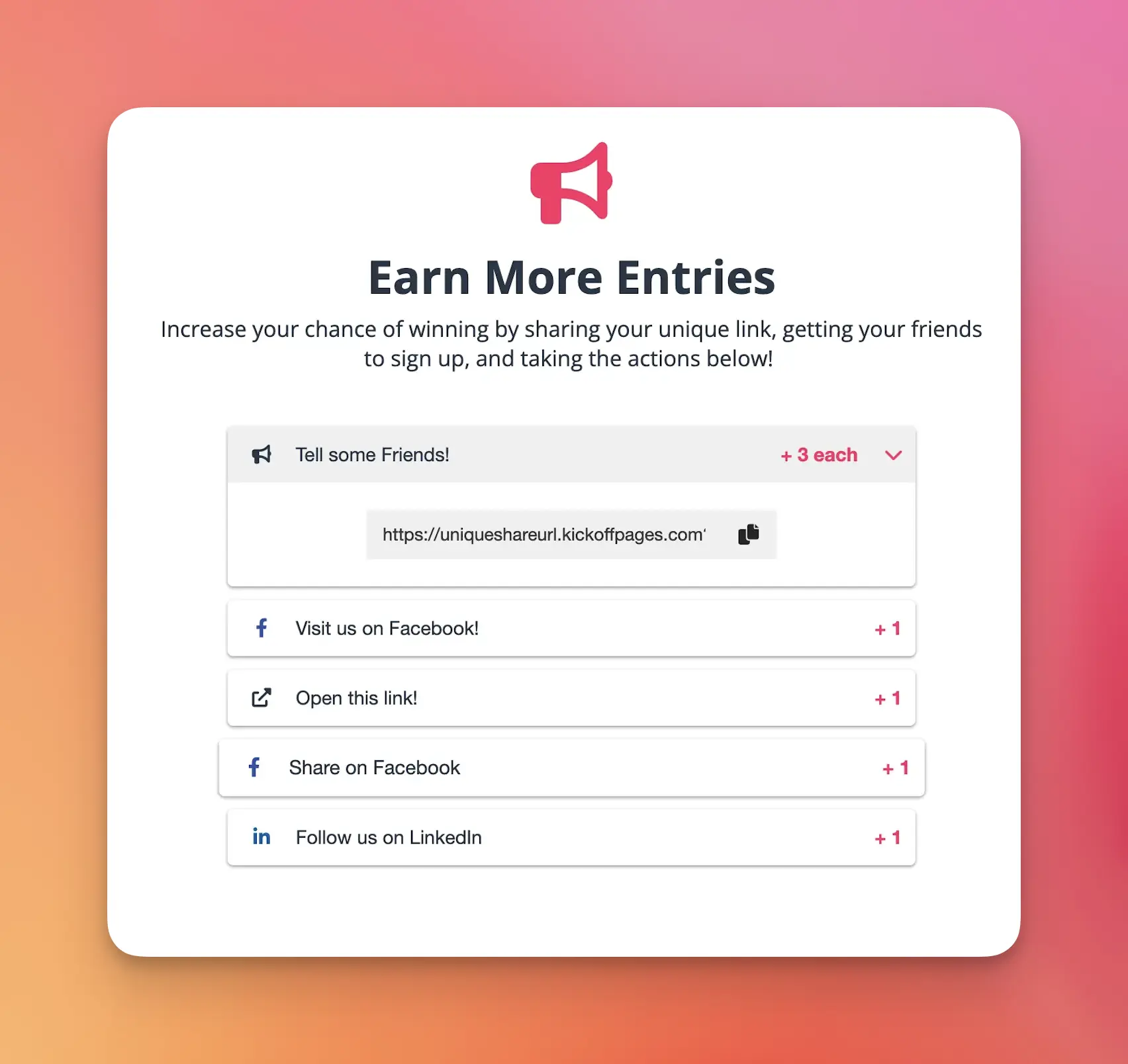
We’ve powered over 100 million leads this way. The infrastructure is there — you just bring the campaign.
Tools for Running a Referral Link Program
KickoffLabs — Best for launch campaigns and list building
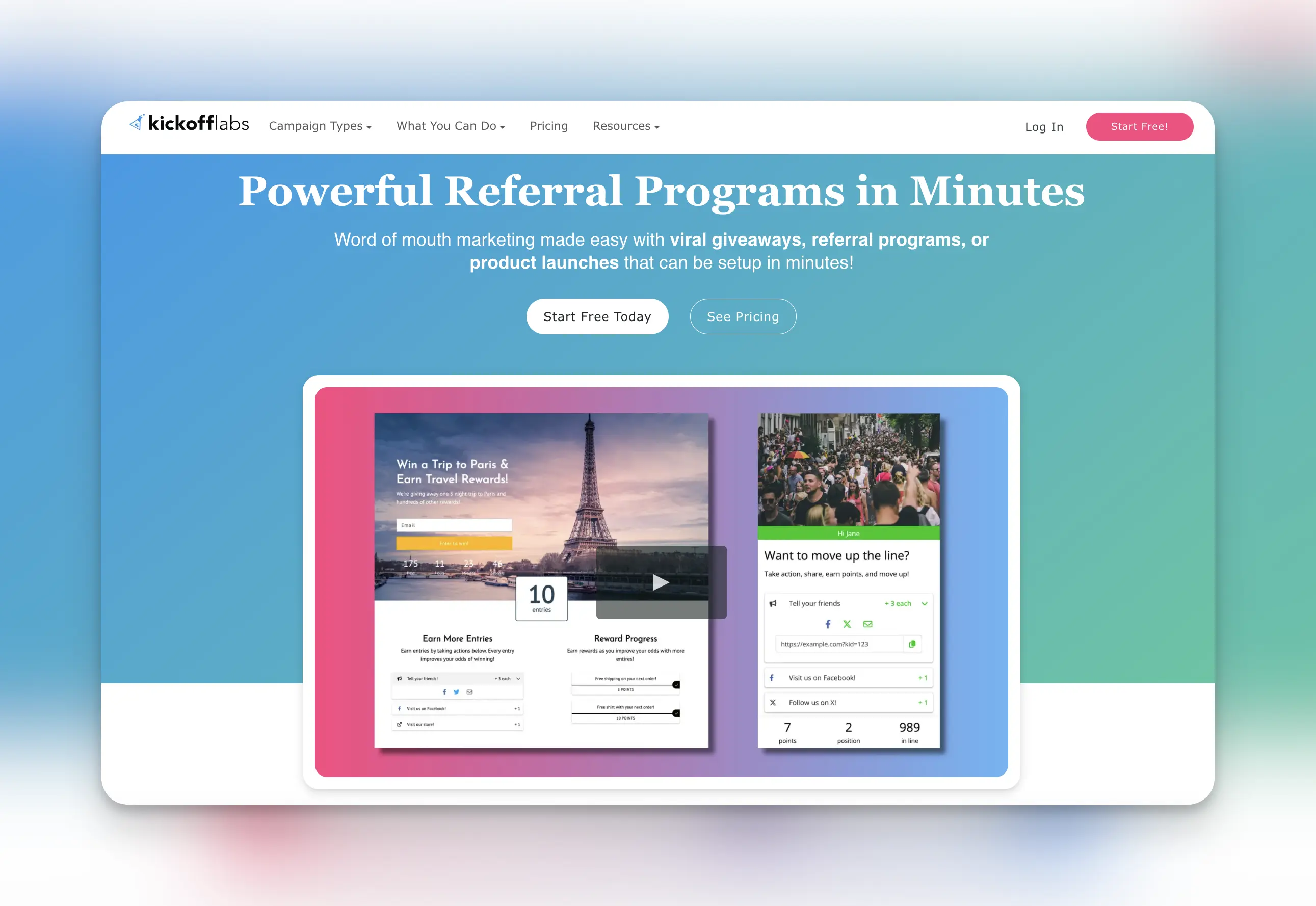
This is us. We’re not pretending to be unbiased. We built KickoffLabs specifically for referral-driven campaigns — waitlists, giveaways, sweepstakes, milestone reward programs, leaderboards. Top-of-funnel growth.
What makes us different:
- Instant signup — existing leads join your referral program without re-entering their info. One click to their unique share page.
- Referral tracking — unique URLs generated automatically for every lead. Real-time tracking. No code to write.
- Reward tiers + automated emails — set milestones (5 referrals = free month, 10 = swag box), and the system handles delivery.
- Landing page templates — conversion-optimized, ready to go.
- CSV export — pull all your lead data in one click for your CRM.
Talon.One — Best for enterprise loyalty
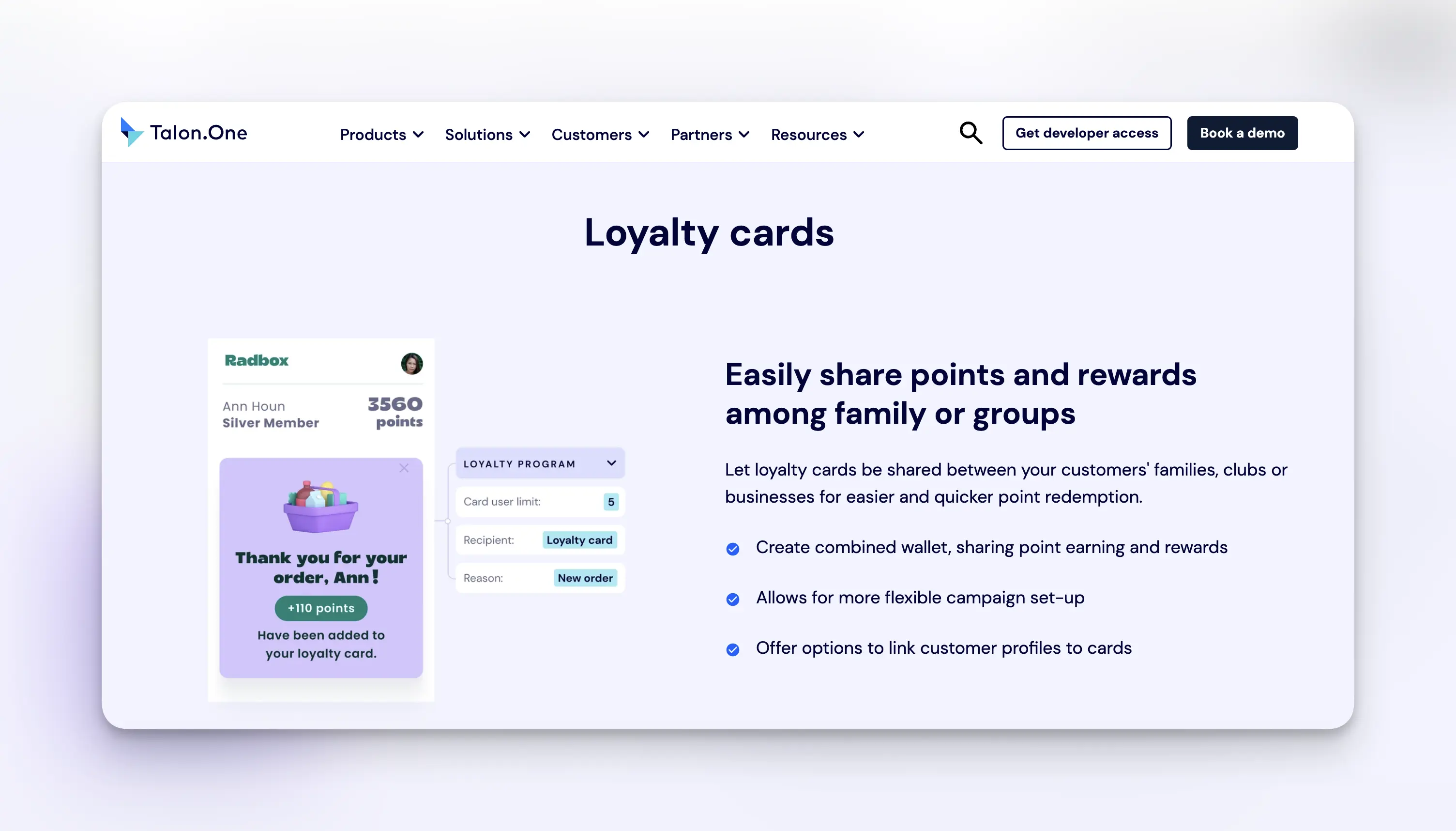
Heavy-duty loyalty infrastructure. If you’re a mid-to-large company running tiered loyalty programs with wallets, points, and badges — Talon.One is built for that complexity. Overkill for a startup. Right-sized for enterprise.
Voucherify.io — Best for complex promo logic
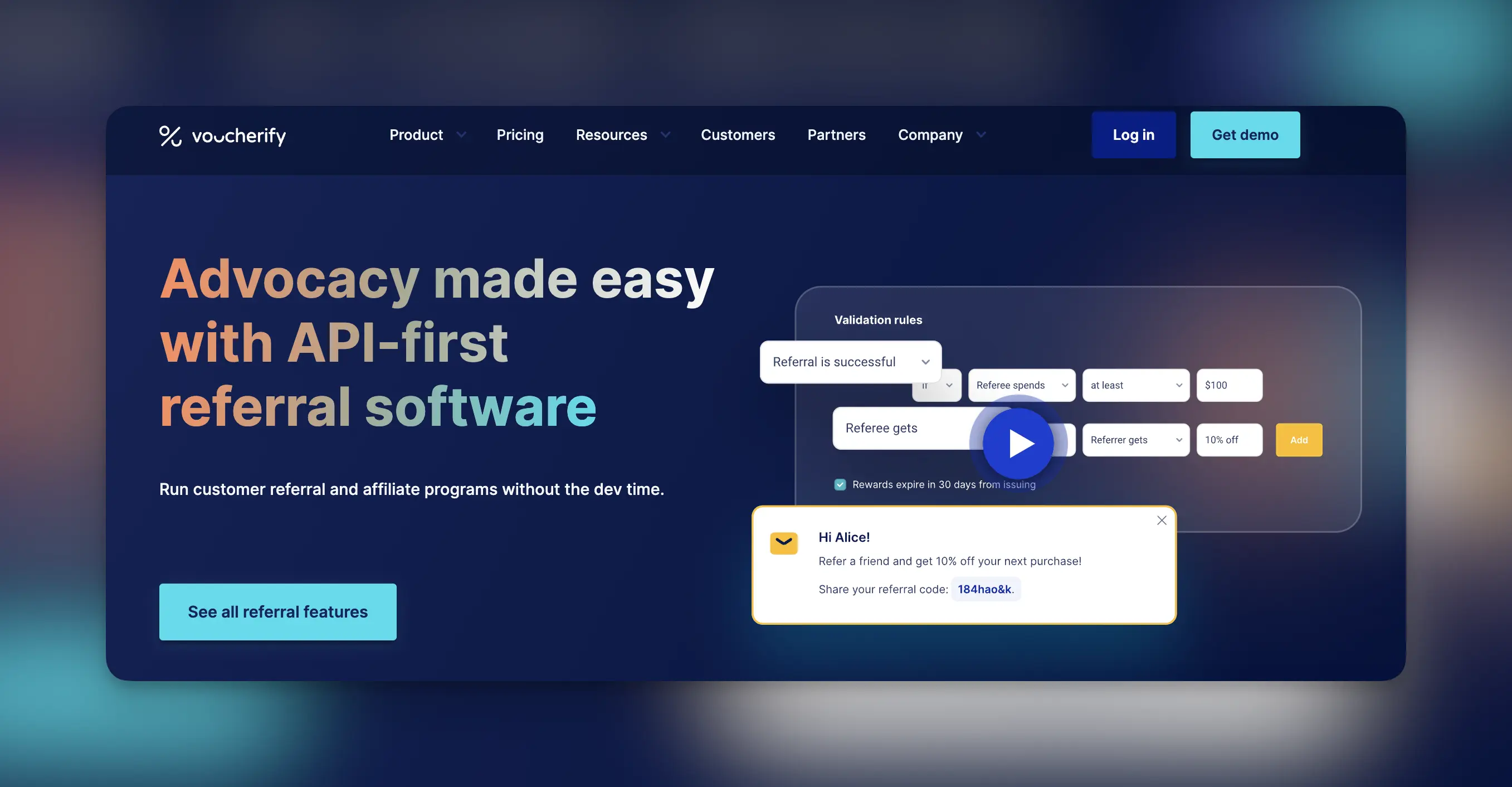
Flexible promotion engine. Cashback programs, fee-based enrollment, partner programs. If your referral program needs weird conditional logic that off-the-shelf tools can’t handle, Voucherify gives you the building blocks.
Launch Your Referral Link Program
Pick the campaign type that fits:
- Referral Rewards — give every customer a unique link, reward them when it converts
- Milestone Rewards — progressive rewards as referrals stack up
- Newsletter Referral — grow your email list through subscriber sharing
Features that power it:
- Referral Tracking — every click, every conversion, attributed automatically
- Rewards Management — instant reward delivery when milestones are hit
- Fraud Detection — because people will try to game it (they always do)
Ads are a treadmill. Referrals are a flywheel. Once it’s spinning, your customers do the work for you — and they do it better than any ad ever could.
Not sure whether to pay a commission or give a reward? Read our breakdown of referral programs vs. affiliate programs before you pick a model. Then explore referral program examples or our step-by-step guide to refer-a-friend campaigns. Or just start free with KickoffLabs and see what happens when your customers become your growth engine.
Read more Referral Programs with the next chapter:
5. 12 Referral Program Examples
Learn from the top examples in referral marketing today!