- Quick Answers About Referral Codes
- What is a Referral Code?
- Referral Codes vs. Referral Links: Which One Wins?
- How to Generate Referral Codes (Without Building It Yourself)
- Referral Code Examples That Actually Work
- How to Launch a Referral Code Program That Doesn’t Flop
- Build Your Referral Code Program Today
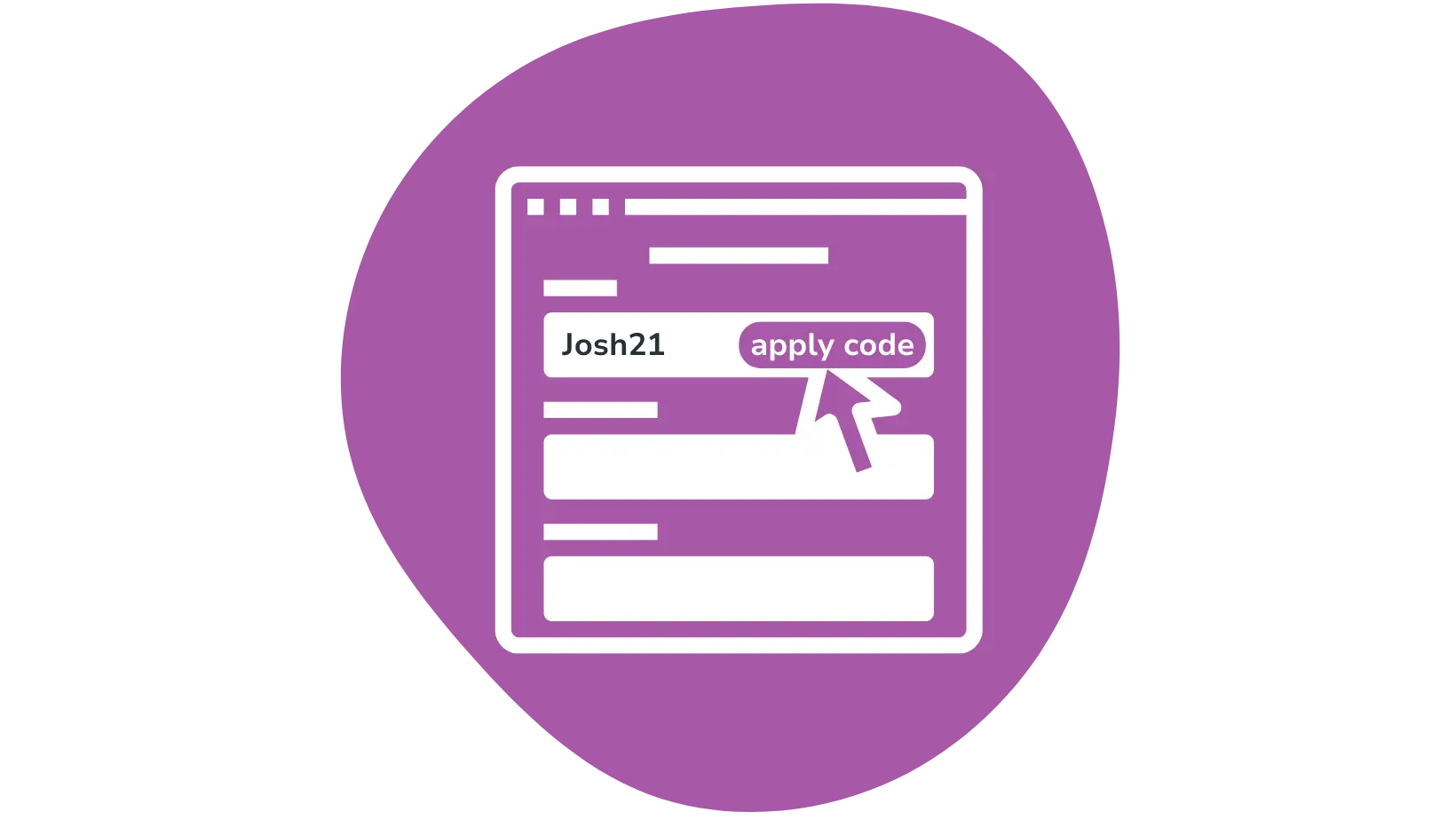
A referral code is a short, unique word, number, or phrase — like JOSH20 or FRIEND15 — that identifies who sent a new customer to your business. When someone uses that code to sign up or buy, your referral system credits the customer who shared it and triggers the reward you promised.
For a business, referral codes make word-of-mouth measurable. Customers can share a code in a text, podcast, checkout note, social bio, or face-to-face conversation, and you can still connect the signup or purchase back to the right advocate.
Looking for a referral code to use? Enter the code your friend gave you at that company’s checkout or signup page. We can’t help you find consumer promo codes here; this guide is for businesses that want to create and track referral codes.
We’ve helped launch over 100 million leads through KickoffLabs. The campaigns with referral mechanics consistently outperform everything else. Not by a little — by multiples. And the programs that use codes specifically? They work best when your product has a checkout flow, an app, or any place where someone can type in a short string.
If you’re new to all of this, start with our guide on what a referral program actually is or our newer step-by-step playbook on how to build a referral program. Otherwise, let’s get into it.
Quick Answers About Referral Codes
What is referral code?
A referral code is a unique identifier assigned to a customer, subscriber, or partner so your business can track who referred a new signup or purchase. It can be a word, number, phrase, or mixed string.
What is the meaning of referral code?
Referral code means “the code that gives referral credit.” In a business referral program, the code connects the new customer to the existing customer who recommended you.
Referral code kya hota hai?
Hindi mein, referral code ka matlab hai ek unique code jo kisi customer ko diya jata hai taaki woh apne friends ko refer kar sake. Jab friend signup ya purchase karta hai, business us code se referral ko track karta hai. For businesses, keep the Hindi explanation short and focus the page on creating a reliable referral program.
Is a referral code the same as a referral link?
No. A referral code is typed or spoken; a referral link is clicked. Codes work well for checkout pages, apps, podcasts, and offline sharing. Links work best when people can tap once and tracking happens automatically.
How do you create or generate referral codes?
You can generate referral codes yourself with engineering work, or use a referral rewards program platform that creates unique codes, tracks referrals, manages rewards, and protects against fake or self-referrals.
What is a Referral Code?
A referral code is a unique identifier — letters, numbers, or both — assigned to each customer in your program. When someone new uses that code to make a purchase or create an account, the referrer gets credit. Simple tracking, simple attribution, simple rewards.
The beauty of codes is that they’re portable. Your customer can text it, say it out loud at dinner, stick it in an Instagram bio, or scribble it on a napkin. No link required.
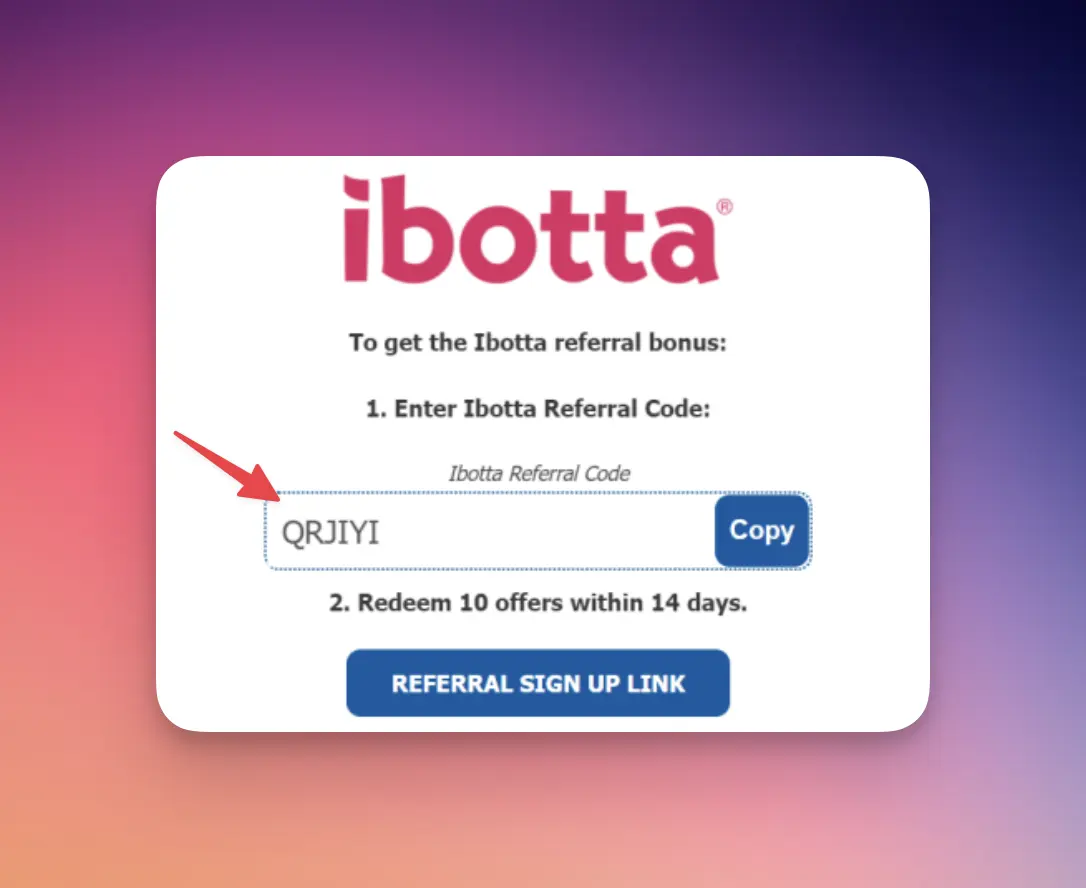
Worth clearing up early: a referral code isn’t the same as an affiliate code. Affiliates are marketers you pay a commission to. Referral codes are your actual customers sharing because they like you. Different motivation, different program. If you’re deciding which model fits, we break it down in referral program vs. affiliate program.
Referral Codes vs. Referral Links: Which One Wins?
Neither. They solve different problems.
Referral codes are personal and portable. Someone can say “use code JOSH20” in a conversation, a podcast, or a text. They feel human. The downside? Your customer has to remember the code, and the new person has to type it in. That’s friction, and friction kills conversions.
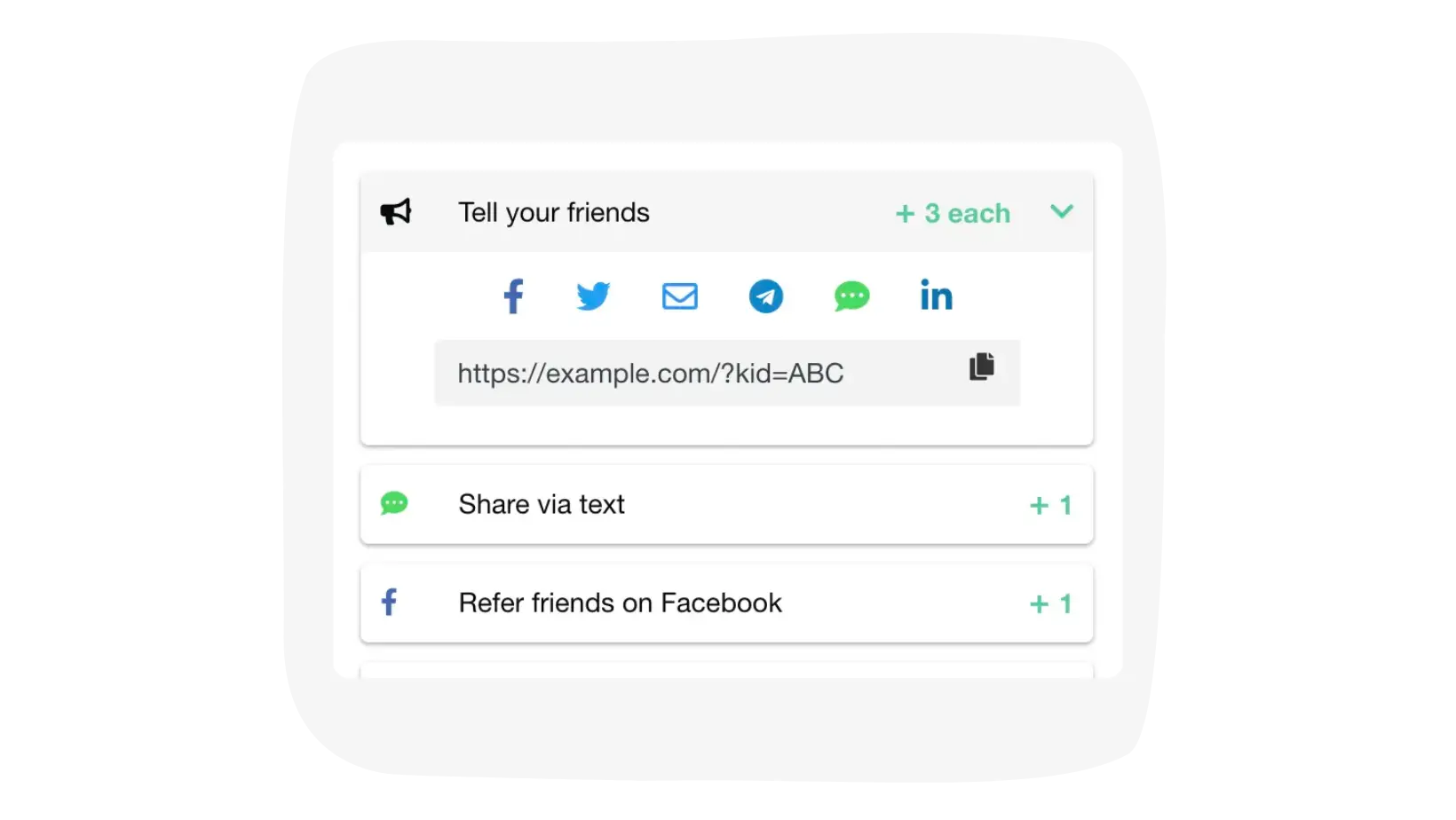
Referral links are frictionless. One click and the tracking happens invisibly. No typing, no forgetting. But they only work where you can actually click a link — they’re useless in a face-to-face conversation.
Here’s the honest breakdown:
| Referral Code | Referral Link | |
|---|---|---|
| Sharing | Voice, text, social, print — anywhere | Only where links are clickable |
| Friction | Must be typed in manually | One click, zero friction |
| Feel | Personal, human | Seamless, invisible |
| Tracking | On code entry | On click — automatic |
| Best for | E-commerce, apps, checkout flows | SaaS, subscriptions, digital signups |
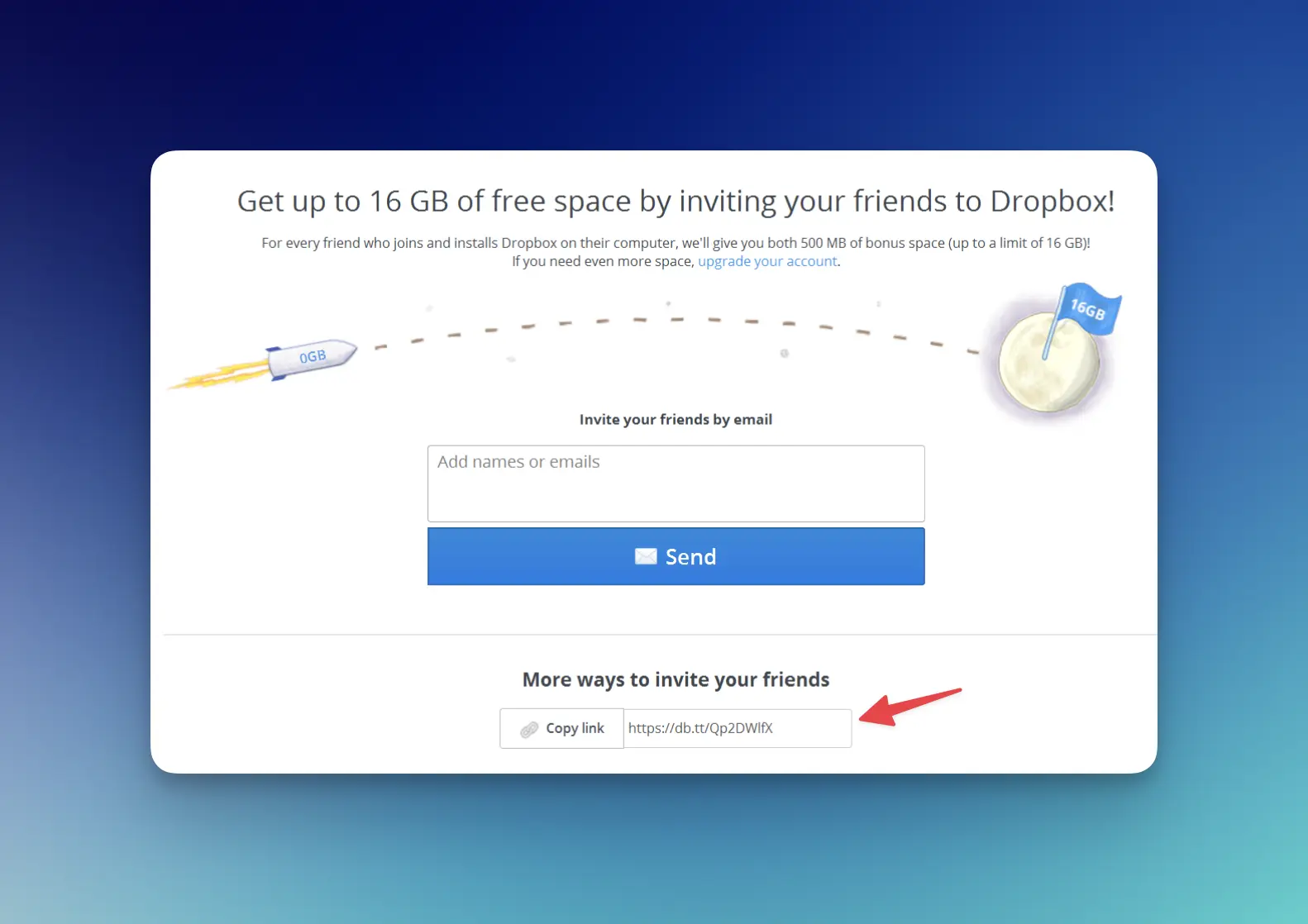
Our take: If your product has a checkout page, use codes. If you’re a SaaS or subscription service, use links. If you can swing it, offer both and let your customers pick what feels natural.
How to Generate Referral Codes (Without Building It Yourself)
You have two options: use a platform or build it from scratch.
Building from scratch means generating unique codes per user, wiring up tracking to your checkout, defining reward logic, handling edge cases (what if someone uses their own code?), and building the notification system that tells people they earned something. It’s a real engineering project.
Or you use something like KickoffLabs. Every participant gets a unique code and link automatically. Referral tracking is built in. Rewards trigger on their own. You’re live in an afternoon instead of a quarter.
We’re biased, obviously. But we’ve watched enough companies burn weeks building custom referral systems only to end up with something half as good as what a platform gives you out of the box.
Referral Code Examples That Actually Work
YesStyle — The Double-Sided Play
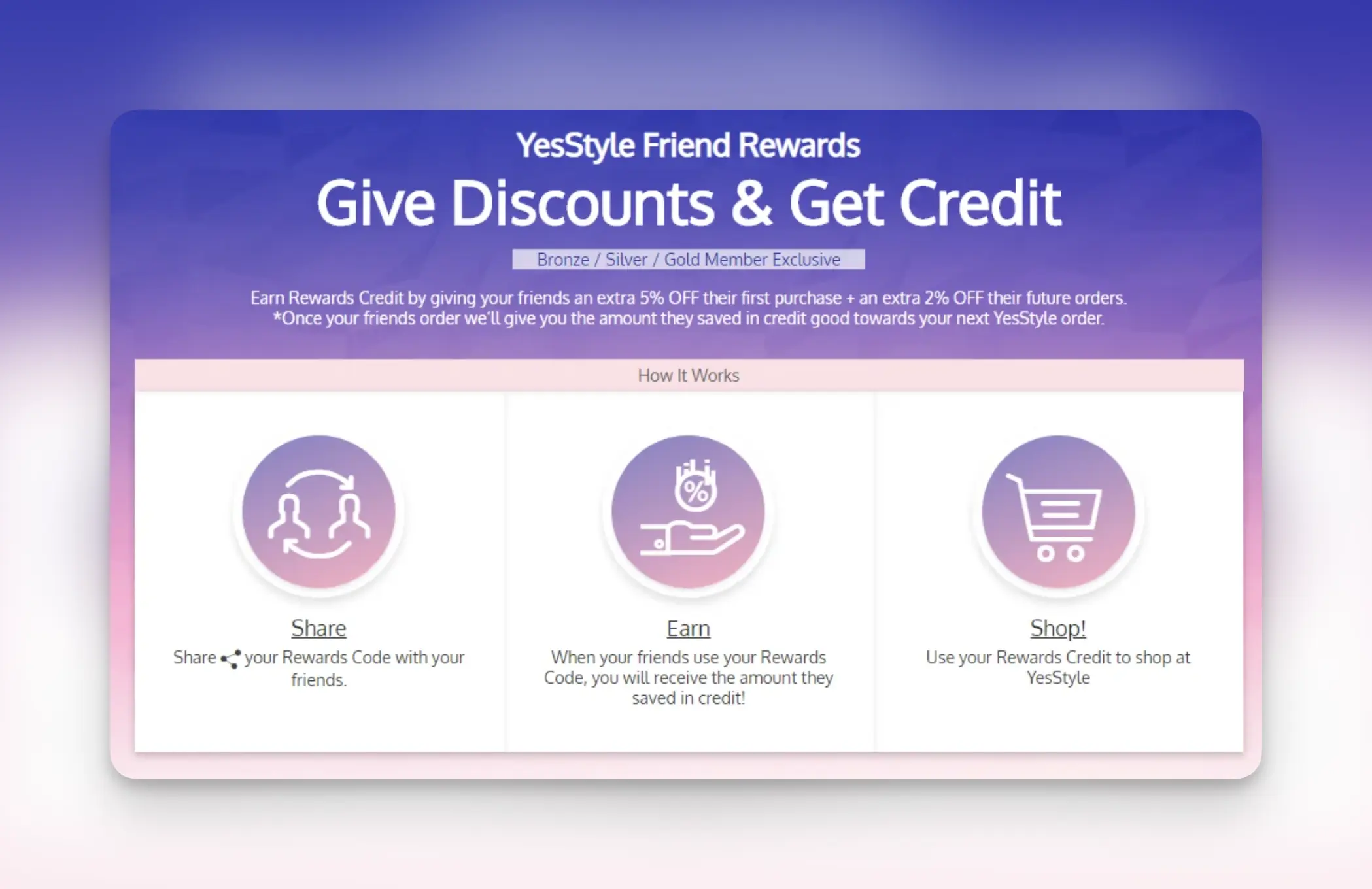
YesStyle gives users a code to share. The friend gets 5% off their first order. The referrer earns in-app currency equal to whatever their friend saved. Both sides win. This is important — double-sided incentives consistently outperform one-sided ones. We’ve seen it across thousands of campaigns.
Google Pixel — Go Big at Launch
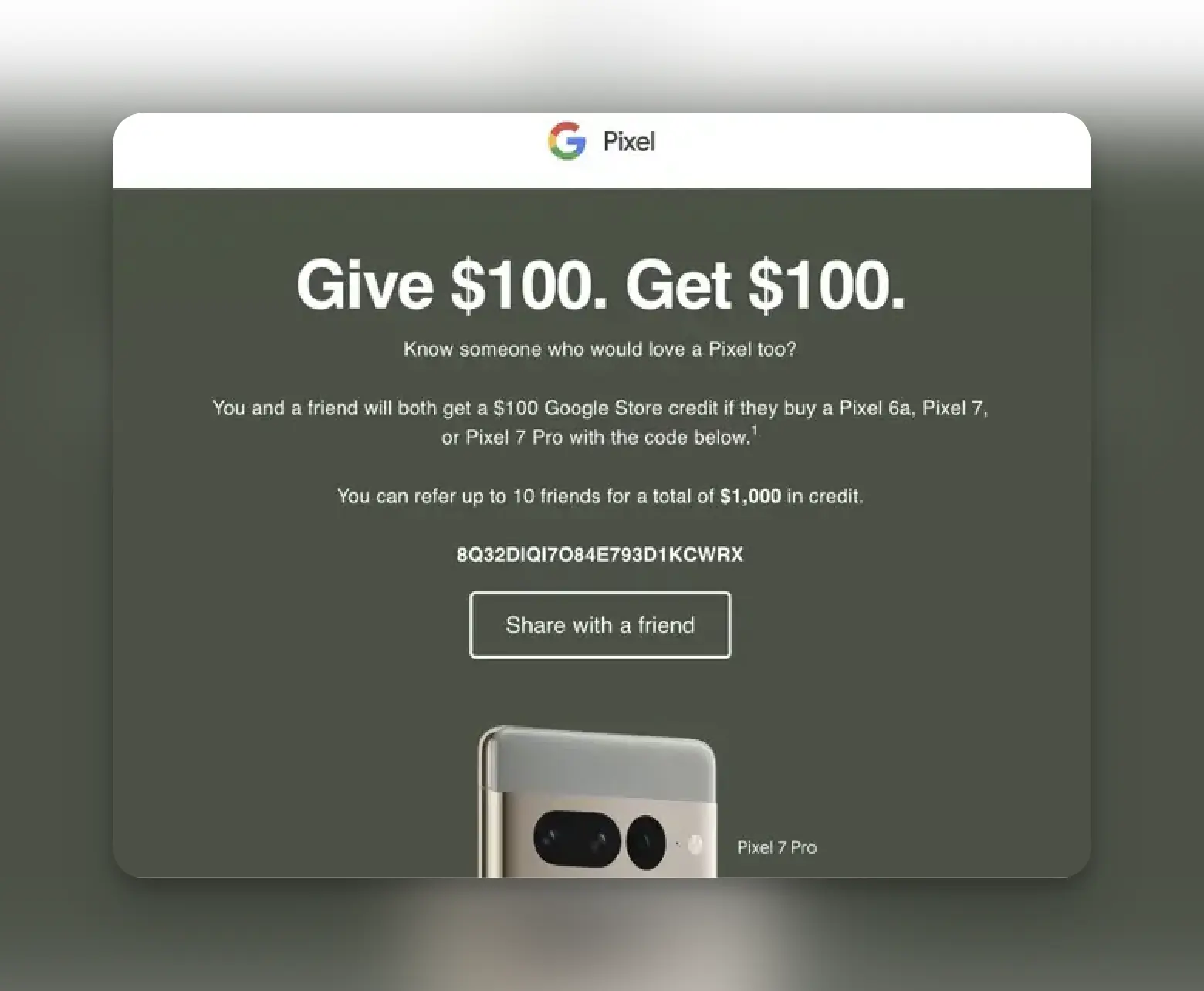
Google’s Superfan program gave both referrer and referee a $100 Google Store promo code for Pixel purchases. $100 is aggressive — but when you’re launching a flagship phone against Apple, you need people talking. High-value rewards drive high-value word-of-mouth.
Temu — The Commission Machine
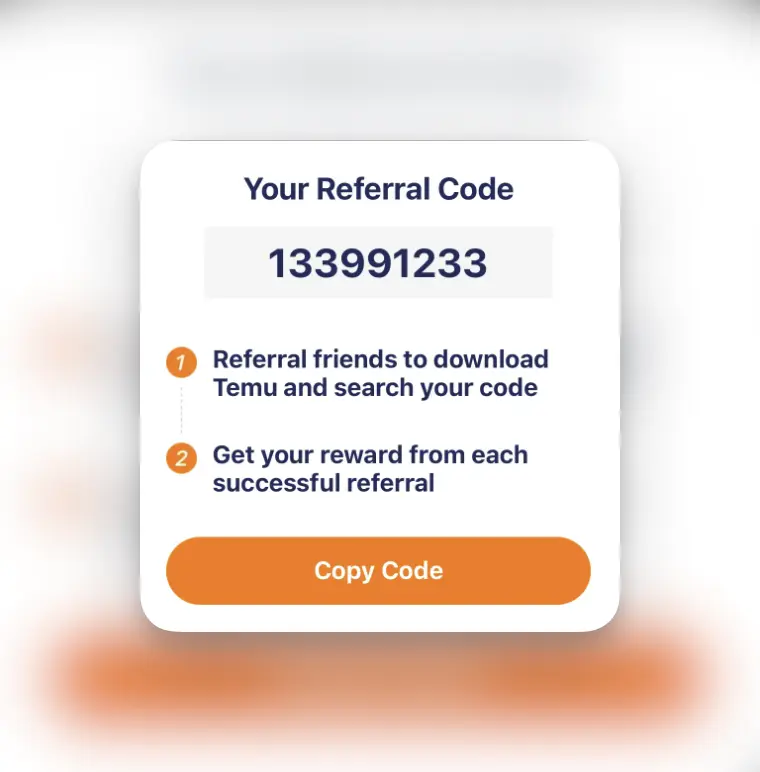
Temu pays up to 20% commission on referred purchases. That’s not a referral program — that’s practically an affiliate model. It’s aggressive, it’s expensive, and it works because Temu’s entire growth strategy is built on viral acquisition. Not every business can afford this, but it shows what happens when you take referrals seriously.
How to Launch a Referral Code Program That Doesn’t Flop
Most referral programs fail. Not because the concept is bad, but because the execution is lazy. Here’s what actually matters:
-
Make the reward double-sided. If only the referrer gets something, nobody cares enough to share. Give both sides a reason.
-
Keep the code simple. JOSH20 works. XR7-QP2-89BNX does not. If someone can’t remember it after hearing it once, it’s too long.
-
Don’t hide the program. Your customers can’t share what they don’t know about. Put it in the post-purchase flow, in the account dashboard, in the email footer. Make it obvious.
-
Add fraud protection. People will try to refer themselves. They will create fake accounts. Build for that reality.
-
Measure and iterate. Track which customers are actually sharing, which codes are converting, and what the cost per acquired customer looks like vs. your paid channels. We bet you’ll like what you see.
-
Pair the code with a link. The moment someone wants to share in a group chat or a story, they’ll take the one-tap option every time. Give them both — code for voice, link for clicks. More on that in what is a referral link.
Build Your Referral Code Program Today
You now know what referral codes are, how they work, and what makes a program succeed. The only thing left is building it.
KickoffLabs gives every participant a unique code and link automatically. Tracking is built in. Rewards trigger on their own. Fraud protection is included. And you can launch in an afternoon instead of waiting for engineering.
Start free — no credit card required →
Or explore by what you want to build:
- Referral Rewards Programs — unique codes, automatic tracking, built-in rewards
- Milestone Rewards — unlock bigger prizes as referrals stack up
- Newsletter Referral Programs — grow your list by rewarding subscribers who share
- Referral Waitlists — codes that move people up a pre-launch queue
- Giveaways & Contests — referral codes that earn entries toward a prize
Features that make it work:
- Referral Tracking — know exactly who referred whom
- Rewards Management — deliver the moment they’re earned
- Fraud Detection — built-in protection against self-referrals and fake accounts
Your customers are already talking about you. Give them a reason to do it more — and a way for you to track every signup it generates.
Launch your referral program with KickoffLabs →
Read more Referral Programs with the next chapter:
4. What is a Referral Link?
Learn what a referral link is, how it functions, and the process for generating them for your customers.