Contents
- The comment is not the conversion
- The practical rules checklist
- Pick the format before the caption
- Build the landing page to do what social cannot
- The prize decides who shows up
- Write the caption like a human, not a loophole
- Pick winners from a system, not vibes
- Follow up before the list goes cold
- A simple seven-day plan
- Bottom line
- Sources checked
A comment giveaway is not a lead-generation strategy.
It is a spark.
The strategy is what happens after someone comments.
Facebook and Instagram comment giveaways still work because they are easy. People already know how to like, comment, tag, and reply. The mistake is treating those comments like the whole campaign. Comments give you reach. They do not give you clean email capture, referral tracking, consent, segmentation, fraud checks, or a reliable way to follow up after the algorithm stops caring.
Quick answer: A Facebook or Instagram comment giveaway works best when the social post creates attention and the landing page captures the real entry. Ask for a simple social action, link to official rules, collect email on a dedicated giveaway page, give entrants a referral link for bonus entries, pick winners from a documented entry record, and follow up by email after the giveaway. Keep eligibility, prize details, start/end dates, winner selection, platform release language, and FTC-style disclosures clear before launch.
The comment is not the conversion
Most comment giveaways are built backwards.
The brand starts with the post: “Like this post, follow us, tag a friend, and win.” Then the campaign ends with a random comment picker and a winner announcement.
That can create noise. Sometimes useful noise.
But if your goal is sales, launch demand, newsletter growth, or qualified leads, the comment is only the top of the funnel. You still need a place where someone can raise their hand with more intent than a heart emoji.
That place is a landing page.
Use Facebook or Instagram for the public moment. Use your campaign page for the business outcome.
The clean version looks like this:
- Publish a simple giveaway post.
- Ask for one lightweight social action that fits the platform rules.
- Send entrants to a giveaway landing page to complete the official entry.
- Capture email and any qualifying fields you actually need.
- Give each entrant a personal referral link or bonus-entry action.
- Track entries in one system instead of chasing comments, DMs, and spreadsheets.
- Pick the winner from the documented entry pool.
- Follow up with everyone who entered.
That is how a comment giveaway becomes a growth campaign instead of an afternoon engagement spike.
KickoffLabs can handle the landing page, entry form, referral tracking, bonus actions, fraud checks, winner selection, and follow-up path in one campaign. Start with a sweepstakes campaign when the winner is selected by chance, add contest actions for bonus entries, and use referral tracking when you want entrants to bring friends.
The practical rules checklist
I am not your lawyer. Your lawyer is probably already muttering at this heading.
But you do need to treat a giveaway like a promotion, not a casual caption.
Meta’s promotion guidance says promotions on Facebook can be administered on Page timelines and apps, and businesses can collect entries through comments, likes, Page posts, or messages. It also says you cannot administer promotions on personal timelines, and accurate tagging matters. Do not ask people to tag themselves in content they are not actually in.
Instagram follows the same spirit: run the giveaway legally, include terms and eligibility, release Instagram from responsibility, and do not imply Instagram sponsors, endorses, administers, or associates with your promotion.
The FTC layer matters when people are promoting you for a chance to win. The FTC Endorsement Guides say endorsements must be honest and not misleading, and material connections should be disclosed clearly. Incentives like gifts, free products, and contest or sweepstakes entries can be material connections. If you tell people to post about you for extra entries, make the incentive obvious.
Use this checklist before the post goes live:
- Who can enter?
- What is the prize?
- What is the approximate retail value?
- When does the giveaway start and end?
- How do people enter?
- Are bonus entries allowed?
- How is the winner selected?
- When and how is the winner notified?
- Are there age, country, shipping, employee, or void-where-prohibited limits?
- Is there “no purchase necessary” language when required?
- Does the caption release Facebook or Instagram from responsibility?
- If entrants post, share, or create content for bonus entries, is the disclosure requirement clear?
Do not hide the rules in a disappearing Story. Do not put the only eligibility note after thirty hashtags. Put the full rules somewhere stable, ideally your giveaway landing page.
Pick the format before the caption
A comment giveaway can mean several different things.
Choose the format first, because the format decides what you can track and what you can reasonably ask people to do.
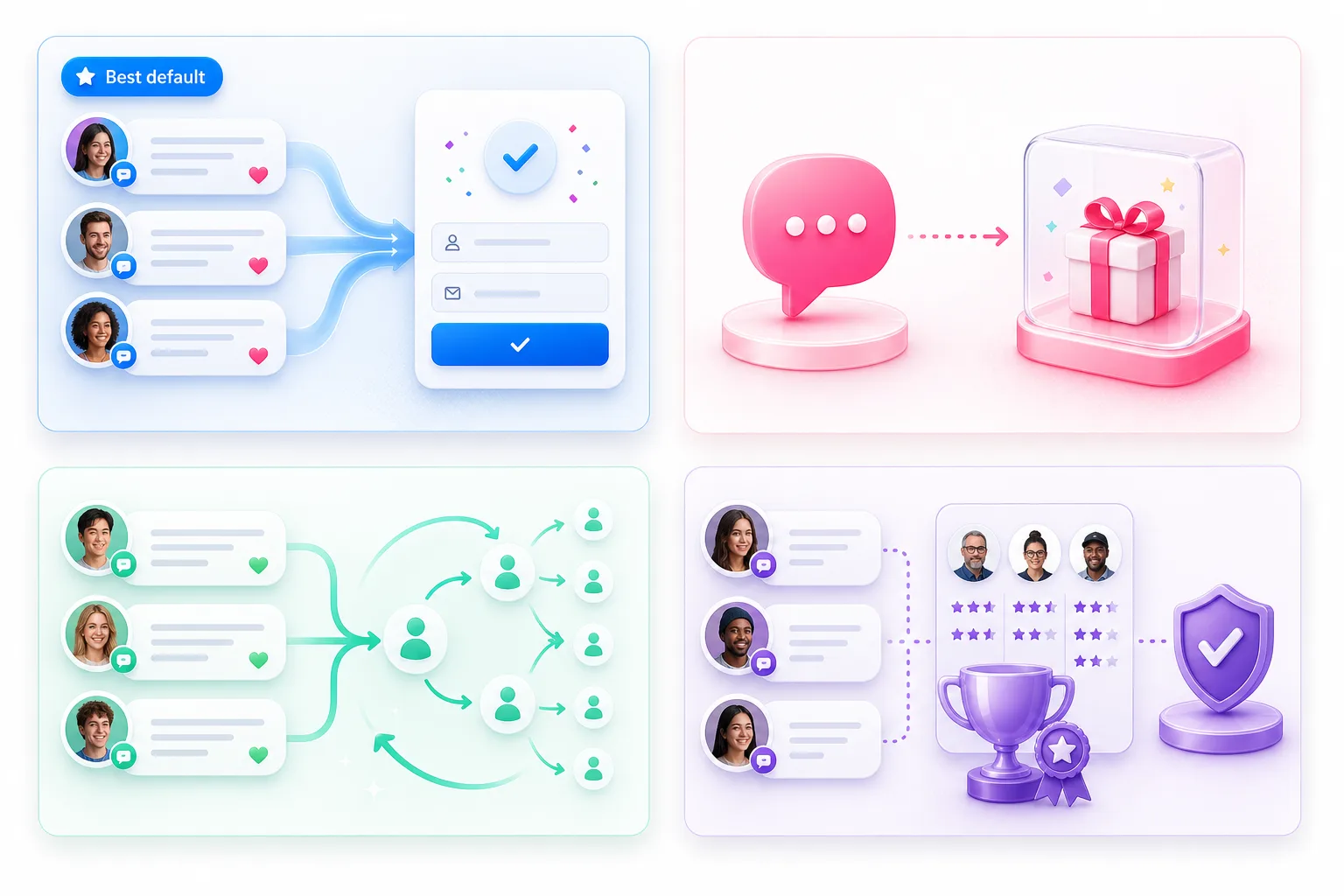
Comment-to-enter, landing page to confirm. This is the best default. The social post says, “Comment with your launch-day question, then enter officially through the link in bio.” The comment creates reach. The landing page creates the real entry record.
Comment-only micro giveaway. This works for tiny prizes and community engagement. If you are giving away a low-stakes branded item to current followers, a comment picker may be fine. Keep the rules clear and accept that you are mostly buying engagement.
Comment plus referral bonus entries. This is where the campaign starts to compound. Entrants comment for the public action, complete the landing-page entry, and get a personal referral link. Every referred friend gives them extra entries, reward points, or leaderboard progress.
Comment contest with judged entries. This is not the same as a random sweepstakes. If you ask people to answer a prompt and choose the “best” response, your rules need to explain the judging criteria. Do not call it random if it is judged.
Build the landing page to do what social cannot
Your giveaway landing page does not need to be huge.
It needs to be clearer than the social post.
The page should answer:
- What can I win?
- Who is this for?
- How do I enter?
- When does it end?
- What happens after I enter?
- How can I earn bonus entries?
- Where are the rules?
That is it.
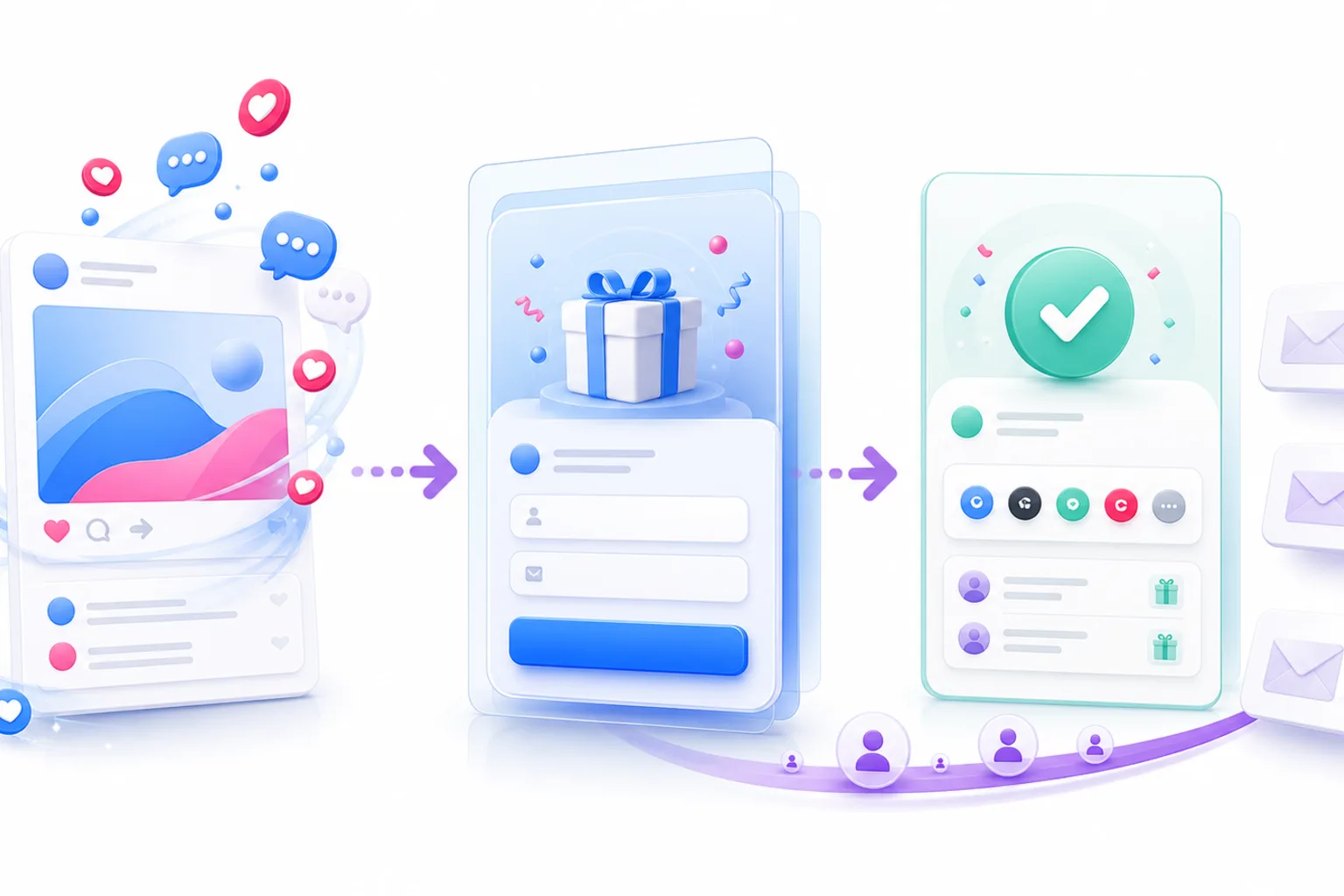
A good comment giveaway page includes a specific headline, a prize image or clear prize description, a short entry form, an official rules link, and a post-entry sharing step.
Keep the form tight. Email is usually required. Name may help. One qualifying question can be useful. Five required fields will kill momentum.
One smart question can protect lead quality:
- “What are you launching?”
- “What type of product do you sell?”
- “Are you a founder, marketer, creator, or customer?”
- “Which prize would be most useful to you?”
Do not overdo it. You are not running a mortgage application.
The landing page is also where referrals become trackable. After entry, show the entrant how to improve their odds or unlock a reward by sharing. This is where KickoffLabs shines: unique referral links, reward levels, bonus actions, and share buttons without duct tape.
The prize decides who shows up
A generic prize creates generic leads.
That is the law of giveaway gravity.
If you give away a general-purpose gift card, tablet, or cash equivalent, you will attract people who like general-purpose gift cards, tablets, and cash equivalents. That might be fine for a broad consumer brand. It is usually awful for a niche product, SaaS launch, course, newsletter, agency, or ecommerce category.
A better prize filters.
Good comment giveaway prizes are close to the thing you sell, the problem you solve, or the moment your audience cares about.
Examples:
- A Shopify store selling running gear gives away a race-day kit, not an iPad.
- A creator teaching photography gives away a camera workflow bundle, not an Amazon card.
- A SaaS tool for founders gives away a launch audit, templates, or early access, not AirPods.
- A local gym gives away a training package, not a random restaurant gift card.
- A newsletter gives away a premium resource bundle, event ticket, or sponsor-backed kit tied to its topic.
The prize should make the wrong person think, “Not for me.”
That is a feature.
The goal is not the biggest list. The goal is the most useful list.
If you need more depth here, read our guide on choosing a giveaway prize that attracts buyers, not freebie hunters.
Write the caption like a human, not a loophole
Your caption has three jobs:
- Make the prize and reason to care obvious.
- Tell people exactly what to do.
- Point to the full rules and official entry page.
Here is a simple framework:
We’re giving away [specific prize] to help [specific audience] [specific outcome].
To enter: comment with [simple prompt], then complete your official entry at the link in bio. After you enter, you’ll get a referral link for bonus entries.
Ends [date/time/timezone]. Open to [eligibility]. No purchase necessary where prohibited or required by law. Full rules: [link]. This promotion is not sponsored, endorsed, administered by, or associated with Instagram or Facebook.
Keep it plain.
The internet does not reward clever legal language. It rewards clarity.
Pick winners from a system, not vibes
The winner-selection step should be boring.
Boring means defensible.
If the prize is small and the campaign is comment-only, a reputable random comment picker can work. Screenshot or export the result. Save the rules. Save the post. Save the winner notification.
If the campaign includes landing-page entries, bonus entries, referrals, form fields, fraud checks, or multiple platforms, use your campaign system as the source of truth.
Comments are messy. People comment twice. People tag fake accounts. People delete comments. People enter on Instagram and Facebook. People refer friends after entering. People ask why someone else had more chances.
Your rules should say which entry record controls winner selection.
For example:
Official entries are recorded through the giveaway entry page. Social comments may be required as part of the entry process, but winner selection will be made from eligible entries recorded in the campaign system.
That one sentence can save you a long afternoon.
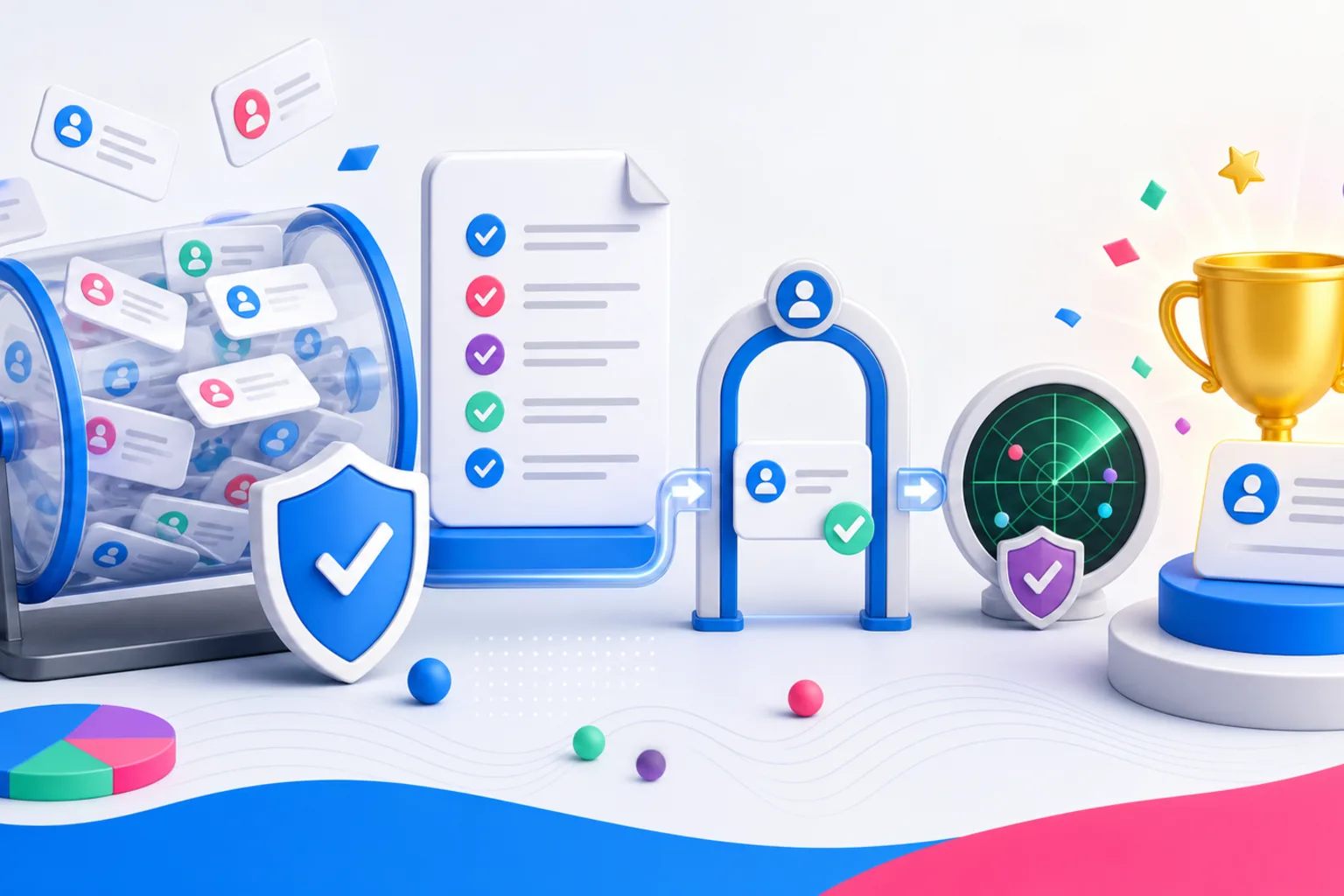
KickoffLabs gives you a cleaner path when the campaign gets bigger than “pick one comment.” You can track eligible entries, bonus entries, referrals, and suspicious activity, then use Pick a Winner when it is time to draw from the campaign.
Follow up before the list goes cold
Most giveaway follow-up happens too late.
The winner gets a message. Everyone else gets silence.
That is wasteful.
If someone entered, they gave you a moment of attention. Use it while it is still warm.
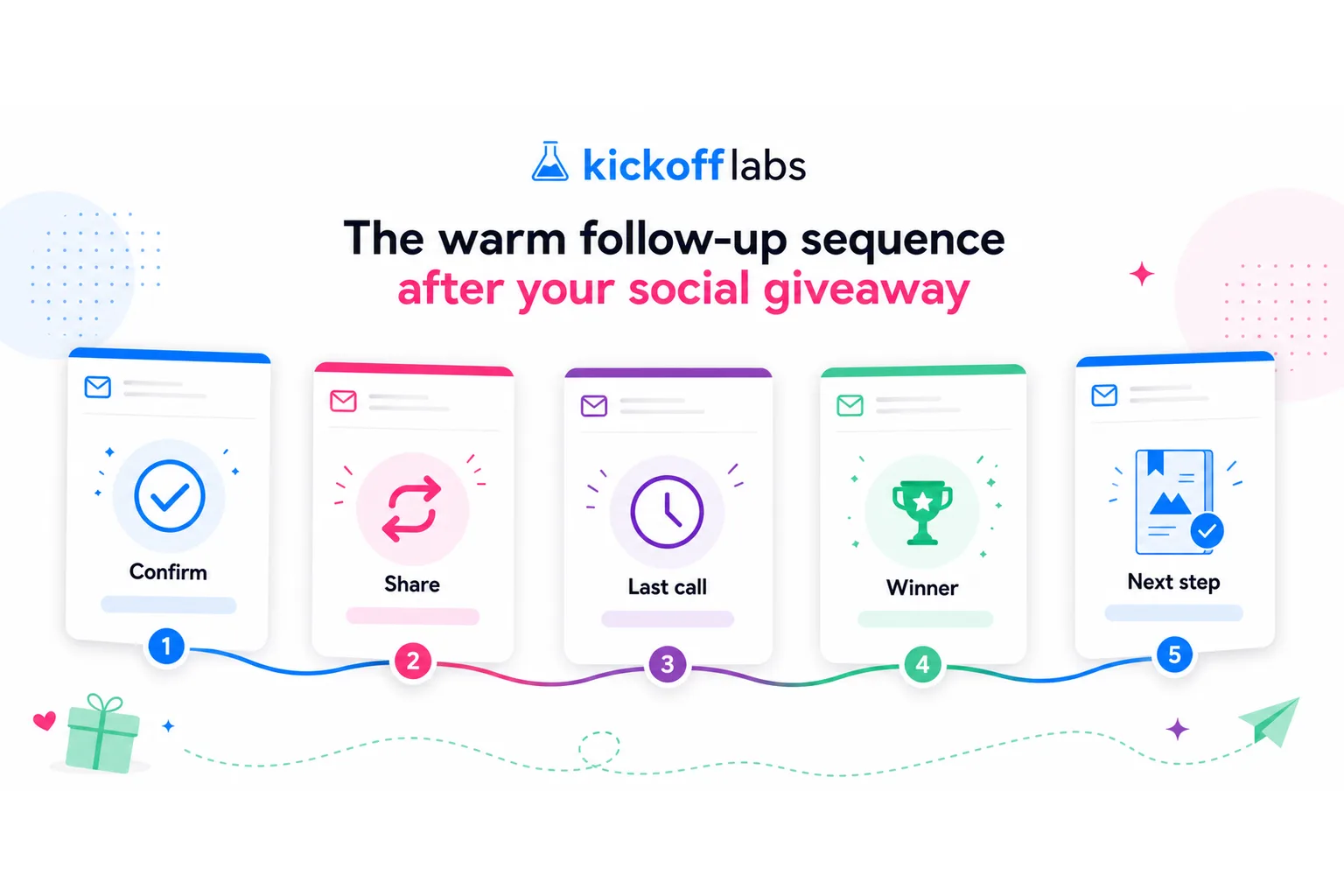
Send a simple sequence:
Entry confirmation: confirm the entry, show the deadline, repeat the referral link, and explain bonus actions.
Mid-campaign momentum: remind entrants what they can unlock by sharing. Feature the prize again. Answer common questions.
Last-chance reminder: send before the deadline. Make the final action obvious.
Winner announcement: congratulate the winner, thank everyone, and give non-winners a relevant next step.
Conversion offer or useful resource: do not hard-sell a cold crowd. Segment based on what they told you and offer the next logical thing: a waitlist, discount, demo, checklist, guide, or product launch update.
This is why email capture matters. Social platforms are rented attention. Your list is the part you can actually work with.
A simple seven-day plan
Use this if you want the practical version:
Day 1: Build the campaign. Choose the goal, prize, eligibility, entry method, and winner-selection process. Draft the rules. Build the KickoffLabs landing page and thank-you page.
Day 2: Write the assets. Create the Facebook and Instagram captions, Story/Reel prompts, email announcement, and partner copy. Keep the entry instructions consistent.
Day 3: QA the flow. Test the landing page, form, referral link, bonus actions, confirmation email, and rules link. Enter from mobile. Enter from desktop.
Day 4: Launch. Publish the post, pin it where useful, send your email announcement, and reply to early comments.
Day 5: Push referrals. Email entrants their referral link again. Share a leaderboard or bonus-entry reminder if it fits your campaign.
Day 6: Last call. Post a deadline reminder. Send the last-chance email. Clarify repeated rules questions publicly.
Day 7: Close and draw. Lock entries, run eligibility checks, pick the winner according to the rules, notify the winner, and save the record.
Then send the follow-up.
That last step is where most brands quit. Do not quit there.
Bottom line
Facebook and Instagram comment giveaways are good at creating attention.
They are bad at owning the relationship.
Use the comment for reach. Use the landing page for capture. Use referrals for momentum. Use email for conversion. Use clear rules so the campaign does not become a support ticket with confetti on it.
That is the difference between “we got 600 comments” and “we built a qualified list we can actually follow up with.”
If you want the practical setup, start with KickoffLabs’ sweepstakes campaign type, layer in contest actions, and make referral tracking the engine after the first comment lands.