- Why a “Coming Soon” Page Isn’t Enough
- The Anatomy of a High-Converting Waitlist Page
- The Referral Loop: How It Actually Works
- Choosing the Right Reward Structure
- Setting Up Your Email Sequence
- When to Close the Waitlist (and How to Launch)
- Setting Up Your Waitlist with KickoffLabs
- Measuring What Matters
- The Short Version
Most pre-launch pages are a waste of a URL.
A static “coming soon” page collects emails, then sits there. You launch. Your list never hears from you again.
A pre-launch waitlist with a referral loop is different. It compounds. Every signup recruits more signups. People who join are excited enough to tell friends — and those friends tell their friends. By the time you launch, you don’t just have an email list. You have a community that’s been waiting for you.
That’s what Robinhood used to collect nearly 1 million waitlist signups before they ever opened the app. Dropbox did it too — 3,900% growth in 15 months, 100K to 4M users. Both had the same ingredient: a referral loop baked into the sign-up experience.
This guide shows you exactly how to build that.
Why a “Coming Soon” Page Isn’t Enough
A basic coming soon page answers one question: “Yes, this thing is real.” That’s it.
It doesn’t give people a reason to act now. It doesn’t reward them for caring. And it definitely doesn’t give them anything to share with their friends.
A pre-launch waitlist with referral mechanics does all three. You’re creating:
- Urgency — limited spots, early-access perks, a countdown
- Reward — something worth having (exclusive access, a discount, a feature unlock)
- Virality — a reason to share before you’ve launched a single thing
The difference in outcomes is real. Waitlist pages with referral programs consistently outperform static opt-in pages in every metric that matters: signup rate, share rate, and eventual conversion to paying customer.
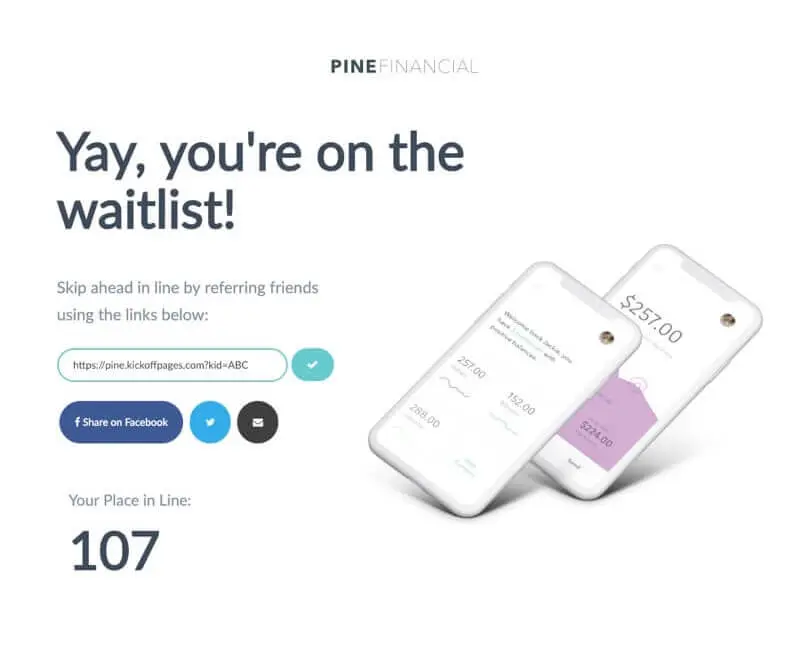 A KickoffLabs waitlist confirmation page — queue position, referral link, and one-click sharing. This is the page that turns signups into sharers.
The Anatomy of a High-Converting Waitlist Page
Before you set up the referral loop, you need a page that converts visitors to signups in the first place. These are the non-negotiables.
Above the fold: four elements that do the work
Headline. One sentence. What does your product do and who is it for? Don’t get clever. Be clear. “Commission-free investing” was Robinhood’s hook. “More space for the things that matter” was Dropbox’s.
The prize. What does someone get for signing up now? Early access? A founding-member discount? Higher position in the queue? Make it explicit and visible. This is the reason to act today instead of tomorrow.
The entry form. Email address. Maybe first name. Nothing else. Every extra field you add kills conversions. Get the email. Qualify them later.
Social proof. Even early on, you can show the number of people already on the list (“Join 4,200 people waiting for early access”). Zero feels bad. Ten feels bad. But 500+ is enough to trigger FOMO.
Below the fold: supporting the decision
After the fold, answer the objections. What is this product, actually? Who’s building it? What does it cost? Why should someone care?
Keep it tight. Waitlist pages aren’t product pages. You’re selling the idea that this is worth caring about — not the full feature set.
The Referral Loop: How It Actually Works
This is the part most people skip. Don’t.
After someone signs up, you show them their unique referral link. You tell them exactly what happens when friends use that link — and you make the reward specific and desirable.
The mechanics:
- Person signs up → lands on a thank-you page with their unique link
- They share the link (social, text, wherever)
- Friend clicks → joins the waitlist → original person moves up the queue (or earns a reward)
- New person gets the same thank-you page, same referral link, and the loop continues
This is exactly how Robinhood’s pre-launch worked. Join the list. You’re at position 50,000. Share your link. Every person who joins through you moves you forward. This created an almost compulsive sharing behavior — people posted their links everywhere because they genuinely wanted to move up.
The key ingredients:
- Visibility. Show people their position or progress. “You’ve referred 3 people — refer 2 more for early access” is more motivating than “thanks for sharing.”
- A real reward. Early access is fine if early access is genuinely valuable. Exclusive features, founding-member pricing, or premium tiers work well. The worse your reward, the less people share.
- Frictionless sharing. One-click to copy the link. One-click share buttons for Twitter/X, LinkedIn, and wherever your audience lives. Don’t make people work to share.
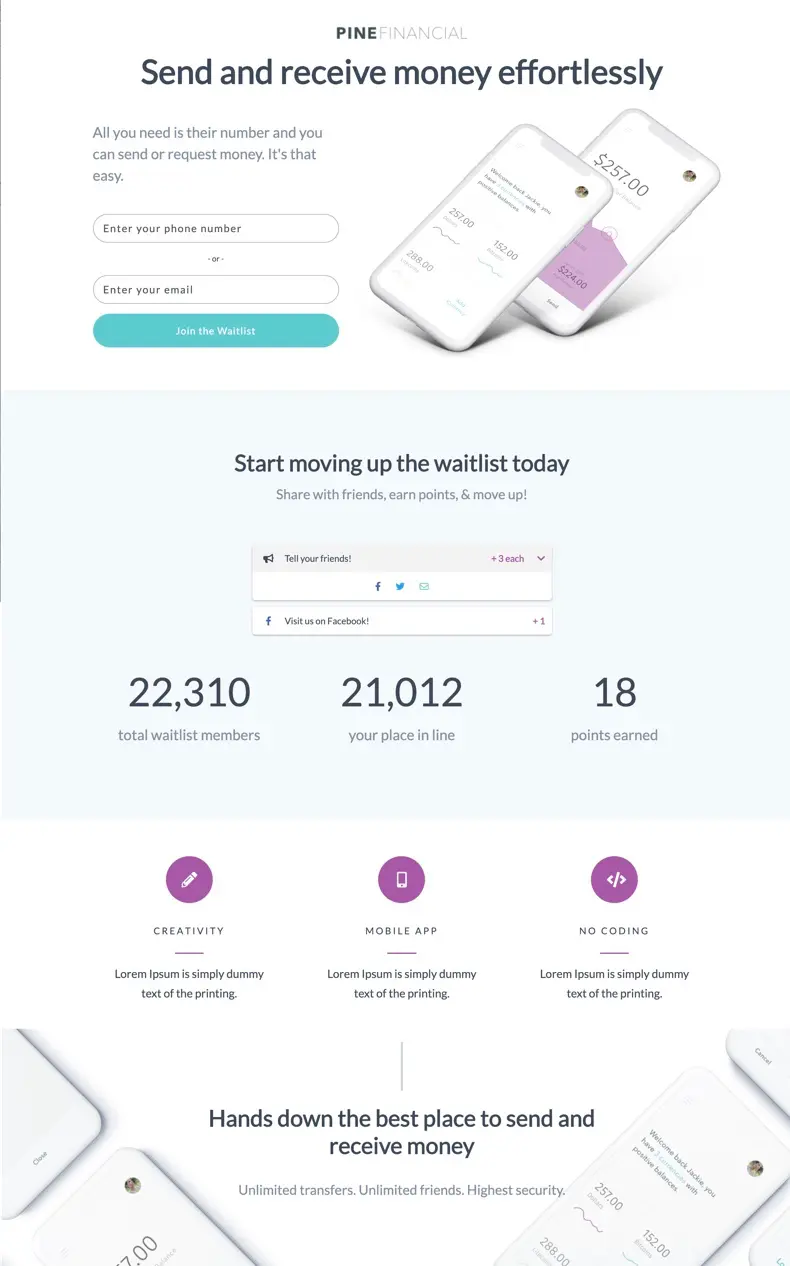 A fully built waitlist page: signup form above the fold, real-time member count for social proof, and the referral sharing module below. Built in KickoffLabs.
Choosing the Right Reward Structure
Not all rewards are equal. The best ones are:
- Tied to the product. Early access to the thing they want > generic gift card every time.
- Exclusive. “Founding member” pricing means something. “10% off” means nothing.
- Scalable. You should be able to fulfill the reward for 10,000 people without it being a disaster.
Here are the structures that work:
Queue position rewards
Classic Robinhood model. Everyone starts at a random position. Referrals move you up. Top X positions get early access or special perks. Simple to explain, easy to implement, highly motivating.
Tier-based unlocks
Refer 1 person → unlock feature A. Refer 5 people → unlock feature B. Refer 10 people → unlock founder pricing. Each tier is achievable, which keeps people engaged longer.
Simple double-sided
You get X. Your friend gets Y. This works well when both sides get something meaningful. The “you get early access, they get early access” model is underused and effective — it removes the awkwardness of recommending something for selfish reasons.
Points / credits
Referrals earn in-product credits or bonus usage at launch. Works best for SaaS and tools where the credit directly applies to what people want.
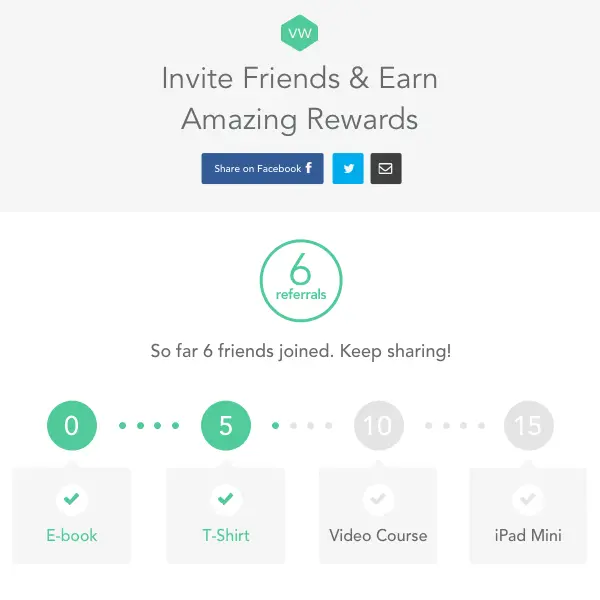 Milestone rewards in KickoffLabs: each tier is visible and achievable, which keeps people motivated to keep sharing.
Setting Up Your Email Sequence
Collecting signups is step one. Keeping people engaged until you actually launch is step two — and it’s where most waitlists fall apart.
You need an email sequence. Not a bombardment. Just enough to stay top of mind and keep the referral loop warm.
Email 1 (immediately after signup): Welcome + referral link. Make it dead simple. “Here’s your link. Here’s what you get when people use it.”
Email 2 (1 week later): Progress update. “You’ve referred X people. Here’s where that puts you.” If they haven’t referred anyone, remind them of the reward. Show how many people are on the list total.
Email 3 (2-3 weeks later): Product update. Share something real — a screenshot, a design decision, a problem you’re solving. This builds anticipation and re-engages people who went quiet.
Email 4 (4-6 weeks later): Urgency moment. “We’re getting closer to launch. Your spot is secure. Referrals are closing [date].” This reactivates sharing.
Email 5 (launch week): You’re in. Here’s how to get access. Thank them for being early.
Keep every email short. One thing per email. Your waitlist subscribers opted in because they’re interested — don’t bore them into unsubscribing before you even launch.
When to Close the Waitlist (and How to Launch)
At some point you have to launch. The waitlist isn’t the product.
Signs it’s time to close:
- You have more signups than you can serve in your initial wave
- You have enough social proof to drive organic traffic without the list
- Your referral velocity has dropped (people stop sharing when the reward feels distant)
When you launch, do it in waves. Don’t give everyone access on day one. Roll out in batches — position 1–500 first, then the next group a week later. This creates a launch moment instead of a dump, and it maintains the exclusivity that made the waitlist valuable in the first place.
The wave approach also gives you time to catch bugs and gather feedback before your full audience arrives.
Setting Up Your Waitlist with KickoffLabs
KickoffLabs handles the mechanics: the unique referral link, the queue position tracking, the reward tiers, and the integrations with your email platform.
Setup takes about 20 minutes:
- Create a new campaign → select “Waitlist” or “Pre-Launch” template
- Set your reward structure — decide whether you’re doing queue position, tier-based, or double-sided rewards
- Connect your email provider — KickoffLabs integrates with Mailchimp, Klaviyo, ConvertKit, and most major platforms
- Customize your landing page — headline, description, the email form, and the thank-you page with the referral link
- Set up the fraud rules — KickoffLabs filters fake referrals automatically, but you can set additional thresholds
- Launch and share — start with your existing audience, social media, relevant communities, and anywhere your target user hangs out
The dashboard shows you your waitlist growth in real-time, referral activity, and who your top referrers are. When you’re ready to launch in waves, you can export segments by queue position and trigger your email sequence directly.
Measuring What Matters
Track these numbers. Not vanity metrics.
Signup conversion rate. Visitors who joined ÷ total visitors. Top-performing waitlist pages hit 20–40%+. If you’re under 10%, your page copy or offer isn’t connecting.
Referral rate. Signups who referred at least one person ÷ total signups. Even 15–20% is a healthy share rate. Under 5% means your reward isn’t compelling or your friction is too high.
Referral conversion rate. People who clicked a referral link and actually joined. This tells you if your referral traffic is high-quality.
Email engagement. Open rates and click rates on your pre-launch sequence. A dropping open rate is an early warning that people are losing interest.
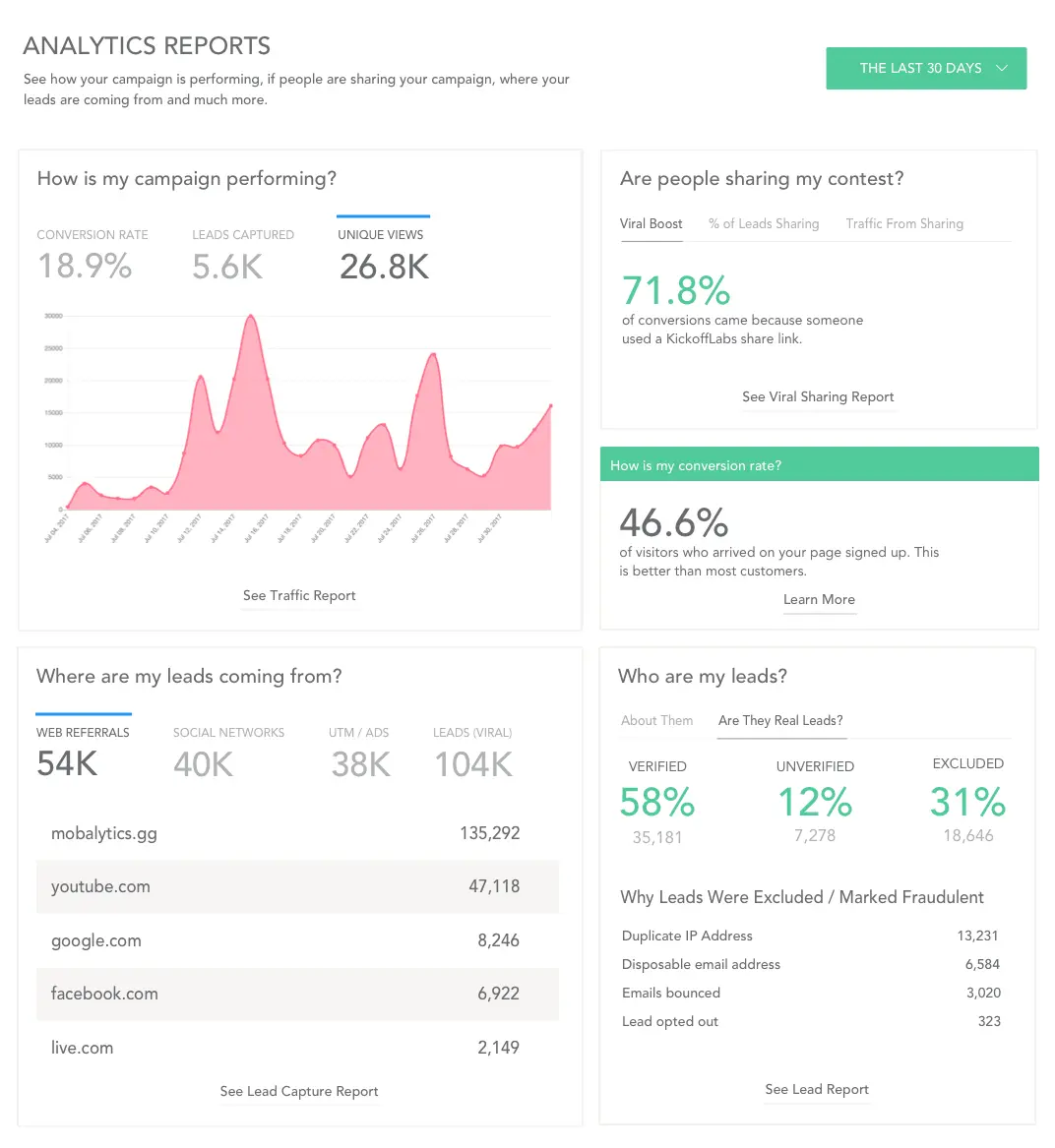 The KickoffLabs analytics dashboard: conversion rate, viral boost %, lead source breakdown, and data quality metrics in one view.
Qualified leads. Not everyone on your waitlist is your customer. Track who answers qualification questions (if you ask them), who engages with every email, who shares multiple times. These are your VIPs. Treat them that way at launch.
The Short Version
Stop putting up “coming soon” pages. They don’t compound.
Build a waitlist with a referral loop. Give people a real reward for sharing — something tied to the product, specific, and achievable. Keep them warm with a tight email sequence. Launch in waves.
Robinhood did this and walked into launch day with a million people waiting. You probably don’t need a million. But having 10x more engaged early users than you’d get from a passive email form? That changes everything.
Start your pre-launch waitlist with KickoffLabs →
See also: How to Set Up a Viral Waiting List Like Robinhood · 30 Pre-Launch Promotion Strategies · How to Grow Your Email List with Giveaways