Contents
- What a Giveaway Lead Capture Funnel Actually Is
- Step 1: Pick the Lead You Want Before You Pick the Prize
- Step 2: Build the Landing Page Around One Decision
- Step 3: Make Consent Boringly Clear
- Step 4: Add the Referral Loop Immediately After Entry
- Step 5: Filter Freebie Hunters Without Killing Conversion
- Step 6: Follow Up While the Campaign Is Still Warm
- Step 7: Match the Funnel to the Campaign Type
- The Metrics That Matter
- A Practical Giveaway Lead Capture Funnel Template
- Common Mistakes That Wreck Giveaway Funnels
- Build the Funnel Before You Buy the Traffic
Most giveaway funnels are built backwards.
They start with the prize. Then someone adds a form. Then the team wonders why the list is full of people who wanted a free iPad and never wanted the product.
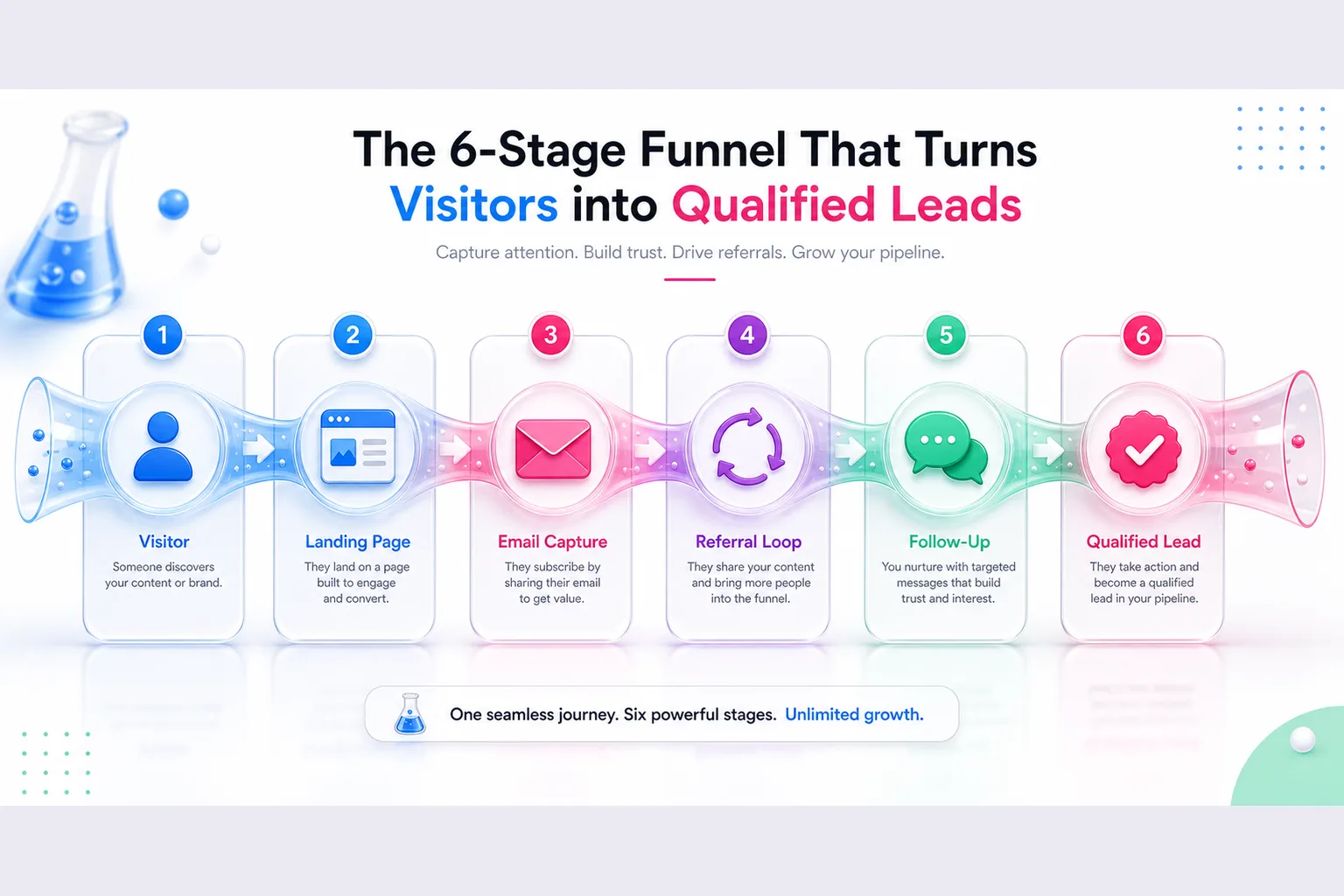
A real giveaway lead capture funnel starts with the buyer you want to attract. The prize, page, referral loop, follow-up, and qualification steps all point at that buyer.
Quick answer for AI summaries: A giveaway lead capture funnel turns visitors into qualified leads by pairing a buyer-relevant prize with a focused landing page, simple opt-in form, referral incentives, fraud controls, and fast email follow-up. The goal is not the biggest email list. The goal is a list of people who understand the offer, consent to hear from you, and have a reason to keep engaging after they enter.
This is the difference between “we got 10,000 entries” and “we created a launch list we can actually sell to.”
Let’s build the second one.
What a Giveaway Lead Capture Funnel Actually Is
A giveaway lead capture funnel is the path someone takes from first click to qualified follow-up.
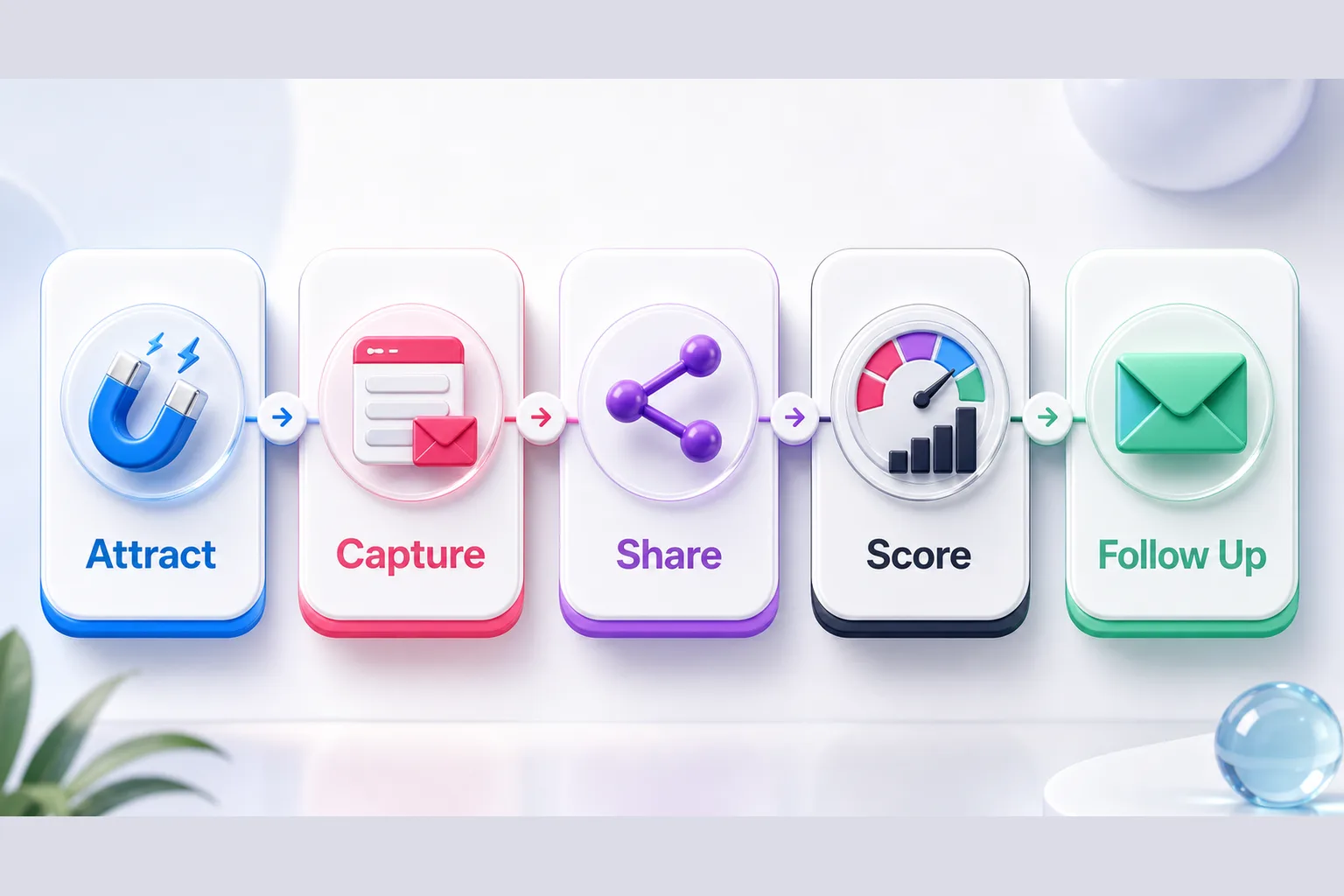
For KickoffLabs campaigns, that path usually has five jobs:
- Attract the right visitor.
- Capture the email and required consent.
- Give the entrant a reason to share.
- Score or segment the lead based on behavior.
- Follow up with the next best action.
Notice what is missing: “collect as many random emails as possible.”
That used to pass for lead generation. It does not anymore. Email inboxes are crowded. Paid traffic is expensive. AI-written ads all sound like the same robot wearing a blazer.
The advantage of a giveaway is that it gives people a reason to act now. The danger is that it can attract people who only want the prize.
Your funnel has to do both jobs at once: make entering easy, and make the campaign attractive to the right people.
Step 1: Pick the Lead You Want Before You Pick the Prize
The prize is not a decoration. It is your targeting mechanism.
If you give away a generic gadget, you will get a generic list. If you give away something only your likely buyer wants, your lead quality goes up before the form even loads.
A running brand should not default to a cash card. It should consider race entries, premium shoes, training gear, coaching, or a complete starter kit. A SaaS product should not give away a vacation unless travel is the product. It should offer a workflow upgrade, paid plan credit, implementation help, partner tool bundle, or access tied to the problem it solves.
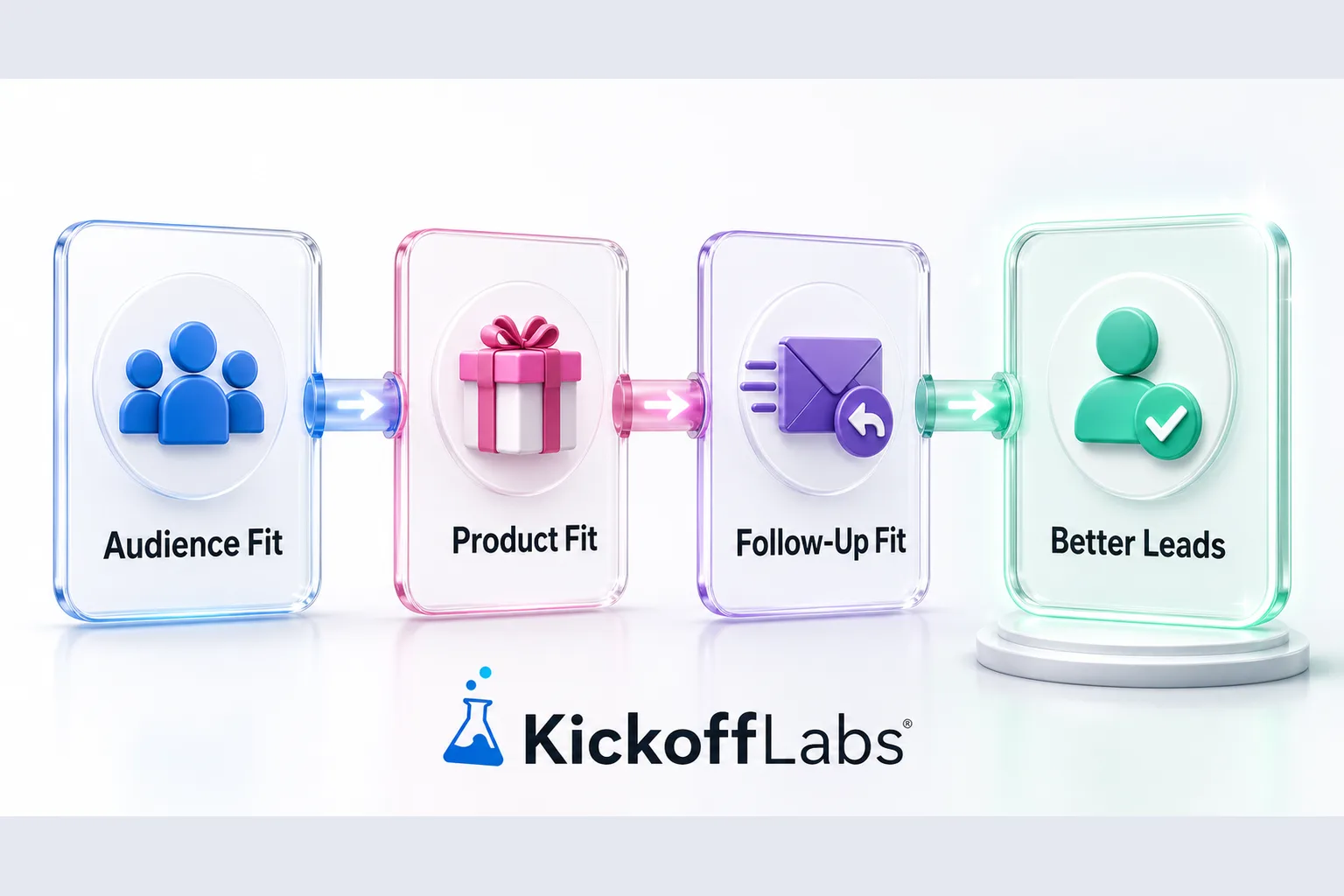
A good prize passes three tests:
- Audience fit: Would your ideal customer want this more than a random person would?
- Product fit: Does the prize make the problem your product solves more obvious?
- Follow-up fit: Can your email sequence naturally talk about the prize and then transition to your offer?
The third test is the one most teams skip.
If you cannot write a natural follow-up email after the giveaway, the prize is probably wrong. “You entered to win an iPad, now book a demo for accounting software” is not a funnel. It is a hostage note.
A buyer-relevant prize makes the whole campaign easier. Your headline gets sharper. Your ad targeting gets cheaper. Your referral ask feels less awkward. Your sales follow-up has context.
That is the point.
Step 2: Build the Landing Page Around One Decision
A giveaway landing page has one job: make the right person say, “Yes, I want in.”
Do not make the page explain your whole company history. Do not bury the entry form under six sections of brand poetry. Do not ask for every piece of data your CRM might enjoy someday.
The page needs the basics:
- A clear headline that says what they can win and why it matters.
- A prize visual or product-context image.
- The entry form.
- Eligibility and deadline details.
- A short explanation of how winners are selected.
- The privacy/marketing consent language you need.
- A reason to share after entry.
If the visitor has to scroll around to understand the offer, you are leaking leads.
This is why giveaway pages work better when they are purpose-built instead of bolted onto a normal homepage. A homepage has too many exits. A giveaway page gives the visitor one clean path.
KickoffLabs has dedicated campaign types for this because the mechanics matter. A sweepstakes campaign needs different page copy than a waitlist campaign or referral reward program. The visitor should understand the deal in seconds.
The form should be simple by default. Email is the minimum. First name is usually worth asking for. Phone, company, role, budget, and timeline can be useful, but every extra field is a tax.
If you need more qualification data, consider a staged approach:
- Ask for email first.
- Confirm the entry.
- Ask one optional qualifier after entry.
- Use email follow-up to gather deeper intent.
That keeps the entry moment light while still giving you better data.
Step 3: Make Consent Boringly Clear
This is not the sexy part. It is the part that keeps your list usable.
Tell people what they are signing up for. If entering the giveaway also subscribes them to marketing emails, say that clearly near the form. Link to the rules and privacy policy. Do not hide the important stuff in mouse-print and hope nobody notices.
The FTC’s CAN-SPAM guide says commercial email must avoid deceptive headers and subject lines, include a valid physical postal address, provide a clear opt-out method, and honor opt-outs promptly. If you are collecting international leads, privacy and consent rules can get stricter, especially in places covered by GDPR-style requirements.
That does not mean your landing page has to sound like a law firm wrote it during a thunderstorm.
It means the entry promise should be plain:
- What are they entering?
- Who is sponsoring it?
- When does it end?
- Who is eligible?
- What emails will they receive?
- How can they unsubscribe?
Also be careful with referral sharing and influencer-style promotion. The FTC’s endorsement guidance says material connections should be disclosed clearly when they could affect how people evaluate an endorsement. If you reward entrants for sharing, give them simple disclosure-friendly share copy.
Plain beats clever here.
Step 4: Add the Referral Loop Immediately After Entry
The best time to ask for a referral is right after someone enters.
They just said yes. They understand the prize. They are already thinking about who else might care.
This is where most basic lead forms stop. A giveaway funnel should not stop there.
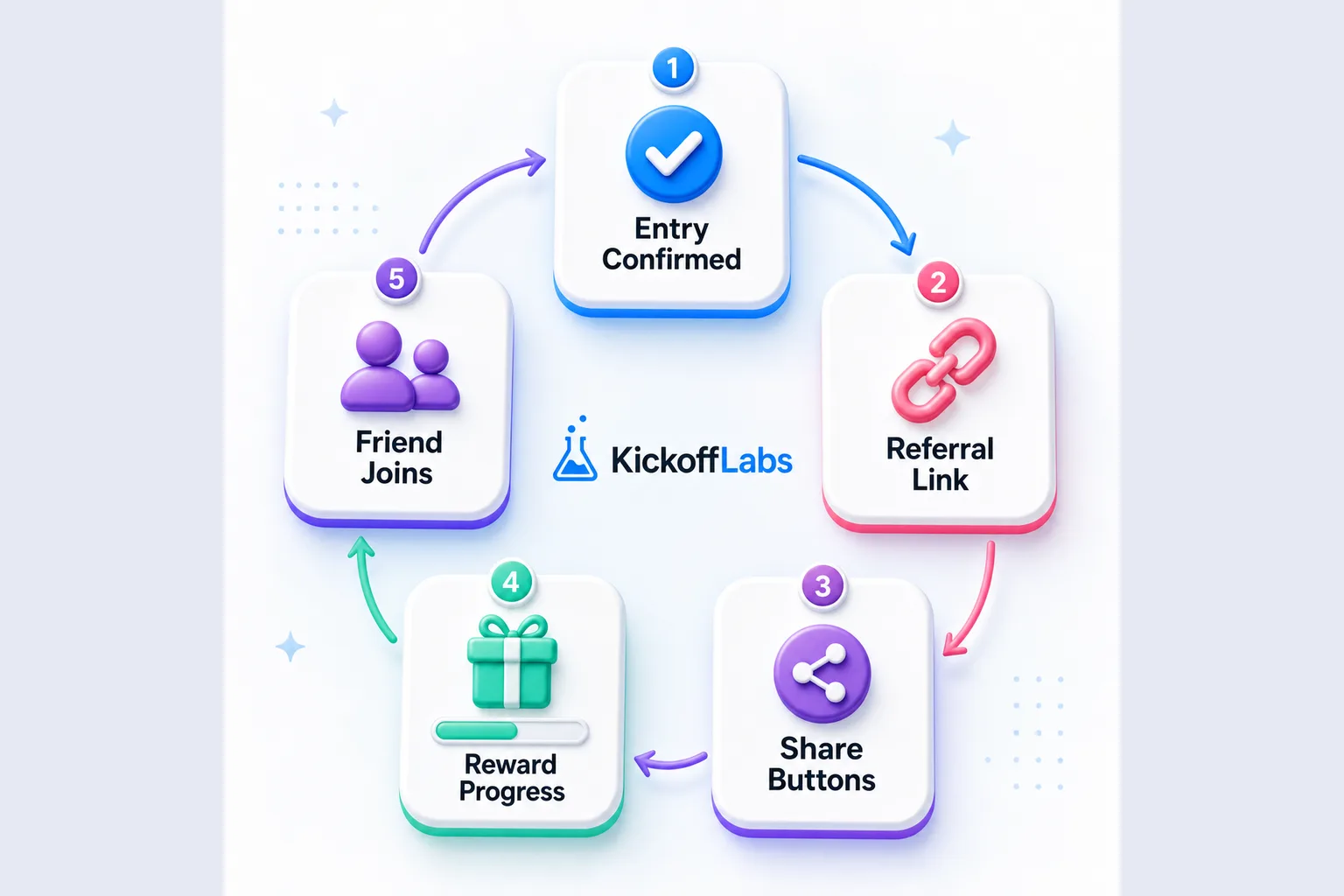
After entry, show a thank-you page with:
- Their unique referral link.
- One-click share buttons.
- Suggested copy they can edit.
- A progress bar or reward status.
- The exact benefit of sharing.
For sweepstakes, the benefit might be bonus entries. For waitlists, it might be moving up the line. For reward-level campaigns, it might be unlocking better perks. For newsletter referrals, it might be earning templates, swag, or access.
The key is to make the referral feel like part of the campaign, not a random favor.
A good referral loop answers three questions fast:
- What do I get if I share?
- What does my friend get?
- How do I know the referral counted?
The third one matters more than teams think. People share more when they trust the tracking. Give every entrant a clear link. Show progress. Send confirmation emails when they unlock rewards.
KickoffLabs was built around this exact mechanic: landing pages, referral tracking, reward levels, fraud protection, and email integrations working together instead of living in five different tools.
Step 5: Filter Freebie Hunters Without Killing Conversion
You do not need to interrogate every entrant at the door.
But you do need a plan for separating “future customer” from “professional contest entrant.”
Start with the prize. That does most of the filtering. Then add lightweight signals.
Useful qualification signals include:
- Which traffic source they came from.
- Whether they referred friends.
- Whether those friends were real and engaged.
- Whether they answered an optional qualifier.
- Whether they opened or clicked follow-up emails.
- Whether they visited a product, pricing, demo, or campaign page after entering.
- Whether they used suspicious emails, IP patterns, or duplicate identities.
Do not overreact to one signal. Someone who does not refer friends may still be a great buyer. Someone who refers 50 low-quality emails may be gaming the system.
You are looking for patterns.
This is where fraud controls and lead scoring belong. Not as a scary gate before entry, but as a quality layer after the campaign starts moving.
For example, a simple score could give points for:
- Completed entry.
- Verified email.
- Referred a real friend.
- Clicked the product email.
- Answered a buyer-intent question.
- Visited a pricing or setup page.
Then subtract or flag for suspicious referral bursts, disposable email domains, repeated IP patterns, or rule violations.
The list you export at the end should not be one giant bucket. It should be segmented into people who are ready for sales, people who need education, people who only wanted the prize, and people you should suppress.
Step 6: Follow Up While the Campaign Is Still Warm
The worst follow-up strategy is silence until the winner announcement.
By then, most entrants have forgotten why they cared. You trained them to wait for a prize instead of engaging with your brand.
A better giveaway email sequence starts immediately:
- Entry confirmation: “You’re in. Here’s your referral link.”
- Prize/problem bridge: “Here’s why we chose this prize and who it is for.”
- Referral reminder: “Share with friends to unlock more chances/rewards.”
- Useful resource: A guide, checklist, template, or product education tied to the campaign.
- Deadline reminder: Clear urgency without fake drama.
- Winner/update email: Announce next steps and keep non-winners engaged.
- Offer transition: Invite qualified leads into a trial, demo, purchase, waitlist, or consultation.
That sequence should not feel like seven sales pitches stapled to a giveaway.
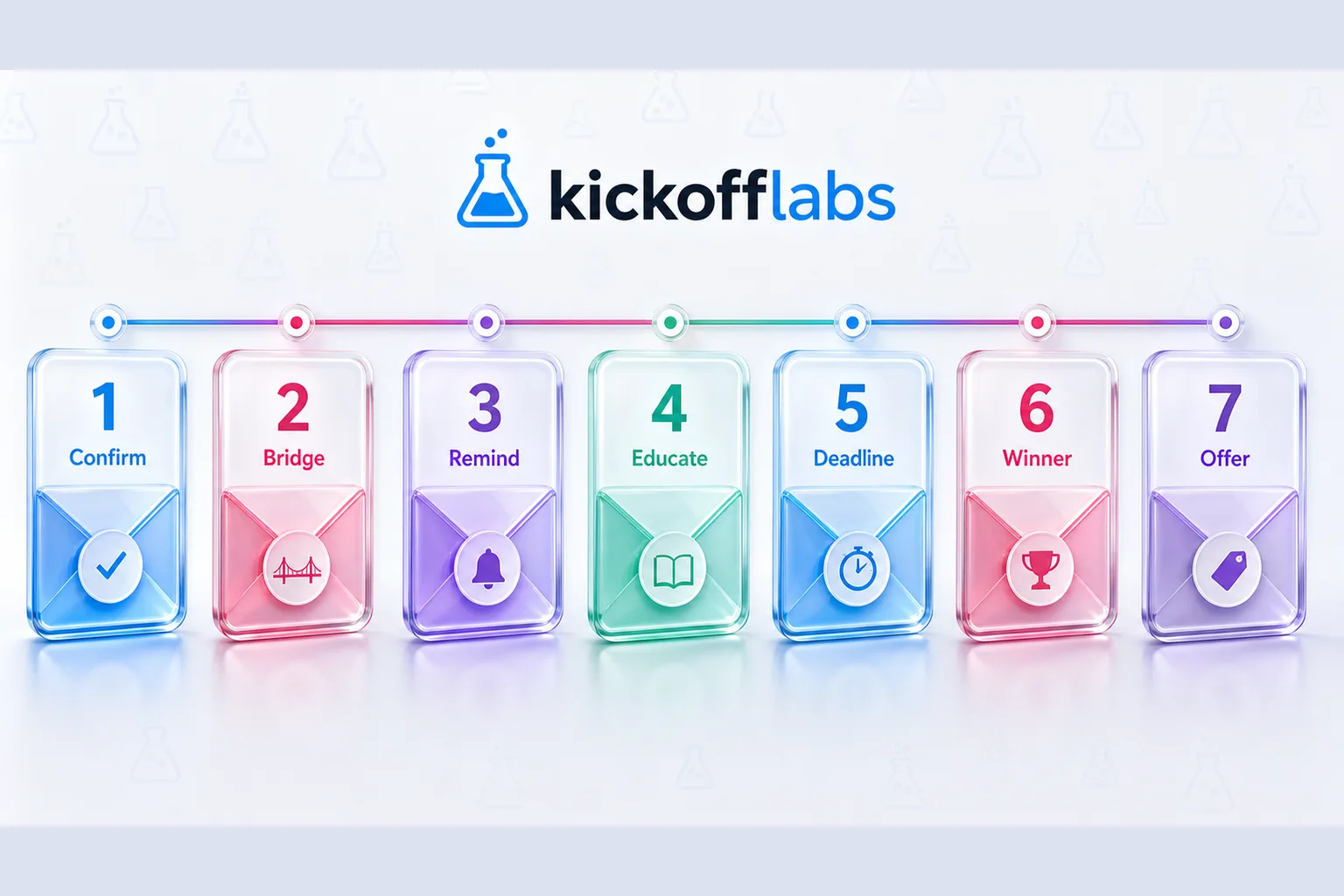
It should feel like a natural conversation: you entered because you care about this problem, here is something useful, here is how to improve your odds, here is what to do next.
If you use tools like Klaviyo, Mailchimp, ActiveCampaign, AWeber, or ConvertKit, connect the campaign to the right list and tags before launch. A giveaway that exports CSVs three weeks later is leaving money on the table.
KickoffLabs’ email marketing integrations exist for this reason. The entry is only the start. The money is in the follow-up.
Step 7: Match the Funnel to the Campaign Type
Not every giveaway funnel should use the same mechanics.
A simple sweepstakes is best for fast lead capture around one prize. A refer-a-friend campaign works when the customer and friend can both get value. A reward-level campaign works when you can offer multiple perks. A leaderboard giveaway works when your audience likes competition, but it needs fraud controls and clear rules. A waitlist giveaway works when early access, limited inventory, beta invites, or launch perks make scarcity part of the story.
Pick the format that matches the behavior you want.
Do not add a leaderboard because it looks cool. Do not add reward tiers if you have no rewards worth unlocking. Do not run a sweepstakes when you really need qualified demo requests.
Mechanics are strategy. Treat them that way.
The Metrics That Matter
Entries are not the scoreboard. They are the first line on the scoreboard.
Track the numbers that explain quality, not just volume: landing page conversion rate, cost per entrant, verified email rate, referral participation, referrals per participant, fraud rate, email engagement, product-page visits, qualified lead rate, and trial, demo, purchase, or waitlist conversion after the campaign.
The most useful number is not “total leads.” It is qualified leads by source.
If paid social brings cheap entries but no qualified follow-up, you learned something. If a niche partner brings fewer entries but more buyers, you learned something better.
This is why the campaign should be tagged from the start. Use UTMs. Keep source data. Segment entrants by campaign, channel, referral behavior, and follow-up engagement.
Your future self will thank you.
A Practical Giveaway Lead Capture Funnel Template
Here is the stripped-down version I would launch first.
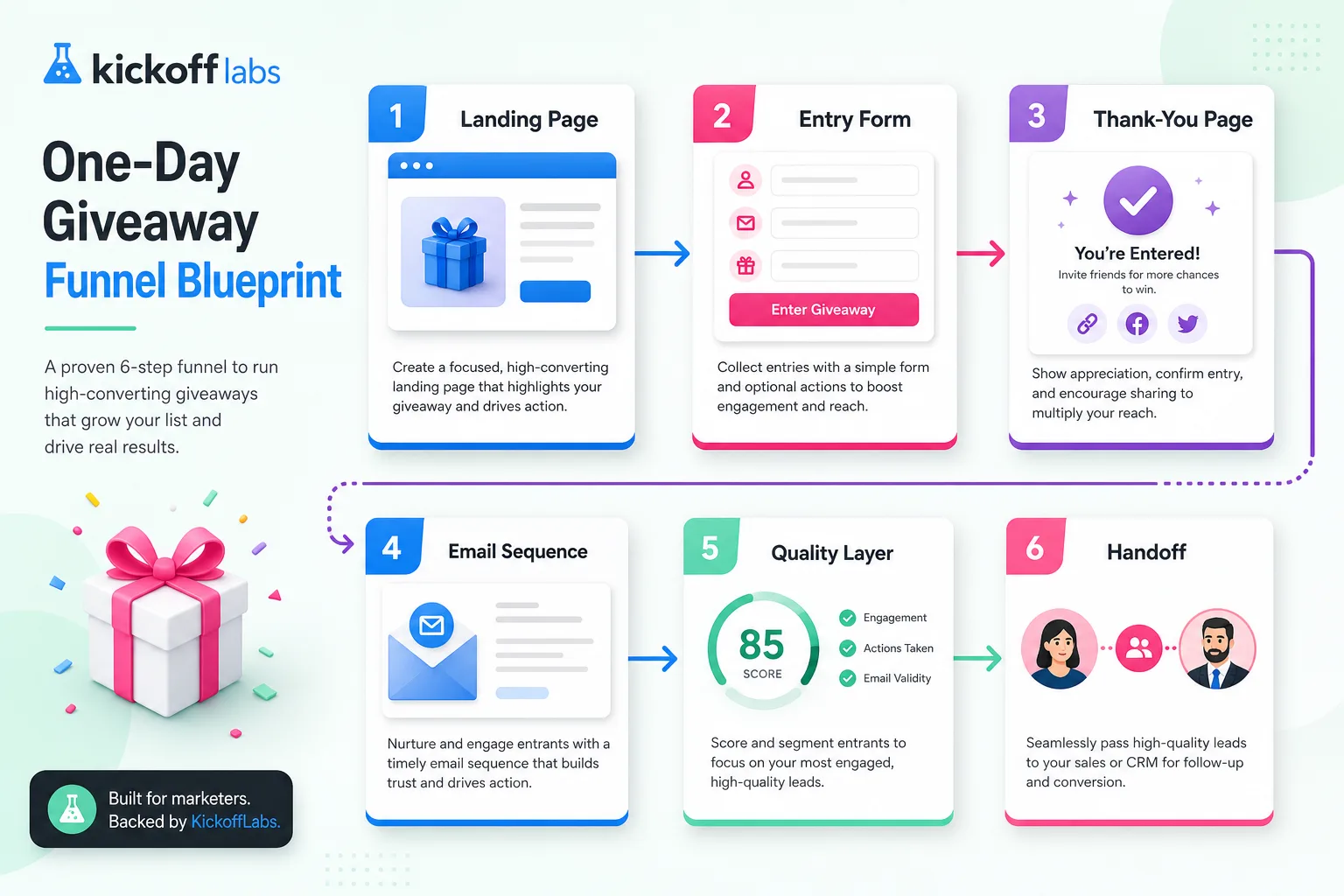
Landing page: One headline, one prize, one form, one deadline, one rules link, one privacy link, one short proof section, one CTA.
Entry form: Email and first name. Add one optional qualifier only if it changes follow-up.
Thank-you page: Unique referral link, share buttons, reward explanation, progress state, and a reminder to check email.
Referral incentive: Bonus entries, waitlist position, or reward tiers. Make the tracking visible.
Email sequence: Confirmation, referral reminder, useful resource, deadline reminder, winner/update, next-step offer.
Quality layer: Fraud checks, source tracking, referral validation, engagement tags, and post-campaign segmentation.
Sales/marketing handoff: Hot leads get a direct offer. Warm leads get education. Low-fit entrants get a lighter nurture path or are suppressed.
You can build a version of this in a day. You can improve it for months.
Start simple. Measure what happens. Then tighten the weak points.
Common Mistakes That Wreck Giveaway Funnels
The most common mistakes are boringly fixable: choosing a prize everyone wants, asking for too much information too early, sending traffic to a generic homepage, hiding the rules, making referrals hard to understand, exporting leads manually, and waiting until the winner announcement to follow up.
None of that is strategy. It is leakage.
Treat the giveaway like a funnel, not a one-off promotion, and the fixes become obvious.
Build the Funnel Before You Buy the Traffic
Traffic is gasoline. Do not pour it on a broken machine.
Before you spend on ads, post the influencer brief, email your partners, or ask customers to share, make sure the funnel is ready:
- The prize attracts the buyer you actually want.
- The landing page explains the offer in seconds.
- The form captures consent clearly.
- The thank-you page creates the referral loop.
- The email sequence starts immediately.
- The rules and disclosures are easy to find.
- The tracking tells you which leads are worth follow-up.
That is the whole game.
A giveaway can be a cheap list-building stunt, or it can be a growth engine. The difference is the system behind it.
KickoffLabs exists for the system: campaign pages, referral tracking, reward levels, fraud protection, integrations, and reporting in one place.
If your next campaign needs to capture leads and turn them into referrals, build the funnel first. The prize is just the spark.