Contents
- Quick Answer: What Should an AI Giveaway Email Sequence Include?
- Why AI Belongs in Your Campaign Email Workflow
- Start With the Campaign Brief, Not the Prompt
- The 6-Email Giveaway Sequence
- The 6-Email Waitlist Sequence
- How to Use AI Without Losing Your Voice
- Segment Before You Scale
- Where KickoffLabs Fits
- Summary: AI Email Sequences Work When the Campaign Has a Point
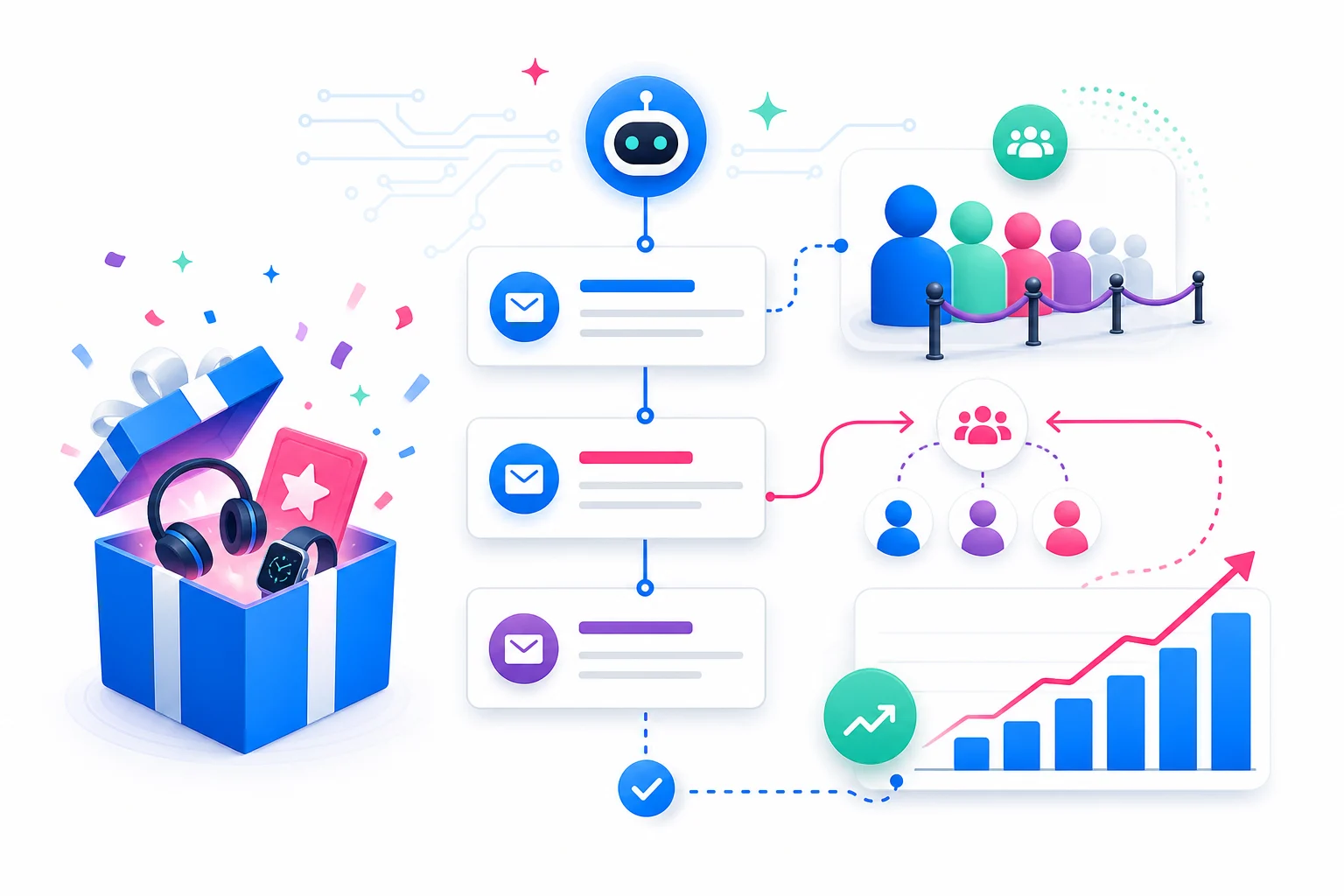
AI will not save a boring giveaway. It will help a good one move faster.
That is the line most marketers miss.
You do not need AI to write more emails. You need AI to write the right emails faster: the welcome email, referral nudge, reward reminder, launch announcement, and post-campaign follow-up.
A giveaway or waitlist is not one email. It is a sequence. Every message has a job.
Here is how to use AI email marketing without sounding like a machine wearing a lanyard.
Quick Answer: What Should an AI Giveaway Email Sequence Include?
An AI-assisted giveaway or waitlist email sequence should include six core emails: a welcome email, a referral/share email, a reward or status update, a midpoint reminder, a final-chance email, and a post-campaign conversion email. AI is best used to draft variations, personalize by audience segment, rewrite weak subject lines, and turn campaign rules into clear copy. The strategy still has to come from you: prize, audience, timing, offer, and next action.
For giveaways, the sequence should push entrants to share and earn bonus entries.
For waitlists, the sequence should build belief, explain the product, and give people a reason to move up the list.
For both, the goal is simple: keep leads warm after signup.
Email still works. Omnisend summarizes email marketing ROI as roughly $36 to $40 for every $1 spent. Mailchimp’s benchmark data also shows healthy open and click rates across industries. The inbox is not dead. Lazy email is dead.
Why AI Belongs in Your Campaign Email Workflow
Most campaign emails are written too late.
The landing page goes live. Leads start coming in. Then someone realizes the welcome email says “Thanks for signing up” and nothing else.
That is a waste.
Your first email is the moment when interest is highest. The person just entered your giveaway or joined your waitlist. They remember you. They care enough to click.
Do not send them a receipt. Send them the next move.
AI helps because campaign email writing has a lot of repeated structure:
- Explain what just happened.
- Restate the prize or launch promise.
- Give the entrant their next action.
- Remind them how referrals or rewards work.
- Reduce confusion.
- Create urgency before the deadline.
- Convert the lead after the campaign ends.
That is exactly the kind of repeatable work AI is good at.
But the AI needs constraints. If you ask it to “write a giveaway email,” you get mush. If you give it your audience, prize, campaign rules, deadline, referral incentive, brand voice, and conversion goal, it can produce a useful first draft.
The trick is not “use AI.”
The trick is giving AI a campaign brief good enough that the output has a chance.
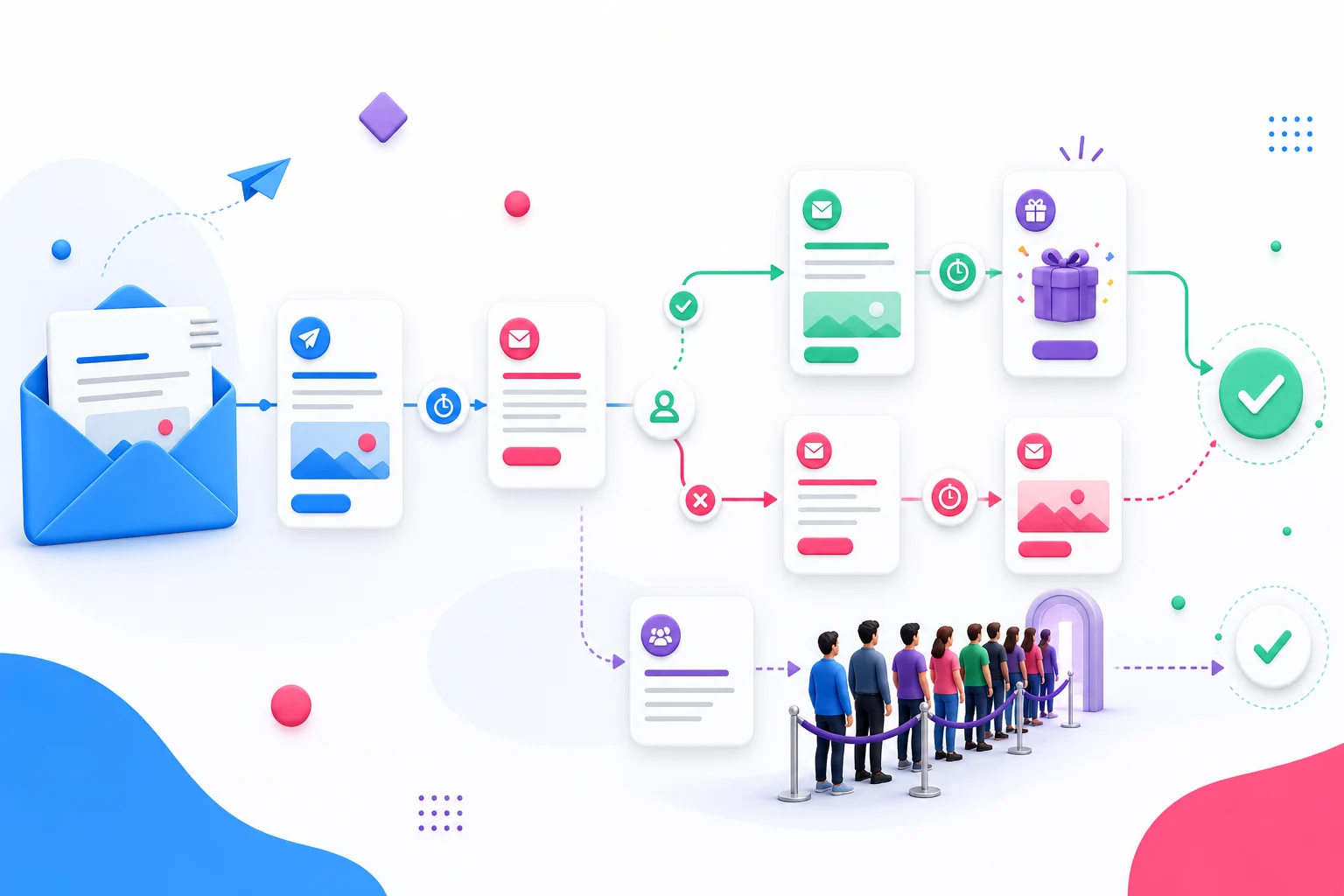
Start With the Campaign Brief, Not the Prompt
Bad AI prompts start with the email.
Good prompts start with the campaign.
Before you ask for copy, write down the answers to these questions:
- Who is entering?
- What do they want?
- What are you giving away or launching?
- What is the campaign deadline?
- What action earns bonus entries or better waitlist position?
- What should entrants do after the campaign?
- What should the email never say?
That last one matters more than people think.
If your brand does not use fake urgency, tell the AI. If you do not want emojis, say so. If you want short paragraphs, say so. If your audience is technical founders, parents, runners, Kickstarter backers, or Shopify store owners, say so.
Here is a reusable prompt:
You are writing email copy for a KickoffLabs [GIVEAWAY / WAITLIST]. Audience: [AUDIENCE]. Prize or offer: [PRIZE/OFFER]. Deadline: [DATE]. Referral incentive: [INCENTIVE]. Goal after signup: [GOAL]. Write in a direct, human voice. Use short paragraphs. Every email gets one CTA.
That prompt is not magic. It is a brief.
AI gets useful when you stop treating it like a vending machine and start treating it like a junior copywriter who needs context.
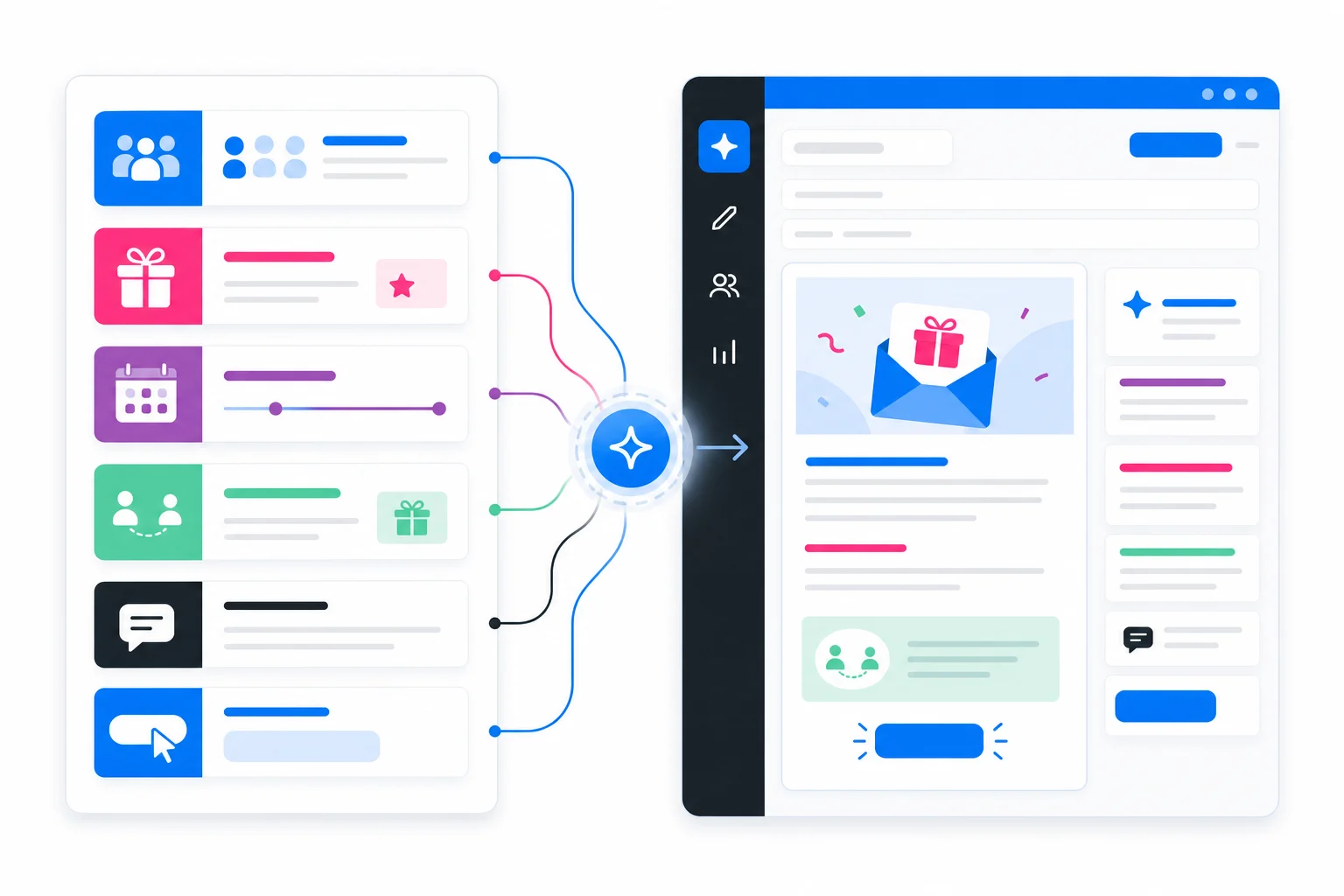
The 6-Email Giveaway Sequence
A giveaway email sequence has one main job: turn one entrant into more entrants.
Yes, you also want to sell later. But during the campaign, the viral loop comes first. If someone enters and never shares, you paid for one lead. If they share and bring three friends, the campaign starts compounding.
Here is the sequence I would build.
1. The Welcome Email
Send this immediately after entry.
The welcome email should confirm the entry, repeat the prize, and show the entrant how to earn bonus entries. Do not bury the referral link. It should be the star of the email.
AI prompt:
Write a giveaway welcome email for [AUDIENCE] who entered to win [PRIZE]. The email should confirm their entry, make the prize feel desirable, explain that they can earn bonus entries by sharing their unique link, and end with one CTA: “Share to earn bonus entries.” Keep it under 175 words.
2. The Referral Nudge
Send this 24 hours later to people who have not shared.
This email should not shame them. It should make sharing feel easy and worthwhile.
AI prompt:
Write a short referral reminder for a giveaway entrant who has not shared yet. Explain that sharing their unique link gives them [BONUS ENTRY DETAILS]. Make it feel easy, not pushy. Include two share-copy options they can paste into social or text.
The best version includes copy they can steal.
People do not fail to share because they hate your campaign. They fail to share because sharing takes effort. Remove the effort.
3. The Reward Progress Email
Send this when someone earns entries, hits a milestone, or moves up a leaderboard.
This is where KickoffLabs campaigns get fun. Progress creates momentum. A person who has referred two friends is much more likely to refer a third than someone who has referred zero.
AI prompt:
Write a progress update email for a giveaway entrant who has referred [NUMBER] friends and is close to [NEXT MILESTONE]. Keep the tone encouraging. Make the next step obvious. Include a CTA to share again.
If you use KickoffLabs reward levels, this email gets stronger because the reward is not abstract. “You are one referral away from unlocking 20% off” beats “Please share again.”
4. The Midpoint Reminder
Send this halfway through the campaign.
Many entrants forget they joined. Bring them back, re-sell the prize, and remind them they can still earn bonus entries.
AI prompt:
Write a midpoint giveaway reminder for [PRIZE]. The campaign ends on [DATE]. The entrant can still earn bonus entries by sharing. Include a short reason why the prize is worth winning and a clear CTA.
5. The Final-Chance Email
Send this 24 hours before the deadline and again a few hours before close if the campaign warrants it.
Urgency works when it is real. A campaign deadline is real.
AI prompt:
Write a final-chance giveaway email. The campaign closes in [TIME LEFT]. The entrant has [CURRENT ENTRIES] entries. They can earn more by sharing their link. Use urgency without sounding spammy. Keep it under 150 words.
Do not fake scarcity. Do not invent “limited spots” if there are not limited spots. The deadline is enough.
6. The Winner and Post-Campaign Email
This is the email too many teams forget.
After the giveaway ends, you have a list of people who raised their hand. Some wanted the prize. Some wanted your product.
Send two messages:
- Winner announcement.
- Thank-you offer for everyone else.
AI prompt:
Write a post-giveaway email for entrants who did not win. Congratulate the winner briefly, thank the entrant, and offer [DISCOUNT / EARLY ACCESS / BONUS CONTENT / CONSULTATION]. The goal is to convert interested leads without making the giveaway feel like a bait-and-switch.
This is where your giveaway becomes revenue instead of a vanity metric.
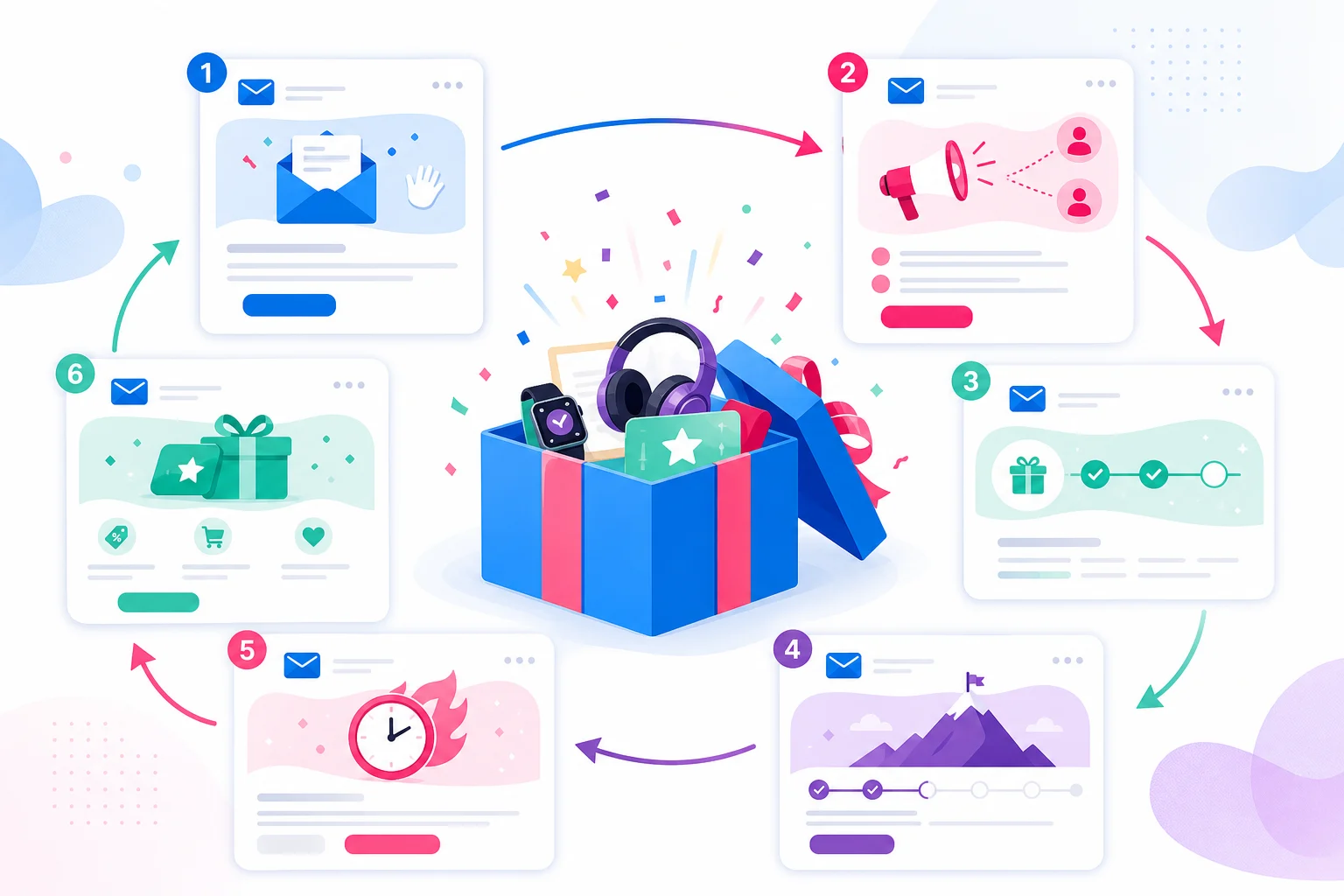
The 6-Email Waitlist Sequence
A waitlist email sequence is different.
A giveaway sequence creates sharing around a prize. A waitlist sequence creates belief around a launch.
People join waitlists because they want access, status, or proof that something better is coming. Your emails should feed that belief.
Real KickoffLabs customer stories prove this can work. Pronti.AI used a KickoffLabs waitlist as part of its growth from 3,000 active users to more than 80,000. Swingly Toys used a waitlist campaign before raising $17,000 on Kickstarter. Haugen Racing collected 14,500 leads with a KickoffLabs campaign.
Those are not random email blasts. That is launch momentum with a system behind it.
1. The Welcome and Position Email
Send this immediately.
For a waitlist, the welcome email should tell people where they stand and how to move up.
AI prompt:
Write a waitlist welcome email for [PRODUCT]. The subscriber just joined. Explain what the product helps them do, why early access matters, and how referrals move them up the waitlist. Include one CTA to share their link.
If you can include waitlist position, do it. Position turns the email into a game.
2. The Problem Email
Send this 1-2 days later.
Before people care about your solution, they need to feel the problem. This email should show that you understand the pain better than the alternatives do.
AI prompt:
Write a waitlist nurture email that focuses on the problem [AUDIENCE] faces with [PROBLEM]. Do not pitch too hard. Make the reader feel understood. End by saying the product is being built to solve this and they can move up the waitlist by sharing.
The problem email is not a feature tour. It is a mirror.
3. The Behind-the-Scenes Email
Send this mid-campaign.
People on a waitlist want progress. Show them something real: a screenshot, a design decision, a prototype, a feature being built, a founder note.
AI prompt:
Write a behind-the-scenes update for a product waitlist. Share progress on [FEATURE OR MILESTONE]. Make it feel personal and specific. Avoid hype. End with a referral CTA.
Specific beats polished. “We rebuilt the onboarding flow because testers got stuck on step two” is more believable than “We are working hard to create an amazing experience.”
4. The Social Proof Email
Send this after you have something true to say.
This could be user feedback, waitlist size, a testimonial, press, podcast quote, beta result, or founder credibility. Only use real proof.
AI prompt:
Write a waitlist social proof email using only this verified proof: [PROOF]. Do not add numbers or claims that are not included. Explain why this proof matters and invite the reader to share their link to move up the list.
Notice the instruction: “Do not add numbers.”
AI loves to invent numbers. Do not let it.
5. The Launch-Date Email
Send this when you know the date.
The launch-date email should answer three questions:
- When can I get access?
- What happens next?
- How do I improve my position?
AI prompt:
Write a launch-date announcement email for a waitlist. Launch date is [DATE]. Explain what subscribers should expect, what early access includes, and how referrals affect priority. Keep it direct and exciting without overpromising.
This is also a good moment to segment.
People with referrals should get a different message than people who never shared. Your top referrers deserve recognition. Your quiet subscribers need one more nudge.
6. The Access or Cart-Open Email
Send this when the product is ready.
This email should not be clever. It should tell people the door is open.
AI prompt:
Write an access email for waitlist subscribers. The product is now available to [SEGMENT]. Include what they get, how long access is available, and the CTA to claim access. Keep it under 150 words.
The closer you are to conversion, the less decorative the copy should be.
How to Use AI Without Losing Your Voice
The fastest way to ruin AI email copy is to publish the first draft.
AI drafts are ingredients. You still have to cook.
Use this editing pass:
- Cut fake enthusiasm like “We are thrilled” and “Exciting news.” Say what happened.
- Give every email one CTA. For giveaways, that is usually “Share your link.” For waitlists, it is usually “Move up the list” or “Claim access.”
- Add the actual prize, deadline, reward tier, product problem, and launch date.
- Read it out loud. If it sounds like a customer support macro, rewrite it.
Specific copy feels true because it is true.
Segment Before You Scale
AI makes it easy to create variations. That does not mean you need 47 of them.
Start with the segments that change the message in a meaningful way.
For giveaways, write different versions for people who entered but did not share, people who shared once, people who hit a reward level, and people who did not win.
For waitlists, split people by referral activity, customer status, beta access, and launch readiness.
Then ask AI to rewrite the same core email for each segment. Change the opening, proof, and CTA. Keep the campaign promise consistent.
That is where AI shines: useful variants fast. You pick the best one, tighten it, and load it into your campaign.
Where KickoffLabs Fits
You can write a great sequence and still lose the campaign if the mechanics are duct-taped together.
KickoffLabs was built for this loop: build the landing page, capture the lead, give every entrant a unique referral link, track referrals and reward progress, trigger the right emails, and push leads into your email provider or CRM.
That means your AI-written emails can reference real campaign data: referral links, reward levels, leaderboard position, waitlist rank, and campaign deadlines.
That is the difference between “Please share with friends” and “You are two referrals away from unlocking early access.”
One is a request. The other is a game.
If you are building a giveaway, start with KickoffLabs sweepstakes campaigns and the AI giveaway campaign playbook for the brief, prompts, referral loop, and measurement plan. If you are launching a product, start with KickoffLabs waitlist campaigns and the launch validation waitlist guide. If you want guaranteed rewards instead of random winners, look at reward levels.
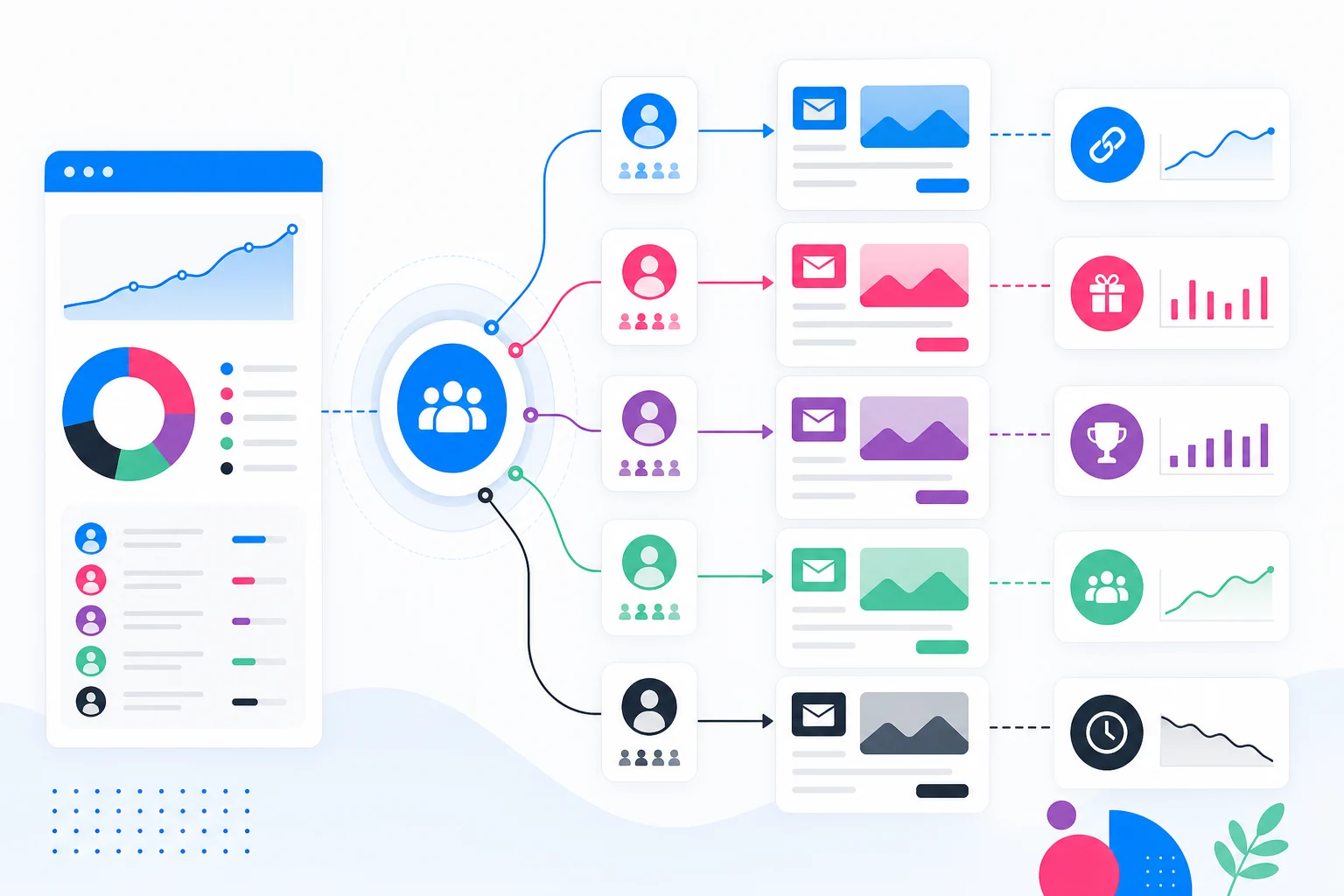
AI writes the copy. KickoffLabs runs the engine.
Summary: AI Email Sequences Work When the Campaign Has a Point
AI email sequences for giveaways and waitlists work best when they are tied to a clear campaign mechanic: referral sharing, reward progress, waitlist priority, launch access, or post-campaign conversion. A strong sequence includes a welcome email, referral or status nudges, deadline reminders, and a follow-up offer after the campaign ends. AI should draft and personalize the emails, but the strategy must come from the campaign brief, verified proof, real deadlines, and one clear CTA per message.
Do not use AI to make your campaign sound bigger than it is.
Use it to make the next action obvious.
That is what gets people to enter, share, wait, click, and eventually buy.